The passport became a way of reading
The idea changed shape · choose a view
01 · A book-shaped identity
01 · A book-shaped identity
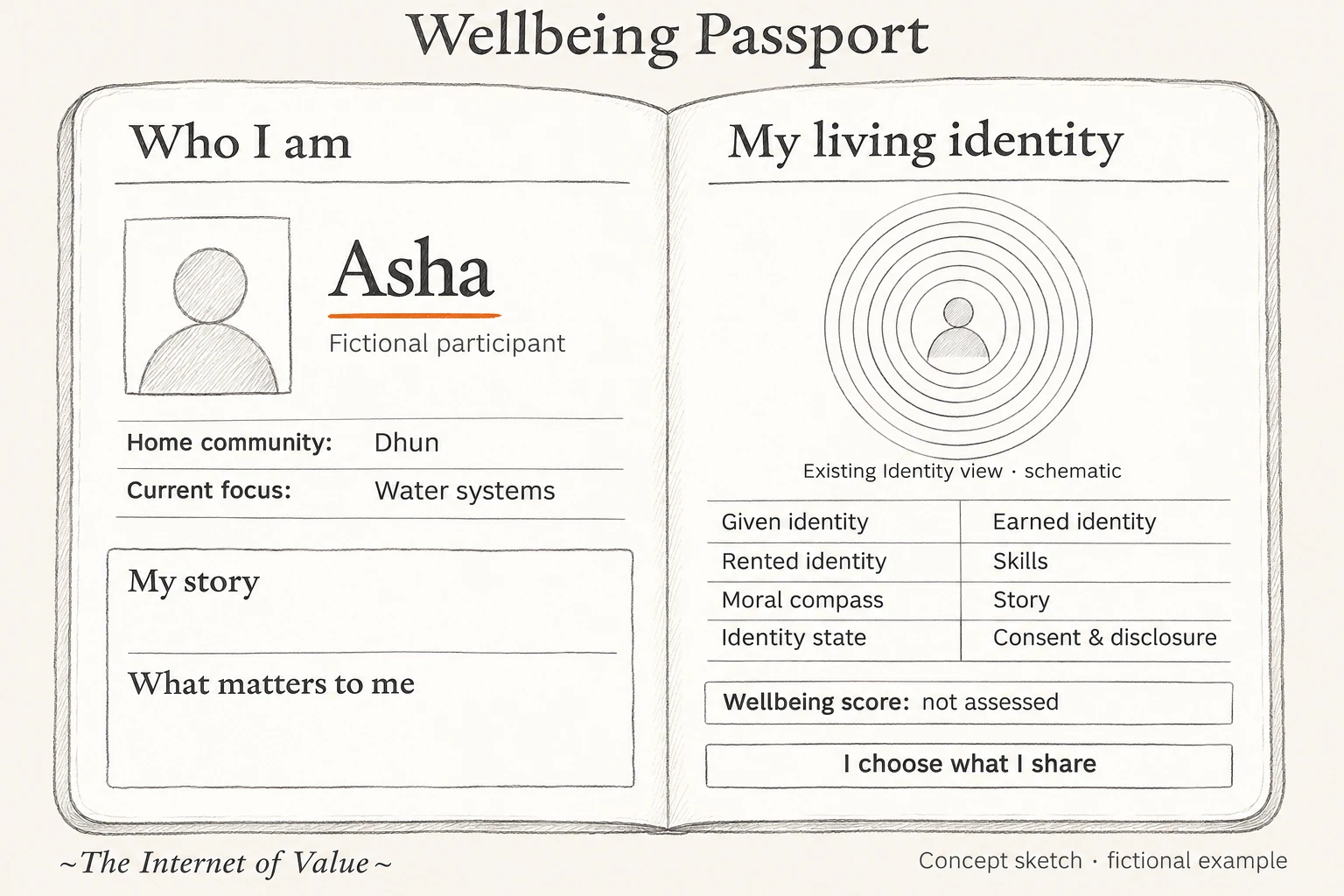
02 · An ordinary day
02 · An ordinary day
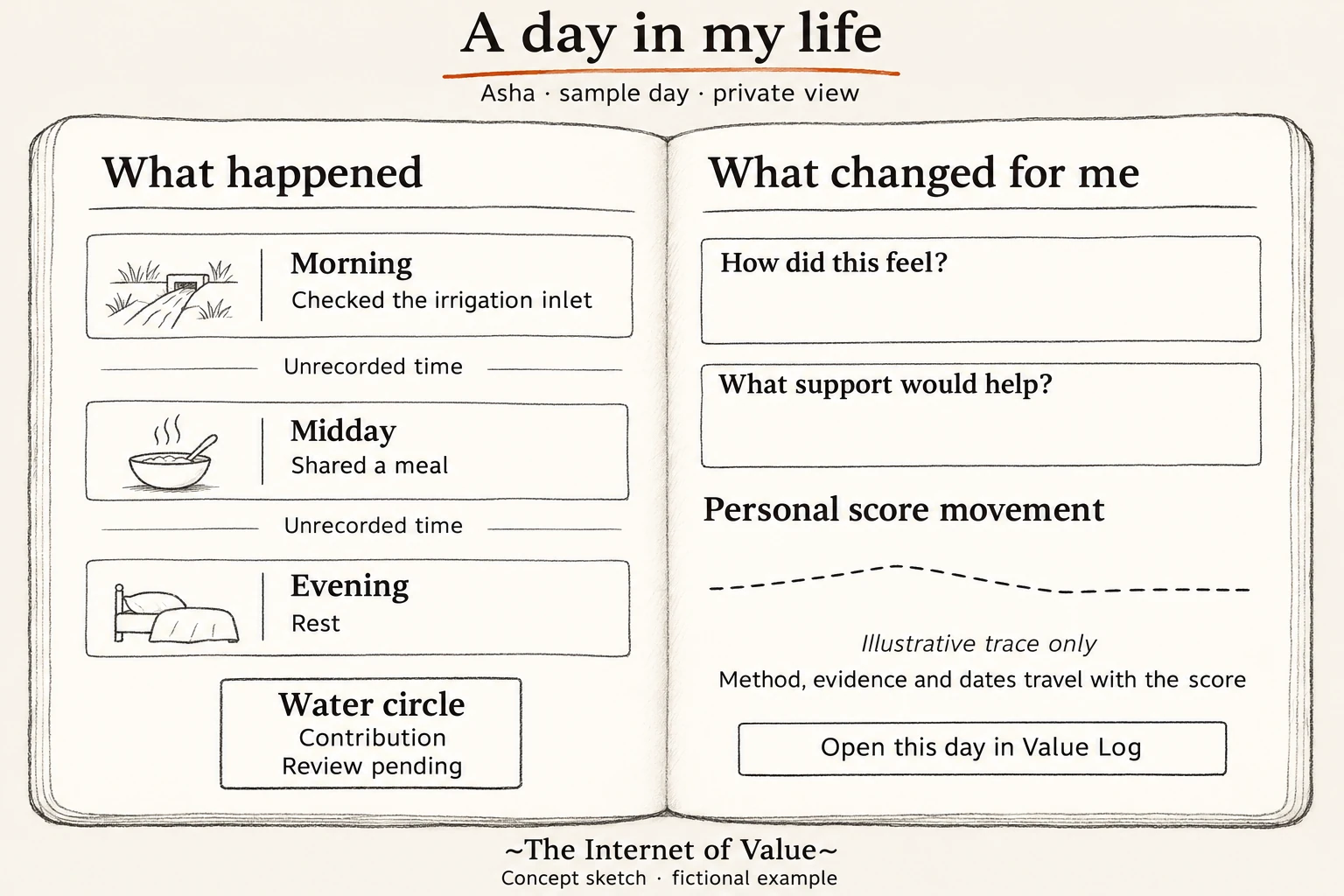
03 · What can travel?
03 · What can travel?
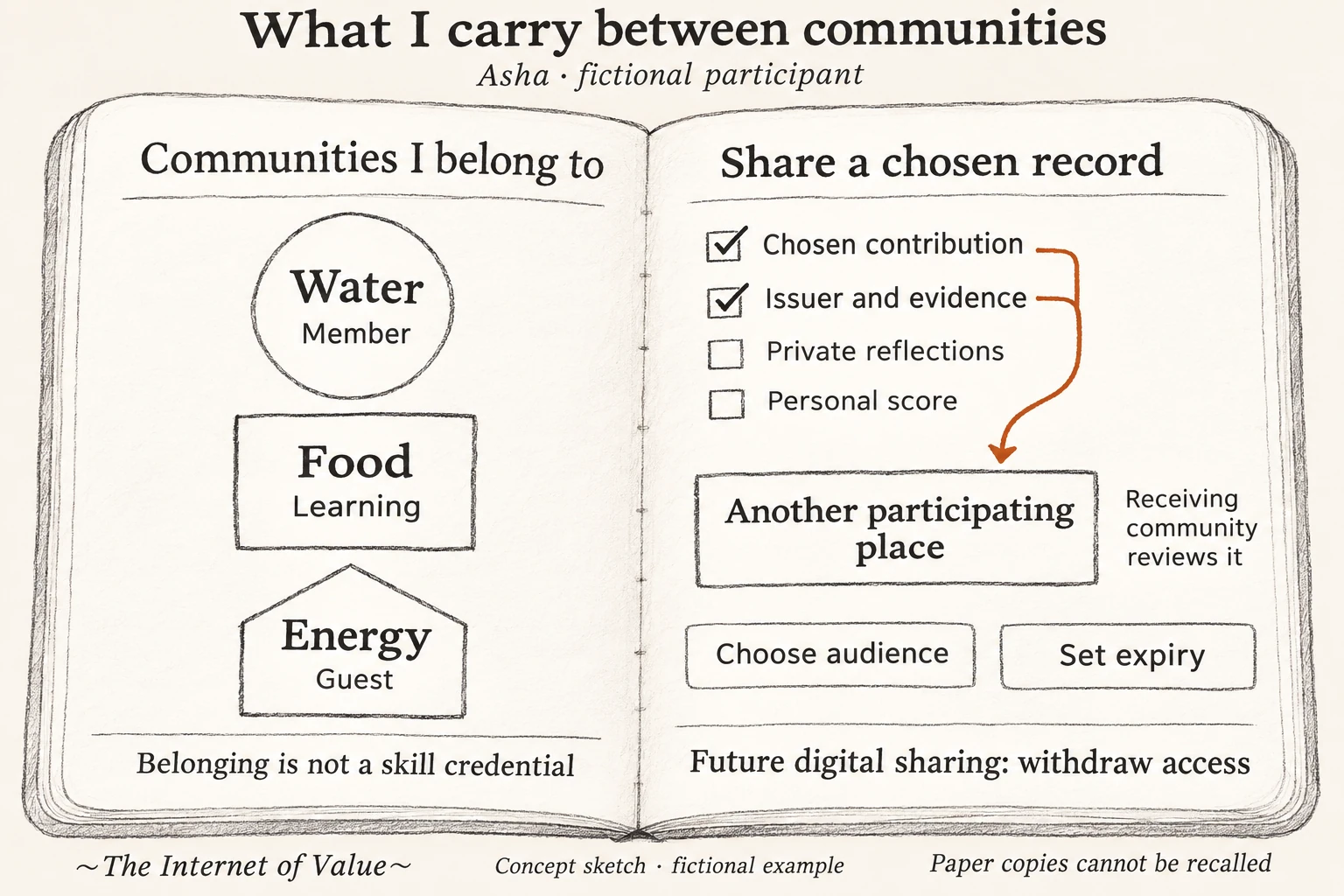
04 · Manisha enters
04 · Manisha enters
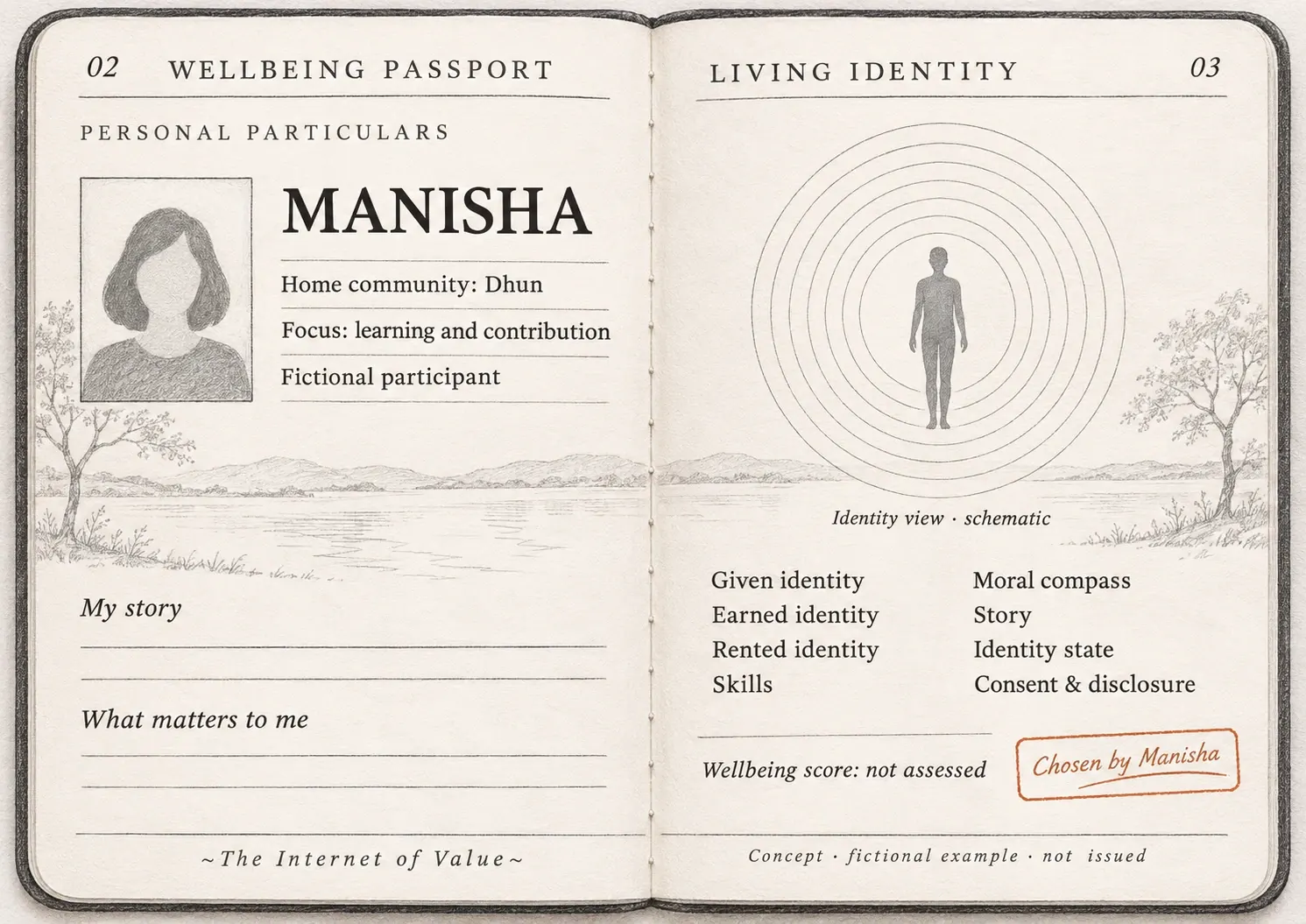
05 · Places within Dhun
05 · Places within Dhun
06 · Who stands behind the mark?
06 · Who stands behind the mark?
07 · The return from an experience
07 · The return from an experience
08 · Inside Insights
08 · Inside Insights
09 · Open the evidence
09 · Open the evidence
10 · A book on a phone
10 · A book on a phone
11 · A calendar becomes an entrance
11 · A calendar becomes an entrance
12 · Details below the page
12 · Details below the page
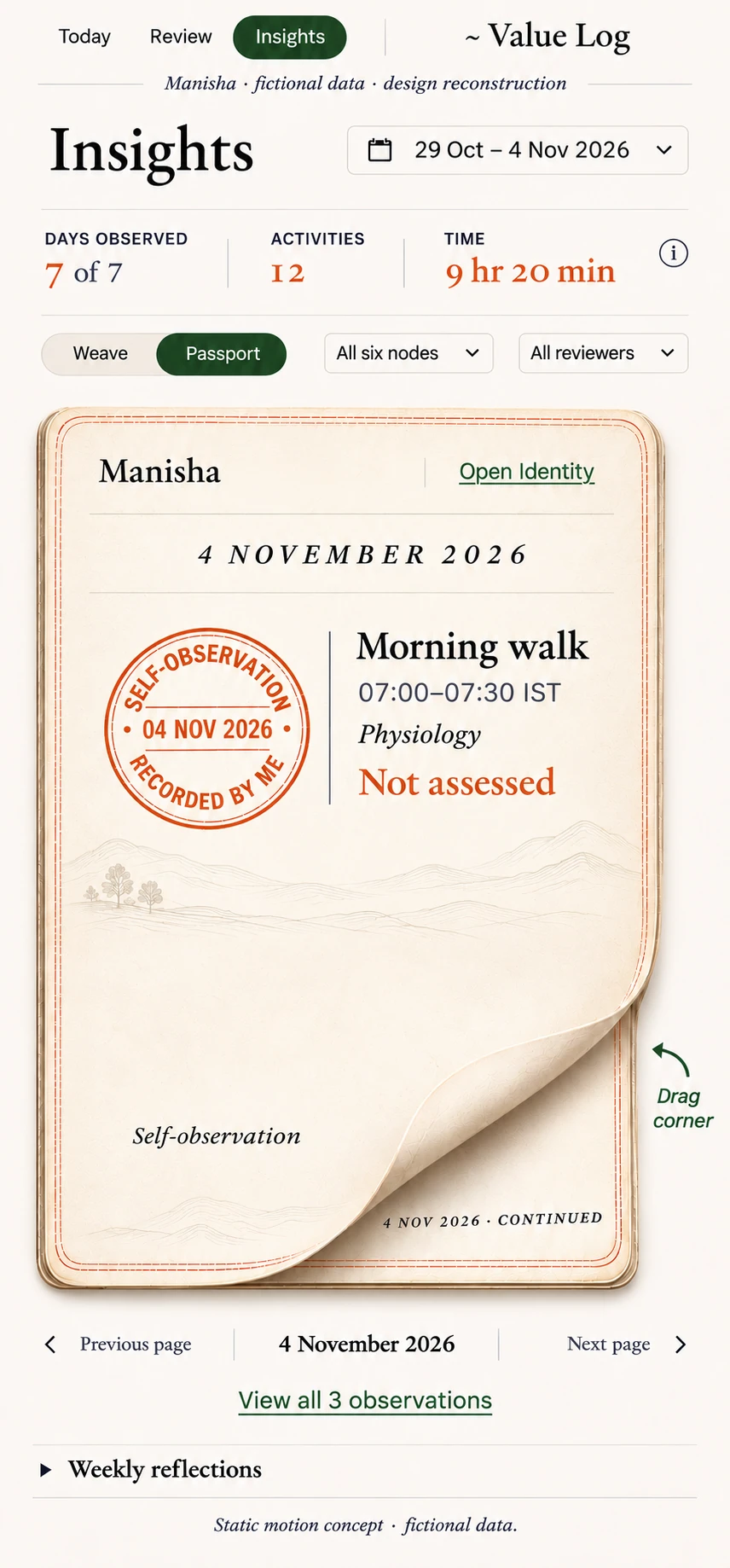
13 · A curled page
13 · A curled page
14 · The person emerges
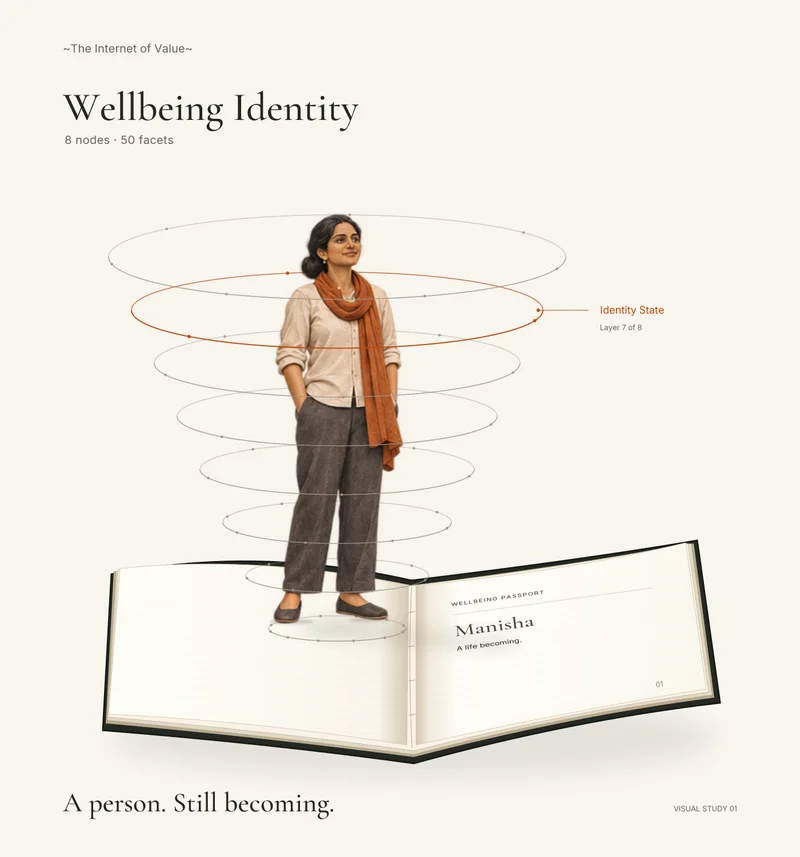
14 · The person emerges
The first sketches were too literal and not literal enough. They borrowed a book outline but filled it with ordinary cards. Later versions looked more like a passport and still failed to answer what a stamp meant. We made an identity page, a day page, visiting-community pages and a wellness journal. Then the existing Insights calendar forced a useful decision: the passport could be a way into evidence, rather than a replacement for every screen.
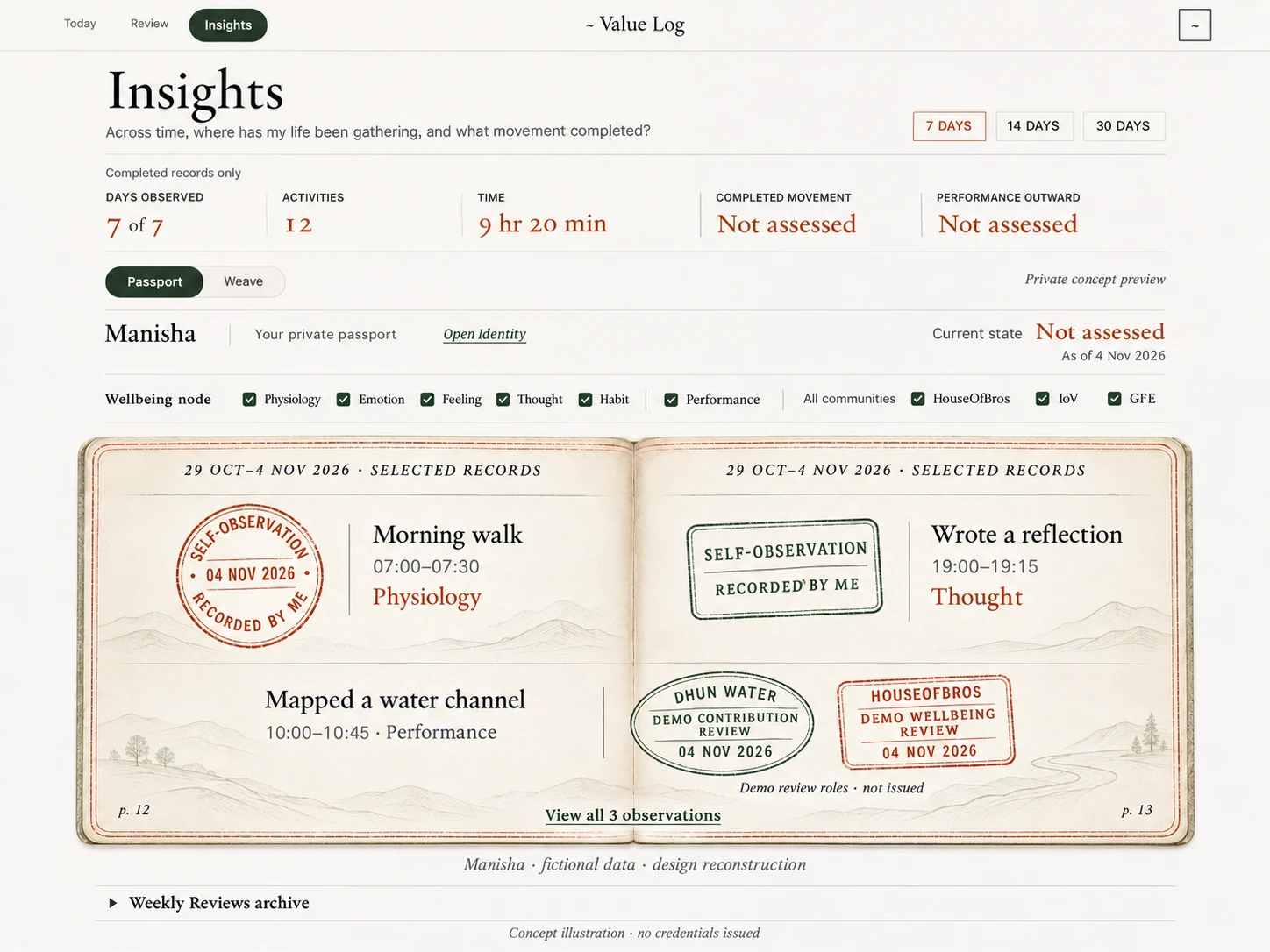
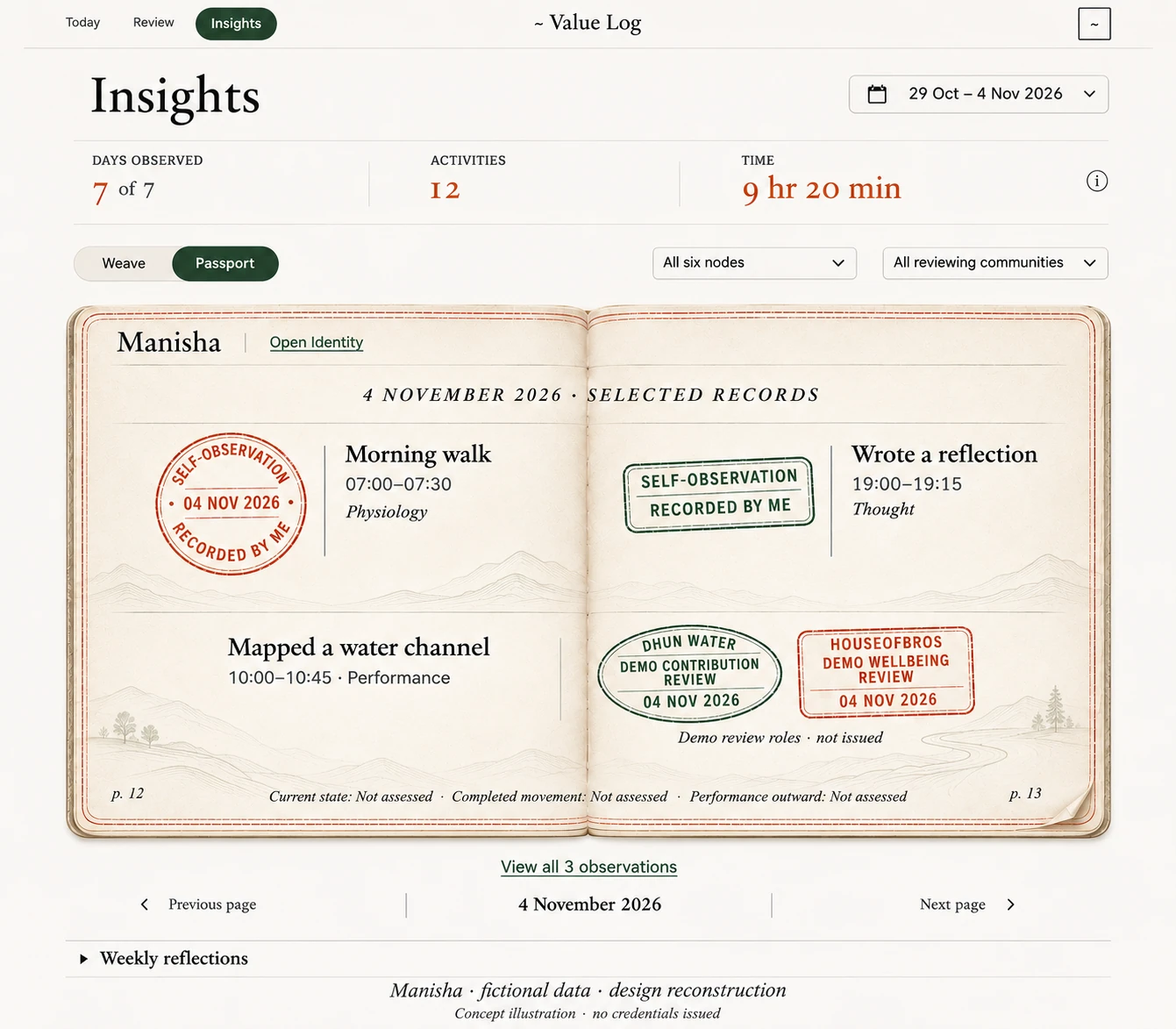
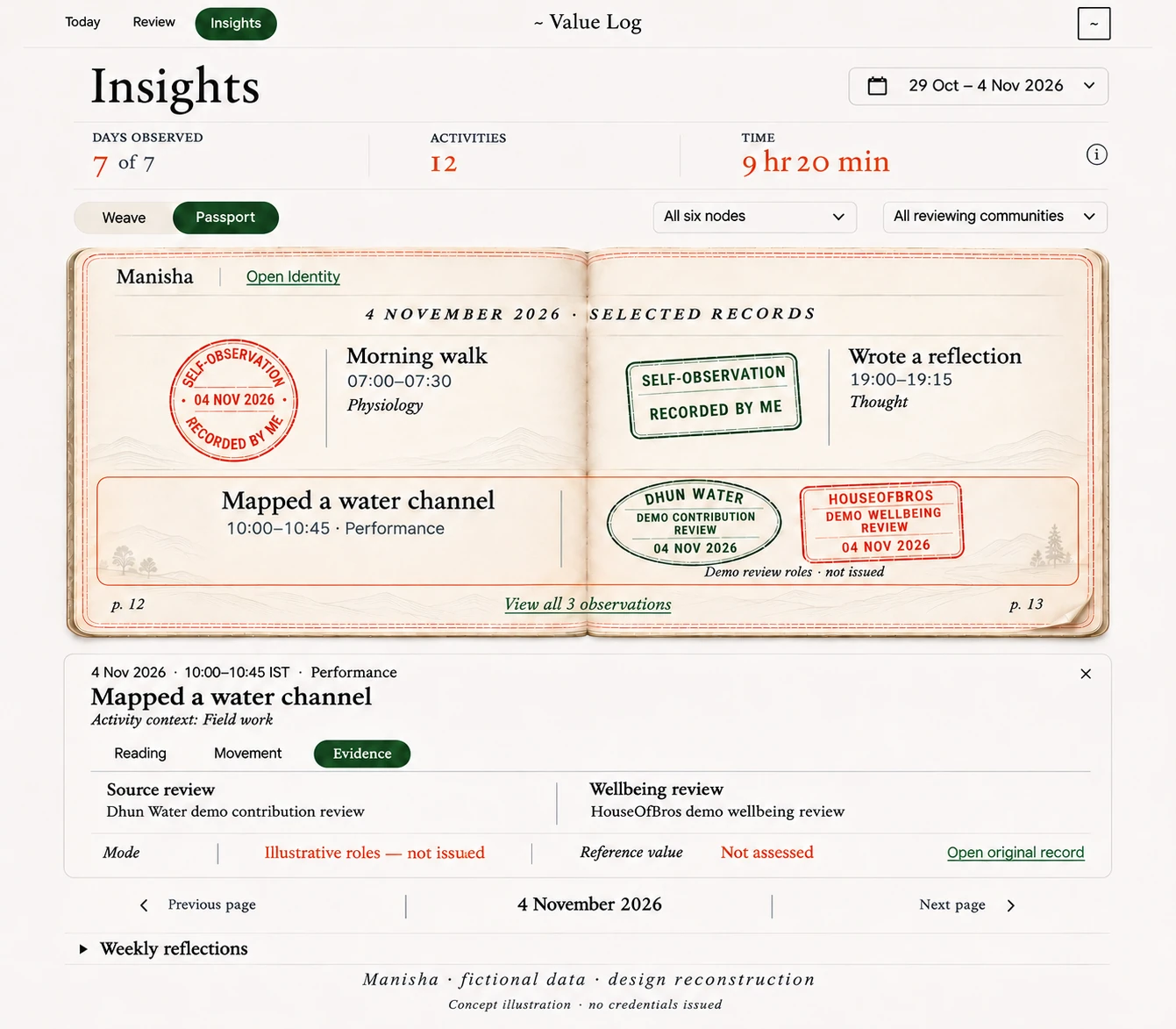
That is where the product became more concrete. A calendar helps me find a day. A day ring makes time visible. An observation lets me say what I noticed. Review details let me inspect the scope of a claim. A passport page can bring these together without making me relearn how to navigate my life.
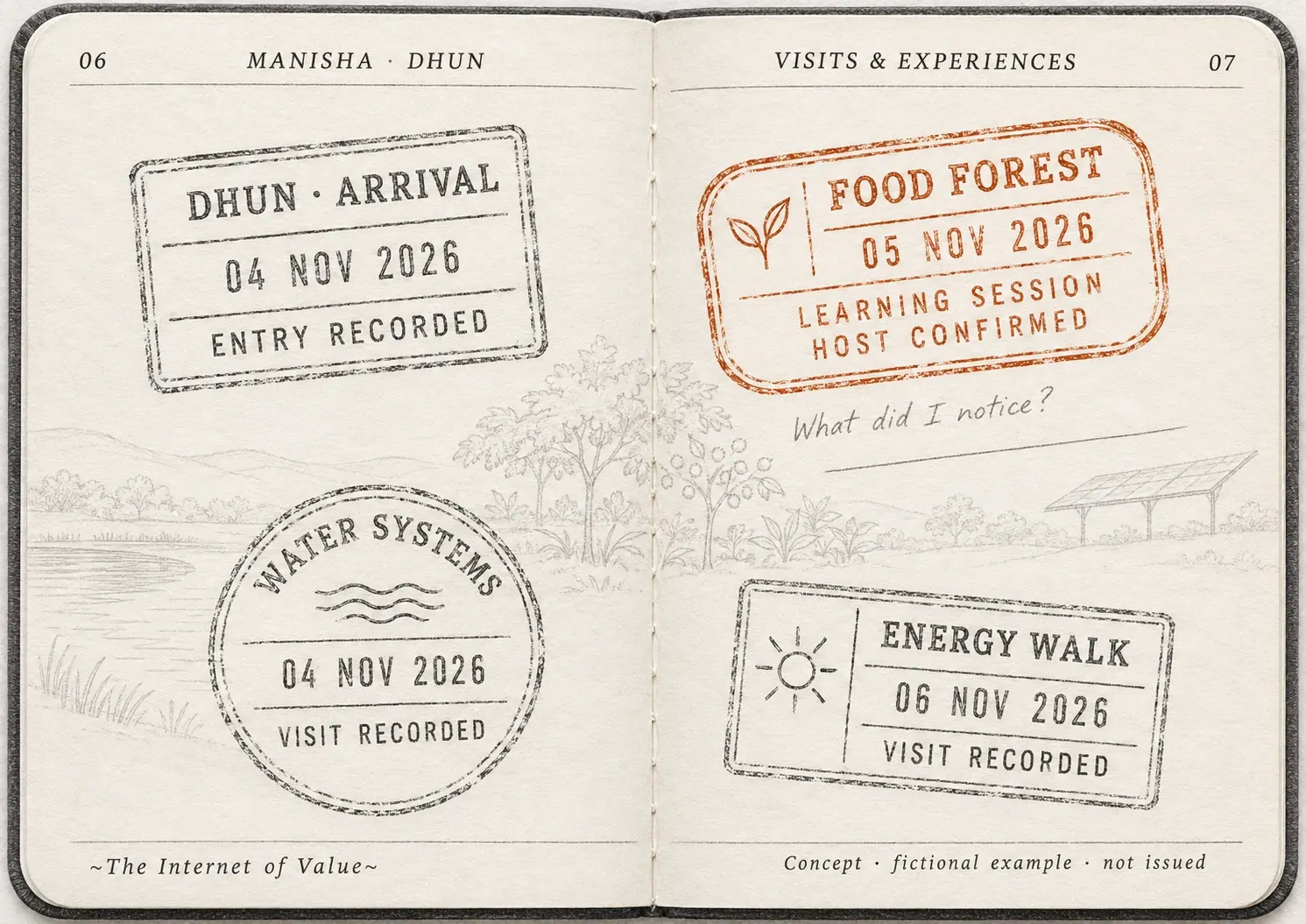
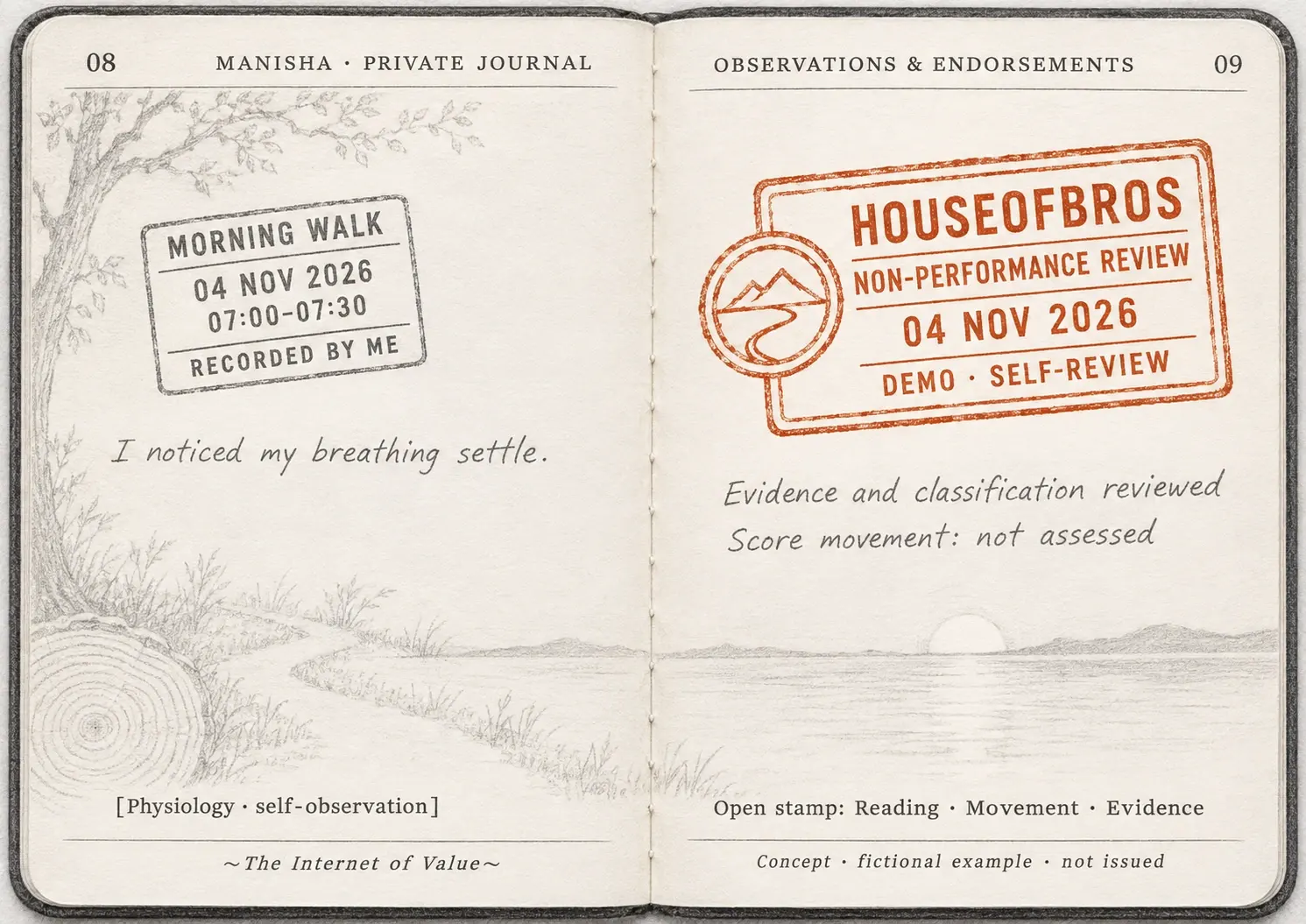
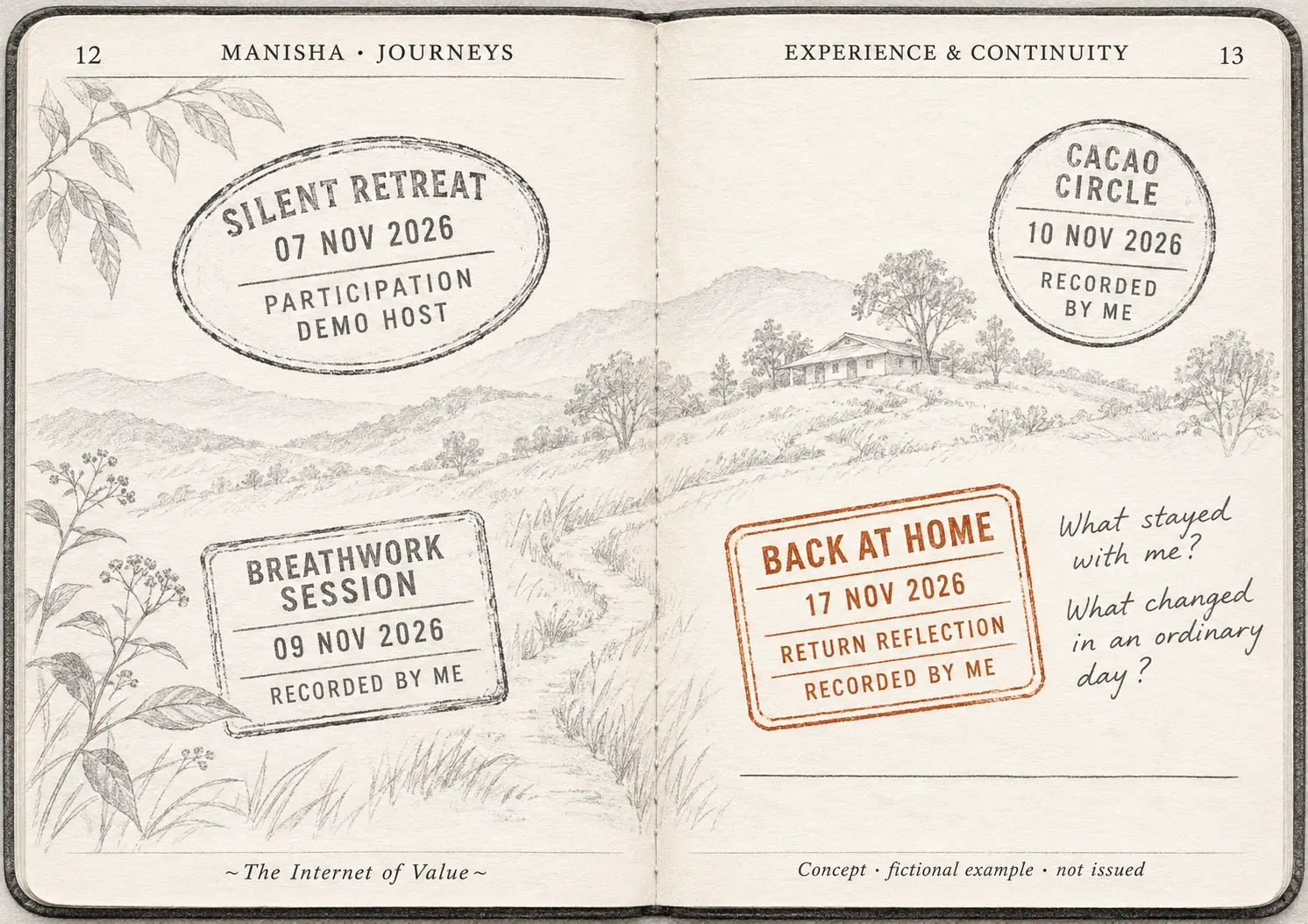
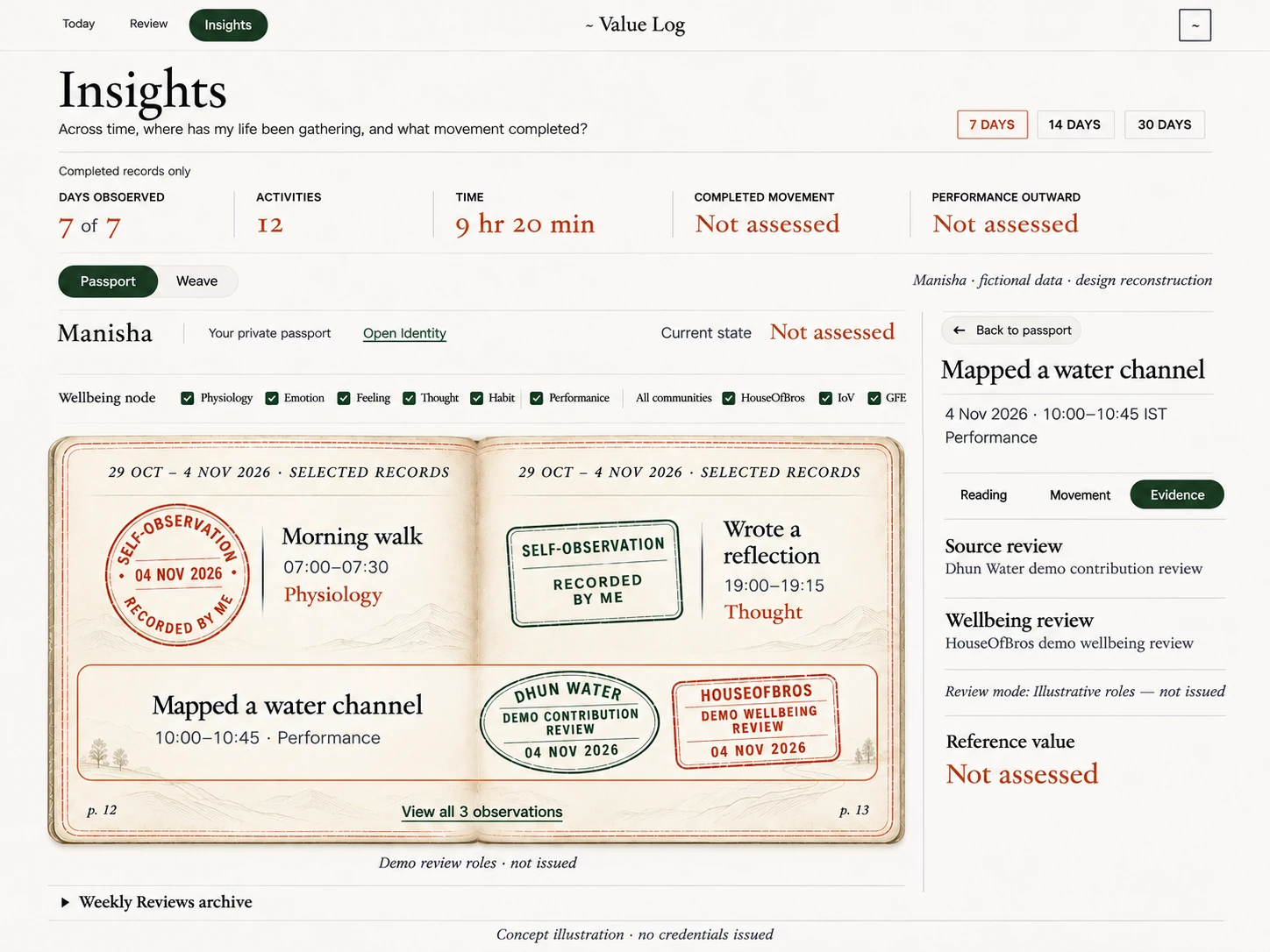
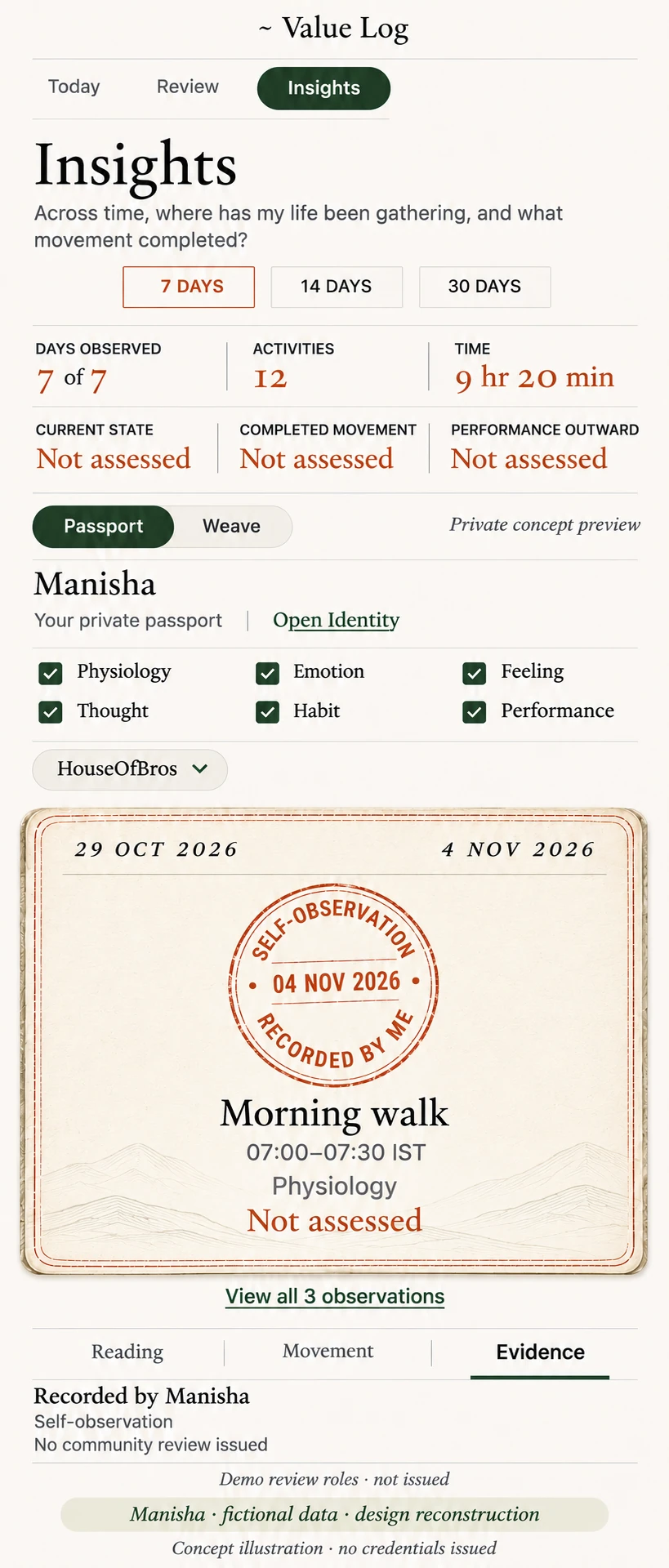
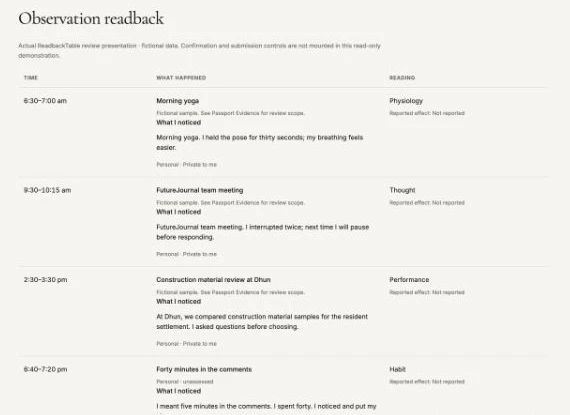
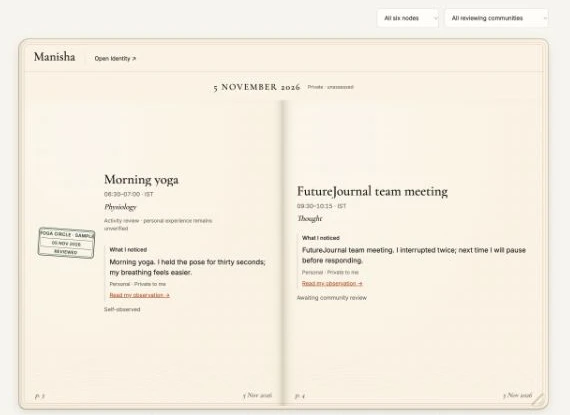
The public demonstration below uses the actual reviewed Value Log presentation components from source revision 8455a31, with a fixed fictional Manisha fixture. These are authentic interface captures of that demonstration. They are not screenshots of Manisha’s account, not today’s private founder ledger and not proof that Dhun has adopted it.
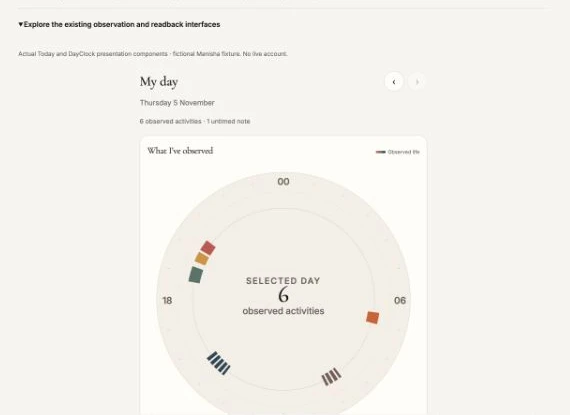
There are three useful acts here. Observe: give an experience a time, an activity and a personal account. Review: distinguish what was claimed, what evidence exists and which decision actually occurred. Return: open the earlier observation from Insights and see what remains pending, unassessed or complete.
The dimensional proposal takes a further step in explanation. Manisha emerges from the passport. Eight rings rise from her feet to her head. Touching a ring reveals its facets. The same person, carrying all eight layers, moves through the clock of an ordinary day. When a scoped review arrives, the relevant layer responds.
This sequence is a teaching device. It should make the relation between a person, a moment and its evidence easier to understand. It does not make the evidence stronger. A beautiful ring glow must never stand in for the review that supposedly caused it.