The person we keep trying to picture
At Field Station I used a set of images to ask a difficult question: what happens when we try to represent a person? A shape on stone, a cosmic body, a measured body and an imagined future human can look like steps in one story. They are not one theory. Their differences are precisely why I want them beside the passport.
A passport chooses what a border institution needs to know. A curriculum vitae chooses what an employer can quickly recognise. A retreat may invite someone to imagine who they could become. Each representation makes a different part of a person legible. Each also leaves something out. Our question is how to work with those partial views without mistaking any of them for a complete human being.
Different pictures of a person · choose a view
01 · Making a human visible
01 · Making a human visible
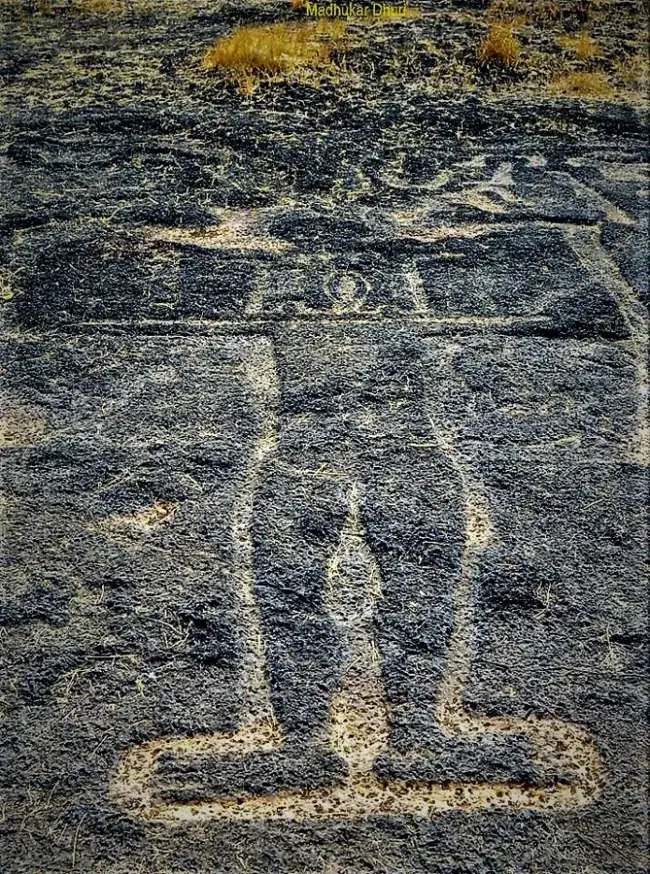

Rock art can preserve a human outline while leaving its maker’s meaning uncertain.
What does a representation leave out?
02 · Locating a human in a world
02 · Locating a human in a world
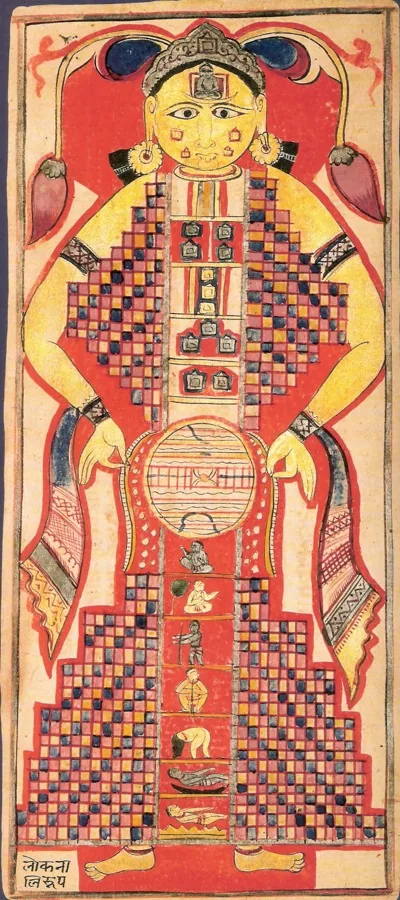

Lokapurusha is a cosmological use of a human form. Jain ideals of liberation raise a separate question about a cultivated life.
What is inherited—and what might be practised?
03 · Measuring a human body
03 · Measuring a human body
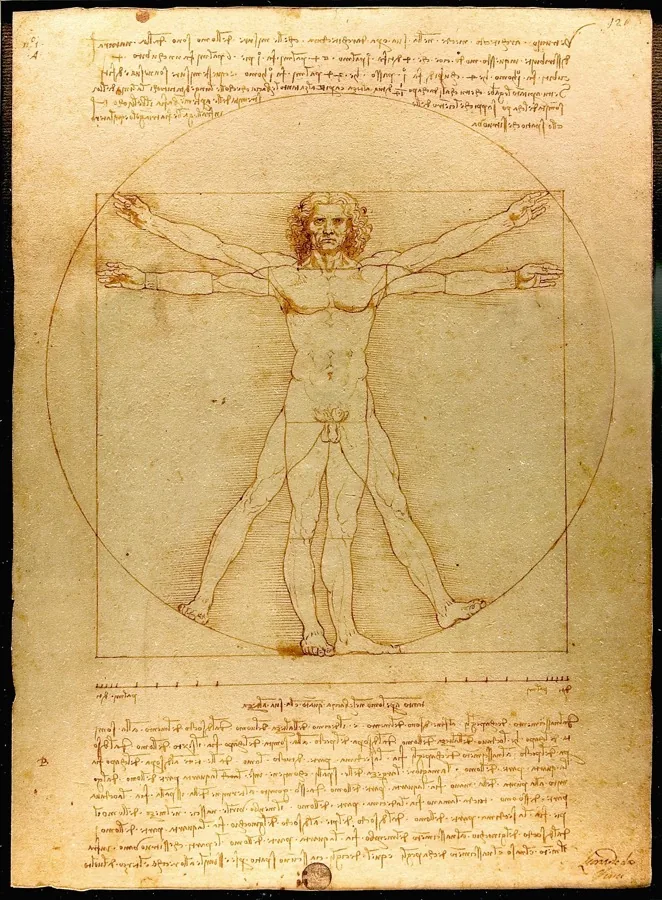

Leonardo studies proportions. The clarity of a geometric picture need not imply a complete account of a person.
What does the diagram measure, and what does it omit?
04 · Imagining a future self
04 · Imagining a future self
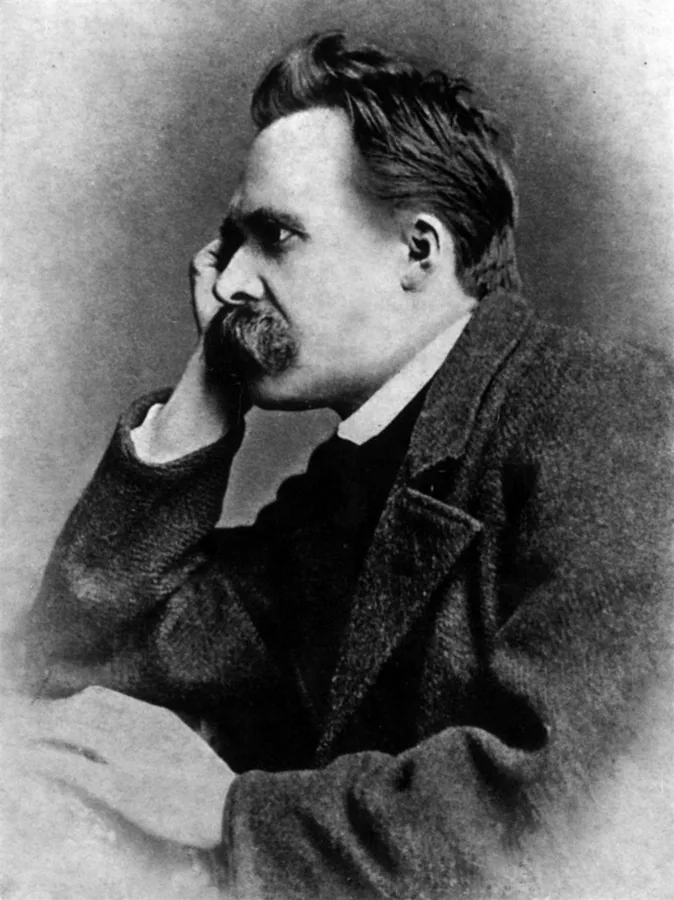

Nietzsche’s self-overcoming gives us a provocation, not a compulsory ideal for every participant.
Can becoming remain an invitation rather than a demand?
05 · Economics and opportunity
05 · Economics and opportunity
A resource, a capacity and an opportunity are different things. Sen’s capability perspective helps us ask what someone can actually pursue.
Can a community recognise a relevant contribution without demanding a whole life?
06 · A body in context
06 · A body in context
Biological and social timescales complicate a story about individual action. A narrative does not reveal a neurochemical measurement.
What context would change how we read this moment?
07 · Our curated model
07 · Our curated model
Eight identity nodes; fifty facets. A navigable research model, open to revision—not a universal inventory of a person.
Which questions are useful, optional, or better left unasked?
A mark is not yet a measurement
The Konkan image in the Field Station deck is rock art, not a modern psychometric diagram. India’s UNESCO Tentative List submission describes human and animal figures among the region’s geoglyphs. That source does not tell us what the maker of this particular figure thought about identity. Nor does it license a claim that this image predates language or depicts an early wellbeing system.
What I take from it is a design question of my own: when a person becomes a mark, what survives? The outline can persist while the maker’s intentions remain unknown. A digital observation has a related problem. A neat label may outlive the context in which someone chose it. Keeping the person’s words beside an interpretation helps a later reader see that gap.
A liberated person and a cosmic body are different ideas
The Lokapurusha image uses a human form to depict a Jain cosmos. It is not a portrait of a gigantic Tirthankara. Tirthankaras belong to a different part of the discussion: the Jain ideal of liberation and the possibility of radical transformation through a disciplined life. The Metropolitan Museum’s account of a Tirthankara in meditation explains the religious figure and its context. These are spiritual and cosmological meanings, not clinical descriptions.
For this proposal, the productive tension is between an inherited world and a cultivated life. Manisha arrives with circumstances she did not choose. She also has commitments she may wish to practise. Our Given Identity and Moral Compass categories let those questions sit beside one another. They do not translate liberation into a score, and they do not establish that Jain thought endorses these categories.
The measured body is also a selection
Leonardo’s Vitruvian drawing gives the body an extraordinary visual economy: a figure, a circle, a square and a set of proportions. The Gallerie dell’Accademia catalogue identifies it as a study of human proportions. Its usefulness here is as a reminder that even a powerful representation has a purpose. A drawing about proportions is not an account of someone’s loyalties, fears, skills or capacity to care.
Our rings borrow the clarity of a diagram. They must not borrow an authority the diagram has not earned. Eight rings can help someone navigate fifty facets. Their symmetry does not prove that human identity has eight natural compartments. Leaving a facet unknown should be as understandable as filling it in.
Becoming is an invitation—and can become a demand
In the Prologue and the self-surpassing passages of Nietzsche’s Thus Spake Zarathustra (Thomas Common translation), the human being is approached through possibility and self-overcoming. I read that as a provocation for this work, not a prescription everyone must accept. It asks whether the person can exceed a settled account of themselves.
For a wellbeing product, that provocation needs a counterweight. If every quiet evening becomes evidence of insufficient ambition, the interface has turned an invitation into a performance demand. A day with rest, doubt or unfinished work must still be a day worth noticing. The passport should make room for a revised intention, including the decision not to optimise something.
Economics asks what an institution can recognise
Amartya Sen’s own account of his work connects individual advantage with substantive freedoms and capabilities. That moves the question beyond possession of a resource towards what a person is able to do with it. In our setting, a listed skill, an opportunity to practise it and an institution willing to recognise a contribution are three different things.
The labour-market question is practical. A new team cannot readily inspect an entire life. It needs relevant evidence, expressed in a form it can understand. Can Manisha carry a reviewed water-inspection contribution into a later conversation without carrying her private evening reflection with it? Skills, earned context and disclosure rules are our design response to that question. Their benefit has to be tested in actual encounters, not inferred from the elegance of the schema.
The body and its context complicate the heroic individual
In a Stanford interview about Behave, Robert Sapolsky describes studying behaviour across biological and social timescales. The lesson I bring into product work is a question about context: what might an isolated action fail to reveal? It is not a claim that a spoken observation can disclose a neurochemical state.
The six Wellbecoming nodes give our observation model a vocabulary. They are not six stages that neuroscience has proved every experience must traverse in order. A late meeting might involve fatigue, irritation, a repeated interruption and useful work. The observation should preserve that overlap rather than force a tidy causal story.
What these lenses change in the product
They make us ask for a fuller starting point, a lighter daily burden and a narrower claim when someone else reviews a moment. They also keep the person’s right to silence within the design. An employer may need a contribution’s review status. That does not create an entitlement to a person’s story, beliefs, bodily context or private feelings.
The resulting eight-node, fifty-facet model is our curated research instrument. It can be challenged and revised. The historical images explain the questions that shaped it; the current registry defines the actual field names. Neither the art nor the philosophy establishes scientific validity for the exact model. At Dhun, one of the first tests is much more concrete: does a voluntary identity session help someone describe a direction for their life, and can the interface keep that direction useful without making disclosure compulsory?