 Indian Corporate
Olympics

The Corporate Sport & Human Becoming Study 2026
Beyond the game.
Into the workplace.
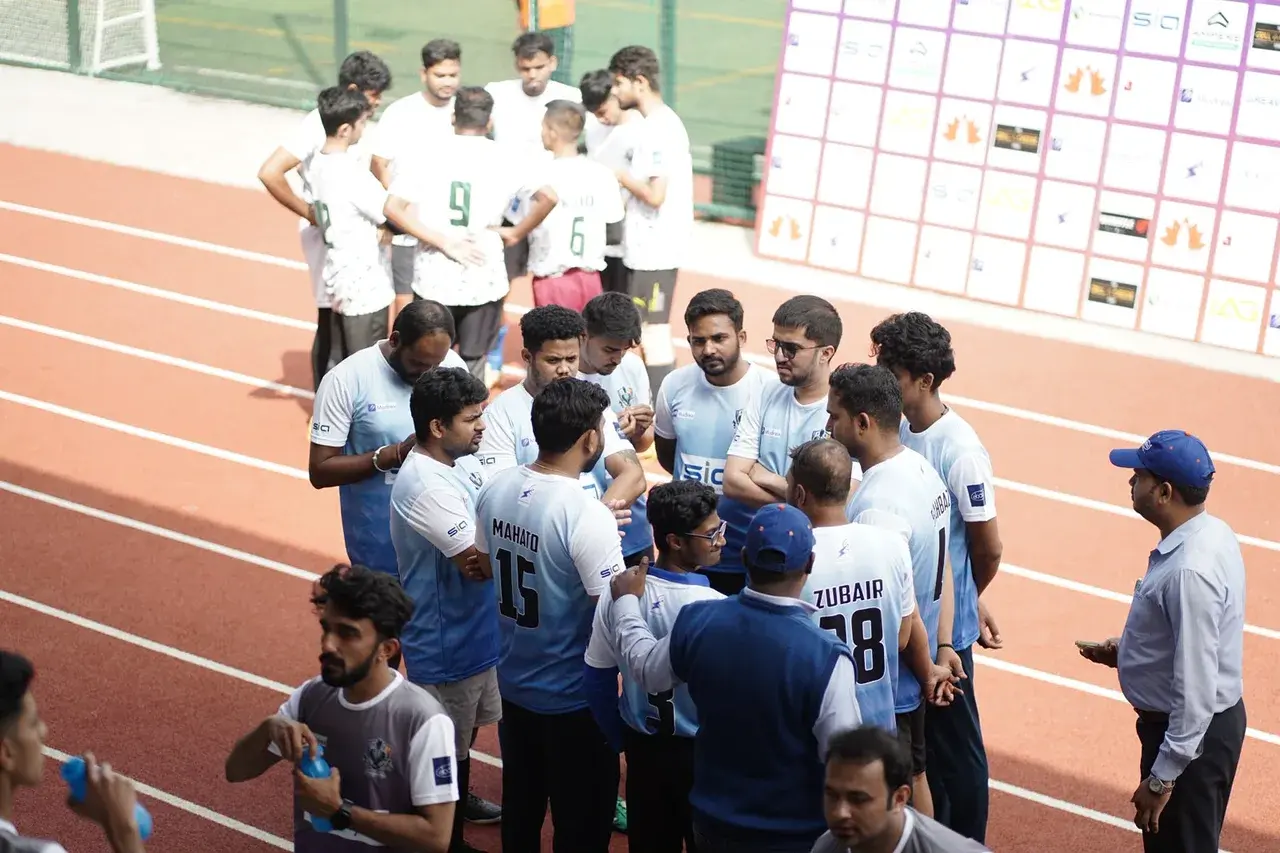
The game ends. What changed?Choose a perspective. Follow it through time.
The person / T2 · Just after competition
The game ends. What changed?
Repeated questions help observe the response to competing, including fatigue and disappointment.
- Energy & fatigue
- Affect & confidence
Explore the proposed study; no results shown. Illustrative questions, not assessments of people pictured. Work functioning is self-reported, not objective productivity.
Exploring how competitive corporate sport shapes human becoming—and what it could mean for wellbeing, collaboration and productivity.
Follow what we’re studying—from the playing field to the working day.
Study in preparation 14–28 November 2026
sporting participants
corporate teams
sports
One playing field.
Many human journeys.
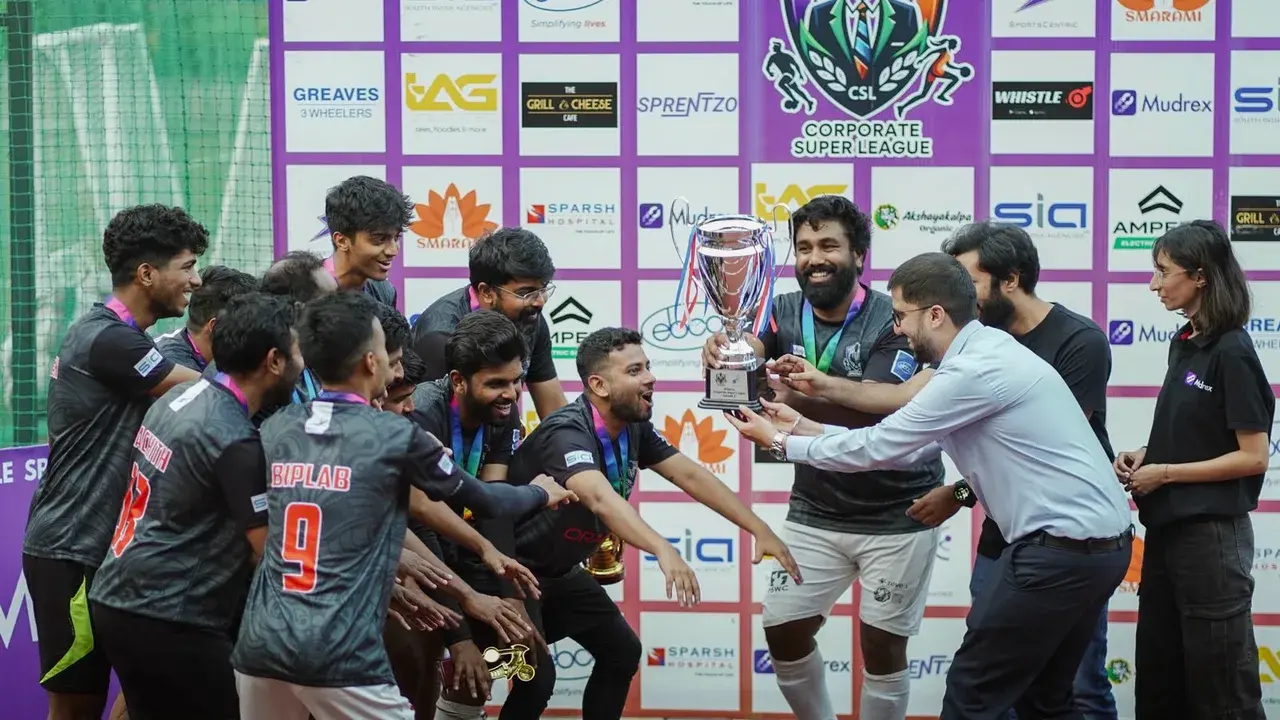
Partnership-supplied photography shows corporate sport event context, including Corporate Super League imagery; not ICO 2026 research participation, follow-up observations or results.
01 / Beyond the scoreboard
A manager becomes a defender.
A colleague becomes a teammate.
Work has its roles, routines and hierarchies. On a playing field, those relationships can shift. People prepare together, depend on one another, compete, win, lose and recover.
The body may be tired while belonging grows. Confidence may rise—or disappointment may follow. A conversation may carry into Monday. A new routine may continue, or quietly disappear.
What changes? Where does it appear? How long does it remain? That is what Internet of Value Research Foundation, in collaboration with Indian Corporate Olympics, proposes to study.
02 / What the evidence tells us
Promising signals.
Open questions.
Existing research gives us reasons to look closely. It does not give us a predetermined answer about competitive corporate sport.
United Kingdom
48employees
12 weeks · non-randomised study
Fitness and team communication can change together.
A workplace team-sport study reported improvements in estimated aerobic fitness and weekly physical activity, with a significant group-by-time effect for interpersonal team communication. [1]
Two worksites, a small sample and non-randomised groups. Most organisational outcomes did not significantly improve; several secondary outcomes were underpowered.
Norway
107female hospital employees
Cluster-randomised trial · 12 / 40 weeks
A physical benefit need not become a work benefit.
Workplace football and Zumba research found fitness benefits at 12 weeks. Related follow-up found improvements in neck–shoulder pain, without significant effects on work ability or perceived exertion at work. [2][3]
Repeated training in a specific occupational group differs from a short corporate tournament. These findings do not establish universal workplace effects.
Singapore
800employees
TRIPPA randomised trial · 6 / 12 months
An immediate change may not last.
In a workplace activity-tracker trial, cash incentives increased activity at six months. That effect was not sustained six months after the incentives ended. [4]
This was an activity-tracker and incentive study, not competitive sport. It helps explain why the ICO study needs follow-up rather than one post-event survey.
We are not setting out to prove that sport improves wellbeing.
We are setting out to observe what changes, what does not, and what lasts.
03 / Follow the transition
The final whistle
is not the final observation.
One participant. One primary sporting event. A series of short check-ins through preparation, competition, recovery and persistence.
Before the event
The change may begin before the whistle.
What has preparing to play already changed?
Training, sleep, food, recovery and time with teammates may start changing weeks before competition. Onboarding looks back at that preparation and establishes the participant’s context.
What we plan to observe
- Previous activity
- Preparation changes
- Team familiarity
- Broader wellbeing
5–7 minutesTarget check-in time · subject to piloting
Just before competition
How are you arriving?
What is your condition before you compete?
A short check-in captures energy, fatigue, positive affect, stress, confidence and connection to teammates, alongside sleep and physical readiness.
What we plan to observe
- Energy & fatigue
- Affect & stress
- Confidence & connection
- Sleep & readiness
About 2 minutesTarget check-in time · subject to piloting
Just after competition
The game is over. What moved?
What changed between walking in and walking out?
The same six state questions are repeated. Exertion, result, sporting satisfaction and discomfort help explain the immediate response—including disappointment and negative experiences.
What we plan to observe
- Repeated state questions
- Exertion & result
- Sporting experience
- Injury or discomfort
2–3 minutesTarget check-in time · subject to piloting
Approximately 72 hours later
Three days later. What stayed?
What survived the immediate response?
The study returns to physical recovery, sleep, mood and teammate connection, then asks whether anything has carried into conversations, relationships or the experience of work.
What we plan to observe
- Recovery & sleep
- Repeated state questions
- Social spillover
- Self-reported work functioning
About 3 minutesTarget check-in time · subject to piloting
Five to seven days later
A week later. What came home with you?
Which changes remain—and which have faded?
Another check-in follows the participant’s trajectory, preparation behaviours, relationships and reflections. A change that disappears is as important to understand as one that persists.
What we plan to observe
- Repeated state questions
- Behaviour continuation
- Relationships
- Reflection & work functioning
About 4 minutesTarget check-in time · subject to piloting
Optional · 21–30 days later
Does it become part of everyday life?
What continues beyond the event?
An optional extended follow-up, with separate permission, would explore continued activity, preparation behaviours, relationships and broader wellbeing over a longer interval.
What we plan to observe
- Continued activity
- Preparation behaviours
- Relationships
- Broader wellbeing
3–4 minutesTarget check-in time · subject to piloting
Research note Preparation changes are recalled by participants; they are not measurements taken before preparation began.
Planned event field period: 14–28 November 2026. Follow-ups extend beyond the final event weekend, into December for later participants. Questionnaires and timings remain subject to final methodological review and piloting.
04 / The whole experience
More than one
number can tell us.
We will look across six dimensions of experience. They can move differently; the research should preserve those differences.
Physiology
What happens in the body?
Energy, fatigue, exertion, sleep and recovery; optional wearable signals.
Emotions
What rises and falls?
Positive affect, stress, excitement and the immediate response to competition.
Feelings
What does the experience mean?
Confidence, belonging, connection and the experience of inclusion or exclusion.
Thoughts
What do we see differently?
Reflection, self-perception and changed perspectives on teammates or colleagues.
Behaviours
What do we keep doing?
Preparation routines and whether exercise, sleep or recovery changes continue.
Performance
What travels back to work?
Exploratory self-reported work functioning: energy, focus, motivation and collaboration; alongside sporting satisfaction.
An optional layer
A wearable can add context.
Participants may choose to contribute selected heart-rate, sleep or activity information. Device, metric, unit and timing matter. Proprietary readiness and recovery scores will remain distinct rather than being merged into a single wellbeing score.
05 / Built around the participant
Your experience.
Your choice to share it.
The proposed study is voluntary and designed to keep research participation separate from employment. Final participant information and consent will be available before enrolment opens.
Ask about the researchAn enquiry is not study enrolment.
Who is the proposed study for?
Adults aged 18 or over who participate in Indian Corporate Olympics 2026 and voluntarily choose to contribute repeated research observations. Owning a wearable is not required.
Is participation open yet?
The study is in preparation. Final participant information, consent and secure survey access will be provided before enrolment opens. Research enquiries through this website do not enrol you in the study.
Will my employer or ICO see my individual responses?
The study design does not provide employers or ICO with participant-level wellbeing responses. Proposed reporting is aggregated, with safeguards for small groups. Contact details for follow-up are to be held separately from research responses; final arrangements will be explained before consent.
Do I need to share wearable data or a public story?
No. Wearable information is optional. Permission for extended follow-up, story contact, public quotes or identifiable images is separate from research participation.
Can I stop participating?
Participation is voluntary. The participant information and final consent process will explain how to stop follow-up, withdraw from research and request deletion, including any limits once data have been anonymised or aggregated.
Will this prove that sport improves productivity?
No. The proposed study is observational, with self-selected participants and no randomised control group. It can examine reported changes and associations. It cannot, on its own, establish that sport caused a productivity improvement or validate a complete wellbeing model.
The question we take into the field
If the scoreboard only showed
wins and losses,
what would it miss?
Indian Corporate Olympics creates the playing field.
Internet of Value Research Foundation studies the human journey through it.
Evidence & methods
Research behind the question
These studies inform the research question. They are not results from ICO 2026.
- [1]
Brinkley et al. · 2017 · Sports Medicine – Open
It’s Time to Start Changing the Game: A 12-Week Workplace Team Sport Intervention Study - [2]
Barene et al. · 2014 · Scandinavian Journal of Medicine & Science in Sports
Do soccer and Zumba exercise improve fitness and indicators of health among female hospital employees? A 12-week RCT - [3]
Barene, Krustrup & Holtermann · 2014 · PLOS ONE
Effects of the Workplace Health Promotion Activities Soccer and Zumba on Muscle Pain, Work Ability and Perceived Physical Exertion among Female Hospital Employees - [4]
Finkelstein et al. · 2016 · The Lancet Diabetes & Endocrinology
Effectiveness of activity trackers with and without incentives to increase physical activity (TRIPPA): a randomised controlled trial
Prospective longitudinal observational field study. Participants self-select; there is no randomised control group. Recall, repeated self-report, different sporting exposures and follow-up attrition limit interpretation. Work-functioning measures are exploratory. The study does not establish causal productivity gains, lasting habit formation or scientific validation of a complete wellbeing model.
Study concept and measurement plan: v0.1 · Updated 9 October 2026