The complete essay · Continuous reading
Kerala’s Time Bank: What Will Make an Hour Count?
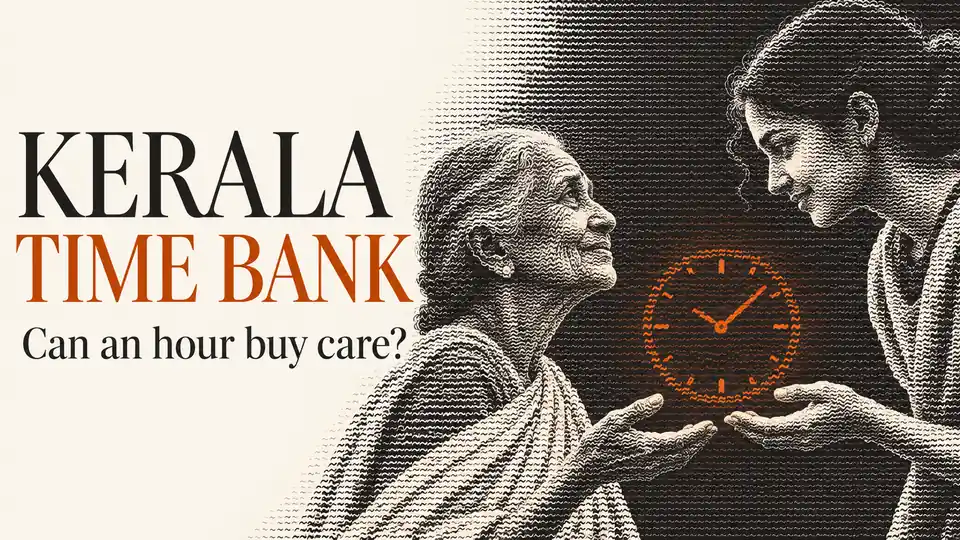
The argument in a minute
A time credit records help given.
The programme must still organise help needed later.
- Preserve reciprocal care and deliberately chosen equal-hour recognition.
- Make the credit’s promise explicit.
- Evaluate whether requests receive suitable help.
- Test whether additional recordkeeping improves accountability enough to justify its burden.
An editorial argument and proposed evaluation, not a finding that Kerala’s pilot has failed.
Where things stand
Elikulam’s local pilot was reported in October 2025. The later statewide programme remains a proposal in the latest reporting reviewed here, with detailed guidelines not yet finalised. The official August 2026 notice invited a feasibility study; it is not a statewide launch sanction. [K2] [K4] [K6]
1. The promise inside the hour
In In Time, the 2011 science-fiction film starring Justin Timberlake and Amanda Seyfried, remaining lifespan becomes currency. The wealthy can accumulate years; others struggle to obtain enough hours to stay alive. The premise makes a familiar phrase—time is money—uncomfortably literal. [S1]
Kerala’s time-bank proposal is a different arrangement: service hours and future assistance, not a countdown to death. The film is useful here as a question, not an equivalence. When we put time into an account, what exactly does the balance give its holder?
The answer has to leave the screen and enter an ordinary day: someone needs a lift, a meal or company. Another person agrees to help. The clock can record an hour. The programme must organise the relationship around it.
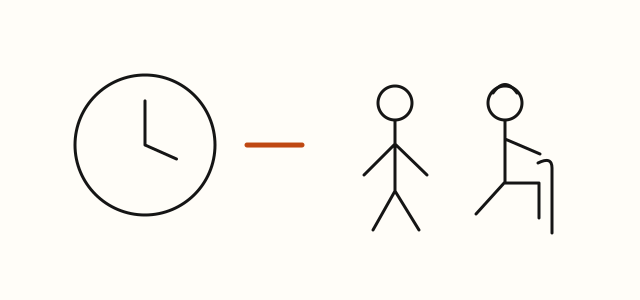
An hour of help today. Someone there for you tomorrow.
I understand why that promise travels. It makes a future need feel less solitary. It invites us to participate in care, including the care we may eventually need ourselves.
But the second half asks more of a programme than the first. Who will be there? What help can they offer? Who takes responsibility when nobody is available?
A time credit records help given. The programme must still organise the help needed later.
That is the question this essay follows: how can a recorded hour become dependable support? The answer involves people, operating rules and evidence, as well as software.
How this essay was researched
I have not visited the pilot, interviewed participants or audited service logs. This is a review of official documents, attributed reporting, published research and my own recorded Foundation contribution. Proposed safeguards and evaluation choices are my recommendations, not findings that Kerala has omitted them.
2. What time banking asks us to see
Time banking begins with a deliberately simple recognition rule.
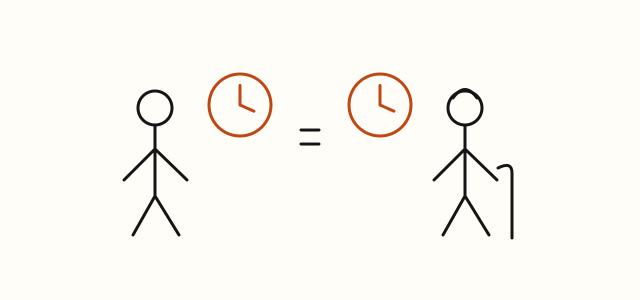
Timebanking UK explains its model as one time credit for an hour of help, regardless of the service. Credits can be used to receive help through the network. This is a documented model, not a claim that every time bank or Kerala’s eventual rules must work identically. [T1]
I read the equal-hour rule as a deliberate recognition principle. It declines to make a neighbour’s contribution count less merely because their skill commands a lower commercial rate.
That does not require us to believe all tasks have identical difficulty, risk or quality. Those questions can be handled through eligibility, training, matching and review while preserving an equal-hour credit rule. Whether that is the right arrangement for a particular service is a governance choice worth making explicitly.
Kerala has an older story with a different emphasis. In the Mahabali legend associated with Onam, the remembered kingdom is one of equal treatment and prosperity. Kerala Tourism describes a ruler beloved for treating his subjects equally. This is folklore, not a history of time banking or a claim about its origins. [S2]
For me, its useful question is about the kind of community we hope to sustain: can people count on belonging and help, including when they have little to exchange? That is an ethical question for the programme, not an outcome the legend can establish.
The strongest part of the idea, for me, is its invitation to be a contributor as well as a recipient. A useful programme should make room for what an older person wants to offer, without treating an inability to contribute as a reason to withhold help.
I would test that promise through ordinary questions: could someone ask for help, refuse an unsuitable match and feel respected? Would they participate again? These are proposed evaluation questions, not reported pilot outcomes.
3. Before the app, there was a local problem
Before the launch headlines, local bodies had identified a problem: older residents needed support with health, wellbeing, finances and social connections. [K1]
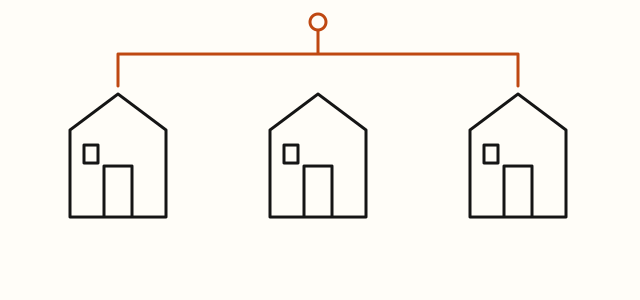
K-DISC’s Expression of Interest, reference 572/2023 dated 20 June 2023, sought a startup partner to develop time-bank software under One Local Government One Idea, or OLOI. It names Elikkulam and Manarcad grama panchayats in Kottayam and Perumbavoor municipality in Ernakulam as having raised concerns about older residents’ health, wellbeing, finances and social connections. Its brief envisages service listings, requests, time-credit management, profiles, messaging and scheduling. [K1]
That sequence is worth paying attention to: local bodies articulate a problem; a public innovation programme looks for a response; K-DISC seeks a software partner as part of that response. The useful starting question is what support people need.
There is a gap in the trail. The 2023 document is an invitation, not an award notice. Later reporting attributes the pilot website to students at Government Engineering College, Wayanad, working with an alumnus. I did not locate documentation connecting a winning bid from the earlier invitation to that student-built platform. We should not turn those separate facts into a completed procurement history. [K1][K3]
I would like the eventual public account to include that missing bridge: who built what, who maintained it, who paid for coordination, and what changed between the original brief and the local trial. Those questions remain open in the documentary trail reviewed here.
4. What the pilot was reported to do
The October 2025 launch report describes a website coordinating everyday assistance, including transport, cooking, shopping, cleaning and companionship. It says volunteers would record service hours and view them through their accounts; expansion was contingent on the pilot. These are reported features and plans at that date, not independently checked usage figures. [K2]
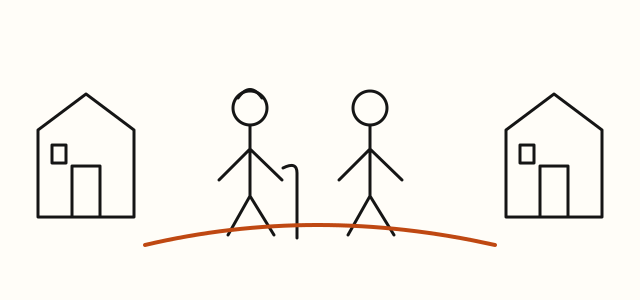
Onmanorama’s November 2025 account adds the local organisation behind the website: K-DISC, Alive Foundation, the panchayat, police, an auto-taxi union and a senior citizens’ collective. Its reported service journey is shown below. A one-time password (OTP) marks the start and end of assistance. It describes basic assistance rather than medical support, and says the panchayat would decide noncash incentives. [K3]
Reported pilot process
- 01
Register
Participants register; volunteers undergo police verification.
- 02
Request & match
A request reaches nearby volunteers using service and location preferences.
- 03
Accept & assist
A volunteer may accept or refuse.
- 04
Record & review
OTP start/end timing, credited hours and two-way feedback.
What if no suitable volunteer accepts?
Proposed evaluation question: retain the unsuccessful request and its reason. The reviewed reporting does not establish how this branch performs.
That is enough to describe the intended service journey. It is not enough to assess how reliably the journey was completed.
I did not find an independently accessible evaluation in the reviewed sources reporting completed exchanges, unsuccessful requests, waiting times, credit redemptions or participant outcomes. That is a limit of this research, not proof the programme has no internal data.
A launch report tells us an experiment has begun. A working-service assessment needs to follow people through it: the person who got help, the person whose request went unanswered, and the volunteer who eventually tried to use the credit.
5. A pilot is not a statewide rollout
The documentary trail distinguishes a reported local trial from a proposed wider programme. These milestones do not establish a completed statewide rollout.
- 20 June 2023
Software invitation
K-DISC EOI
Official document [K1] - 30 October 2025
Local pilot reported
Elikulam, Kottayam
Launch reporting [K2] - 22 August 2026
Feasibility invitation
Statewide study EOI
Official notice [K4] - 9 November 2026
Expansion proposed
Guidelines still pending
Dated reporting [K6]
Kerala I&PRD’s Malayalam notice of 22 August 2026, PNX 3377/2026, announces a Social Justice Department invitation to academic and research institutions to study the feasibility of implementing a statewide time-bank scheme. It describes digitally recording young people’s service to senior citizens and issuing time credits. The submission deadline was 10 September 2026. This is my English paraphrase of the notice. [K4]
The New Indian Express’s 9 November 2026 account, attributed to the director of the department of senior citizens, describes proposed future redemption and family transfer. Student grace marks and travel or fuel coupons were options being explored. It says guidelines were not yet finalised and initial implementation would be piloted in selected districts or local bodies. Those possible benefits are not entitlements established by this article. [K6]
What remains unverified in the official trail?
The indexed listing identifies SJD/3330/2026-G5 as a feasibility-study EOI; the signed attachment was not retrieved. A final statewide implementation order was not located in the reviewed sources. Nor was a formal administrative handover between the earlier pilot and later proposal established. These are limits of this research, not proof that the documents or arrangements do not exist. [K5]
6. Where the promise becomes difficult
An OTP can help a system confirm an interaction and record its duration. It cannot, by itself, establish whether the assistance was safe, welcome or useful. That distinction follows from the reported timing mechanism; it is not an allegation that the pilot ignores quality. [K2][K3]

I would want the operating rules to answer five questions before treating a balance as dependable future support.
Useful help: what did the hour accomplish?
Michael Ende’s Momo, first published in 1973, offers another lens. Its young protagonist has a gift for listening; the grey gentlemen pursue people’s lifetime. The story makes room for a question that a stopwatch cannot settle: what makes time with another person valuable? [S3]
That is a literary connection, not a comparison between Kerala’s organisers and the story’s antagonists. It is especially useful when thinking about companionship.
A slow task may consume more hours than an efficient one. Companionship, meanwhile, cannot sensibly be judged only by speed. The response needs service-specific judgement; a universal productivity multiplier would simply hide another policy choice.
Safe matching: who can do what?
A completed visit is not a qualification to perform clinical work. I would want clear boundaries, training where needed, escalation routes and a way to report harm without bargaining over a rating.
Accessible participation: who can ask for help?
I would look for assisted registration and requests, accessible communication, and a way to correct records. These are questions about inclusion, not findings that Kerala has failed to provide it.
Redemption: what does the credit promise?
Is a credit a request priority, a reciprocal expectation, a transferable unit or an enforceable service commitment? Who decides eligible uses, expiry, portability and complaints? The published proposal leaves detailed rules still to be formalised. [K6]
Continuity: who answers tomorrow?
Volunteers can move away, needs can change, and the people running a programme can change. A design that invites long-term reliance should explain continuity and what happens when the service cannot meet a request.
An account balance can look more certain than the future service behind it.
These are operating questions to resolve and test, not evidence that an hour-based system must fail.
7. What existing research can—and cannot—settle
A 2020 systematic review by Lee and colleagues found positive signals concerning health and social capital across community-exchange and time-currency studies, but judged overall study quality low, with few objective health or wellbeing measures and no reported costs. Its conclusion calls for stronger evaluation. This supports taking the social potential seriously while resisting confident causal or economic claims. It is not an evaluation of Kerala. [R1]

Naughton-Doe, Cameron and Carpenter’s study of six time banks in England, published online in 2020 and in a 2021 journal issue, found small numbers of person-to-person exchanges and significant implementation challenges, including safeguarding, administration and resources. Some sites had moved away from that exchange model. Those findings identify questions worth testing locally; they do not establish that Elikulam has the same problems. [R2]
For Kerala, registrations would be a starting measure. The evaluation should follow a request through to help—or a documented reason it was not fulfilled.
The useful questions are concrete:
- How many eligible requests received help?
- How long did people wait, and why did matches fail?
- Could people report concerns safely?
- What did coordination cost?
- What happened when someone requested help using a credit?
Participant accounts belong alongside those measures. A credit ledger alone cannot tell us whether a relationship was wanted, whether someone felt respected, or whether the person helping became overextended.
8. Three hours from my own record
If I ask Kerala’s scheme to distinguish a record from an outcome, I should do the same with our work.
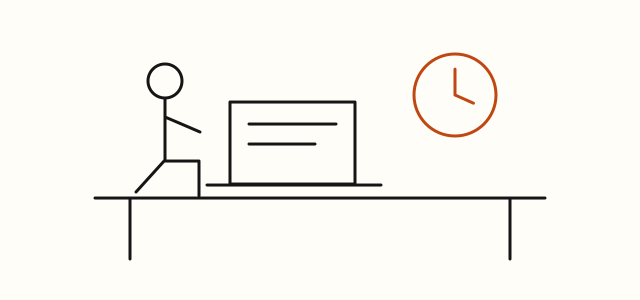
On 31 July 2026, 09:30–12:30 IST, I recorded a three-hour Foundation session concerning value mathematics and calculation infrastructure. The underlying export is private; the public comparison provides my transcription, calculation inputs and limitations. It is author-provided evidence, not independent verification. [F1][F2]
One recorded contribution · two separate rule sets
31 July 2026 · 09:30–12:30 IST · 3 hours
3 time credits
Only if a time bank accepted all three hours as eligible service. No credits were issued for this event.
USD 2,250 Vcom
3 hours at a self-ratified USD 750/hour reference rate.
Wellbeing-weighted output: USD 1,734.97, rounded for reading.
These are separate interpretations, not an exchange rate. The founder output is non-payable; the exact maths and evidence limits follow. [F1] [F2] [T1]
Under the Timebanking UK rule, if an eligible time bank accepted the whole session as service, the arithmetic would be:
No time bank accepted this event in the evidence presented. This is a conditional comparison, not my balance and not a statement that Kerala would accept Foundation research. [T1][F1]
My founder implementation instead applies a self-ratified USD 750/hour reference rate:
That amount is the recorded Value for the Commons valuation under the named policy. It is not an observed market price. The same implementation uses a separate wellbeing-weighted output, with twelve-decimal half-even rounding at each governed step: [F1][F2][P5]
Reproduce the exact calculation and rounding
q = round12(Wbefore / 1000) = 0.771095689848
VCperformance = round12(q × 2250)
VCperformance = 1734.965302158000 USD
Wafter = 771.095689848427
ΔW = 0
The historical ~~~WellbeingScore input is shown so the calculation can be reproduced. My public ~WellbeingIdentity is the place to consult any current owner-published reading; it should not replace the July input. [F2][P4]
For fixed positive Vcom, a lower starting W produces a lower VCperformance. It does not lower Vcom. The multiplier does not measure the session’s change in wellbeing. The stored score is unchanged; that does not establish that I experienced no benefit or cost. It cannot establish that the work was more useful, that I deserved less pay, or that the session changed my wellbeing. Those conclusions do not follow from this equation. [F1][F2]
What this case does—and does not—establish
- The contribution is author-recorded and founder self-reviewed.
- There is no linked proof artifact in the selected record.
- The reference rate was self-ratified after the session.
- The calculated output is non-payable.
- No time bank issued the conditional credits shown here.
The calculation can be reproduced. That does not independently establish work quality, demand, the legitimacy of the rate or the empirical validity of the wellbeing model. [F1][F2]
That is why I would not propose importing my rate or W multiplier into Kerala’s credit rule. A person’s lower wellbeing should not, in my view, reduce an otherwise eligible time credit or their access to help. That is my design recommendation, not a claim about Kerala’s settled policy.
9. What The Internet of Value could contribute
Could a programme explain what happened, how it was experienced, who accepted the record and what was actually promised? That is the practical question I would bring to a possible collaboration.

The Internet of Value separates activity recording, human context, eligible community recognition and living personal state across four protocols. Community mathematics and authority remain community-governed. [P1][P2][P3][P4][P5]
- 01 · Record
What happened?
Time, service, participants, appropriate evidence.
- 02 · Recognition
What was accepted?
A named authority applies a declared rule.
- 03 · Future help
What is promised?
Eligibility, availability and redemption terms.
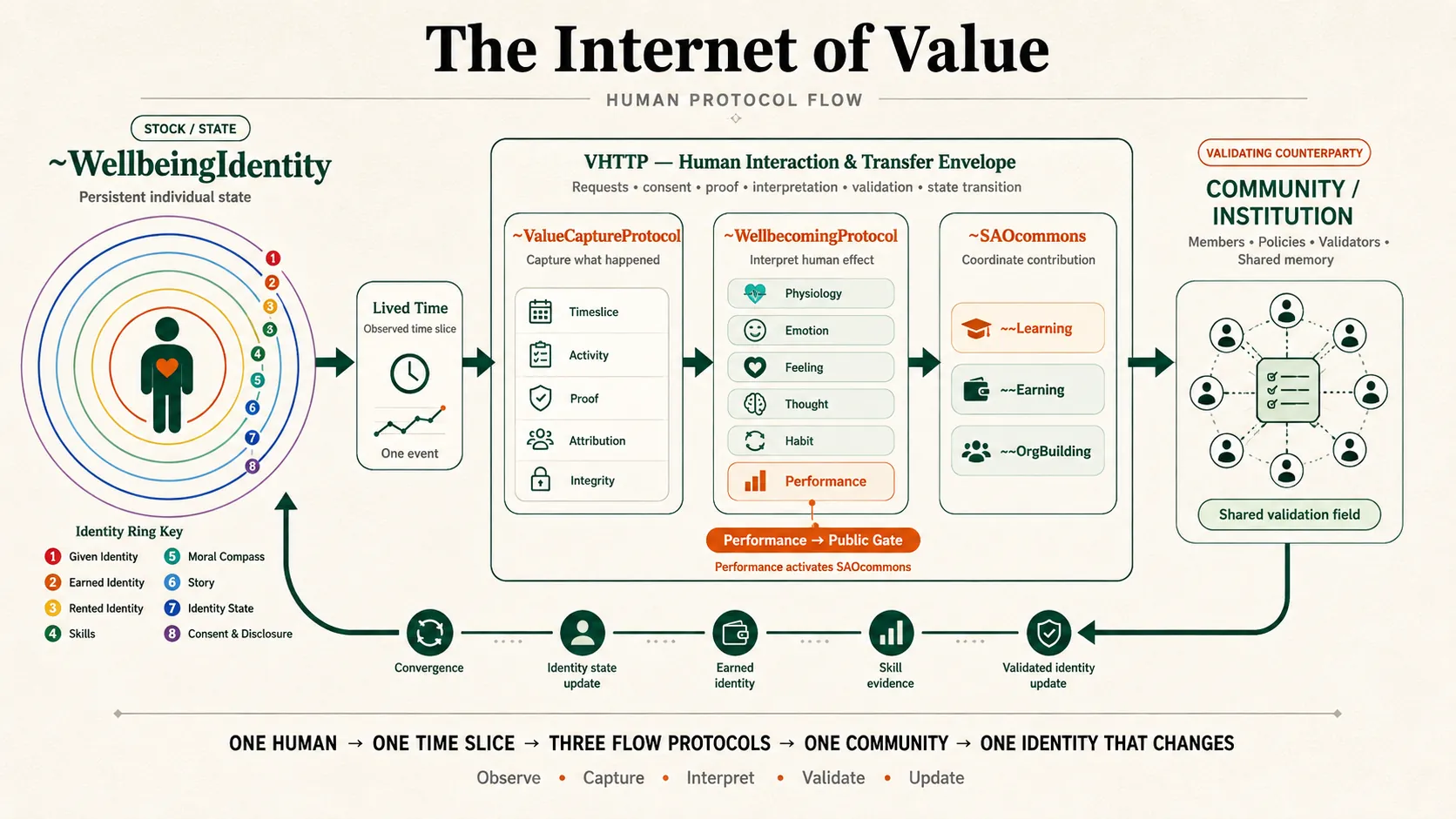
Here is the application I would explore with a programme willing to investigate it. It is a proposed mapping, not an existing Kerala integration or a claim of adoption.
Record the occurrence
With ~ValueCaptureProtocol, I would ask whether each service occurrence could retain a bounded time window, actor, beneficiary, appropriate evidence and a common ~~~~ProtocolLinkId. That identifier would let later interpretations refer to the same occurrence, rather than count it as new hours. The spec defines the recording structure; deciding sufficient evidence for a care interaction remains local work. [P1]
Ask about the experience
With ~WellbecomingProtocol, I would explore consented accounts of the experience alongside the service record. Was the interaction welcome? Did the helper feel overextended? Those are proposed questions, not a validated care questionnaire or outcomes implied by a timestamp. Any resulting personal context would need careful disclosure boundaries. [P2][P4]
Review eligible recognition
Where there is an eligible nonzero ~~Performance output, ~SAOcommons provides an interface for community review and recognition. That conditional gateway does not make every act of care an earning event. A programme would still need to establish its own authority, eligible evidence, review process and disputes. [P2][P3]
Control personal disclosure
~WellbeingIdentity carries living state with consent and disclosure controls. I would not use it as a public ranking of recipients or as a compulsory gateway to support. A programme should ask for the minimum relevant disclosure, with a practical route for people who do not choose to publish a profile. The consent architecture supports scoped disclosure; this access policy is my recommendation. [P4]
The useful experiment would keep three things visibly separate: the service that was recorded, the recognition a community granted, and any future assistance its rules actually promise. The protocol system could help structure that evidence. A time-bank agreement would still have to define the credit and redemption terms.
None of this supplies missing volunteers, funds a coordinator, guarantees clinical competence or creates a legally enforceable promise by calculation. It also adds work. I would only advocate an integration if testing showed that its accountability benefits justified the burden on participants and administrators.
10. The pilot I would want to learn from
I would start with one bounded service category and a small, consented evaluation, rather than requiring everyone to record their entire day or disclose a score.
Before collecting records, I would ask the programme to publish a plain-language service agreement: what qualifies, what the credit means, what happens when help is unavailable, who reviews disputes and who is responsible for safeguarding.
No interface should promise more than that agreement can support.
Proposed evaluation · no Kerala results entered
| Question | Evidence to examine |
|---|---|
| Did requests receive help? | Eligible requests, fulfilment, waiting times and reasons for non-fulfilment. |
| Could credits be used? | Eligible redemption requests and the service response under declared rules. |
| Was the help suitable? | Safety concerns, usefulness, refusals and willingness to participate again. |
| What did it take to run? | Coordination costs, participant effort, withdrawals and dispute resolution. |
The request-to-help journey supplies one proposed measure, not a reported Kerala result:
The reporting period, eligibility rules and treatment of cancellations would have to be declared. If there were no eligible requests, the rate would be undefined, not zero or one hundred percent. I would also report waiting times and reasons for non-fulfilment; a single average can conceal which services or locations are poorly supported.
Redemption deserves its own measure, under a published definition of an eligible redemption request. It should not be inferred from credits issued. Nor should an unsuccessful request disappear simply because no volunteer accepted it.
Alongside that, I would ask separately about safety, usefulness, willingness to participate again, and the effort required to operate the system. I would include people whose requests failed and people who withdrew. Those are proposed evaluation choices, not data we currently have.
If The Internet of Value participated, our part would face the same test. Did linked records make decisions easier to explain and correct? Did people understand what was being shared? Could they dispute an interpretation? Did the extra recording reduce or increase the burden of asking for help?
A successful result could be modest: clearer service boundaries, fewer ambiguous records, a better complaints route. It would not need to demonstrate that we had discovered the universal price of care.
11. What I would keep—and what I would ask next
What I would keep:

- The invitation to reciprocity.
- Equal-hour recognition where the community deliberately chooses it.
- Neighbourly help that does not require every interaction to become a cash transaction.
I would ask for clearer terms around the future promise, and evidence that follows a request all the way to assistance or a documented refusal. I would also ask the same of our own system: show the authority behind a valuation, the evidence behind a recognition and the limits of the number.
The difference I can defend is that The Internet of Value offers a protocol structure for keeping activity, context, community judgement and identity linked but distinct. The Foundation example shows one versioned calculation inside that structure; it does not prove a superior care outcome. [P1][P2][P3][P4][F1][F2]
Kerala’s experiment is worth examining on its own terms. Our first contribution should be a better question and a testable proposal, not a claim that another system is waiting for our formula.
An invitation to examine one service journey
I would welcome a working conversation with the programme team to examine one service category: its rules, a consented sample of records and the points where requests succeed or stop. We could then decide together whether a bounded evaluation is useful.
The scope would need to establish:
- A local programme lead and the service category to examine.
- Participant consent, minimum necessary records and access controls.
- Resources, duration and costs, agreed before any work begins.
- How to assess whether linked records improve explanation and correction without adding unreasonable burden.
This is a proposed conversation, not an agreed Kerala partnership or a funded pilot. A public score or a full-day personal log should not be a condition for receiving help.
An hour today can begin a relationship.
Whether it becomes dependable help tomorrow is the work the programme still has to demonstrate.
Sources and methods
Official documents and dated reporting
[K1] K-DISC — Time Bank software Expression of Interest, ref. 572/2023, 20 June 2023, especially pp. 1, 3–4. Official procurement invitation; not a verified award or implementation report. The source spells the place Elikkulam; later news reports use Elikulam. Return to first citation ↑

[K2] The New Indian Express — Kerala set to roll out ‘Time Bank’ for elderly care; pilot from today, 30 October 2025. Attributed launch reporting; not an independent service audit. Return to first citation ↑
[K3] Swathi P Ajith, Onmanorama — Quality time with elders & earn credits, displayed publication 3 November 2025 (URL dated 2 November). Attributed pilot/process reporting. Its illustration is labelled AI-generated and is not used as field evidence here. Return to first citation ↑
[K4] Kerala I&PRD — ‘ടൈം ബാങ്ക്’ പദ്ധതി: താത്പര്യപത്രം ക്ഷണിച്ചു, 22 August 2026, PNX 3377/2026. Official feasibility-study invitation. English description above is an editorial paraphrase, not a certified translation. Direct retrieval timed out during research; the complete short notice was available in the search-indexed text. Return to first citation ↑
[K5] Kerala Social Justice Department — office-order listing, SJD/3330/2026-G5, 21 August 2026, listed as “TIME BANK- Feasibility study -EoI Invited”. Search-indexed listing inspected; underlying signed attachment not retrieved. The indexed listing was available at a duplicated-path version of the department URL. No final statewide implementation order was located in the sources reviewed. Return to first citation ↑
[K6] The New Indian Express — ‘Time Bank’ to reward elderly support in Keralam, 9 November 2026. Source for the later statewide proposal and unfinalised guidelines; options described as proposed or being explored remain qualified throughout. Return to first citation ↑
Time banking: the model
[T1] Timebanking UK — How timebanking works. Primary description of the equal-hour model used for the conditional calculation; not proof of Kerala’s final operating rules. Return to first citation ↑
Research evidence
[R1] Lee, Burgess, Kuhn, Cowan and Lafortune — Community exchange and time currencies: a systematic and in-depth thematic review of impact on public health outcomes, Public Health 180 (2020), 117–128. Author repository copy. Heterogeneous programmes; findings are not a Kerala impact estimate. Return to first citation ↑
[R2] Naughton-Doe, Cameron and Carpenter — Timebanking and the co-production of preventive social care with adults, Health & Social Care in the Community 29 (2021), 1285–1295; first published online 2020. Author repository copy. Six English case studies; not evidence about Kerala’s performance. Return to first citation ↑
The author-recorded Foundation case
[F1] Time banking vs The Internet of Value — published Foundation case and source note. The selected underlying export is private; author-provided transcription, founder self-review, no linked proof artifact. The rate was self-ratified after the event; the selected promoted replay was exported 7 November 2026. No advance buyer agreement or independent market valuation is established by these materials. Return to first citation ↑
[F2] Public selected-event calculation verification. Version founder-wellbeing-v0.1.1-fixed12. Exact arithmetic only; not independent validation of the activity, rate or wellbeing model. Non-payable output. Return to first citation ↑
Source of Truth (Specs)
[P1] ~ValueCaptureProtocol and canonical registry. Bounded activity, attribution, proof and lineage. Spec source inspected; a schema does not establish that submitted evidence is true. Return to first citation ↑
[P2] ~WellbecomingProtocol. Human-context structure and conditional nonzero ~~Performance gateway, not a validated Kerala care-outcome instrument. Return to first citation ↑
[P3] ~SAOcommons interface. Eligible community recognition and review interface; institutional authority must be established separately. Return to first citation ↑
[P4] ~WellbeingIdentity. Living state and consent/disclosure. My public identity controls which current personal details are visible; private history is not reproduced. Return to first citation ↑
[P5] Community-governed wellbeing mathematics and commons value, accepted 28 July 2026, amended 31 July 2026. Spec-level interoperability and community-owned mathematics are separate. Public website copy is explanatory, not protocol authority. Return to first citation ↑
Research scope: public documents, attributed reporting and the already published founder case, checked 14 November 2026. No participant interviews, unpublished operational logs, credit-redemption audit or completed statewide feasibility report were available to this research. Proposed evaluation and integration passages are the author’s recommendations. No Kerala partnership, deployment, clinical efficacy, guaranteed redemption or new personal measurement is claimed. AI-assisted editorial work, reviewed by the author.
Story references and their limits
[S1] Disney+ — In Time, official synopsis and credits. 2011; directed by Andrew Niccol, starring Justin Timberlake and Amanda Seyfried. Fictional lifespan currency is a narrative analogy, not Kerala’s proposed credit mechanism. No scene dialogue is quoted. Return to first citation ↑
[S2] Kerala Tourism — The Mahabali legend. Official tourism account of the Onam tradition; folklore, not historical proof or a Vedic origin for time banking. The connection to inclusion is the author’s interpretation. Return to first citation ↑
[S3] Michael Ende — Momo. Author’s official site: original publication 1973; listening protagonist and lifetime-stealing grey gentlemen. Based on this primary book description, not a claim to have newly reviewed the entire novel. Literary analogy, not programme evidence. Return to first citation ↑