The name, personal reflection and chosen sharing have precedents. Our proposal is to investigate a specific continuity and review problem in Dhun.
This curated reader preserves the evidence boundaries of the internal research. It is a targeted primary-source review, not a vendor ranking, exhaustive novelty search, hands-on test of every account, independent security audit or clinical efficacy assessment. “Not established” means not established by this research.
The case journeys
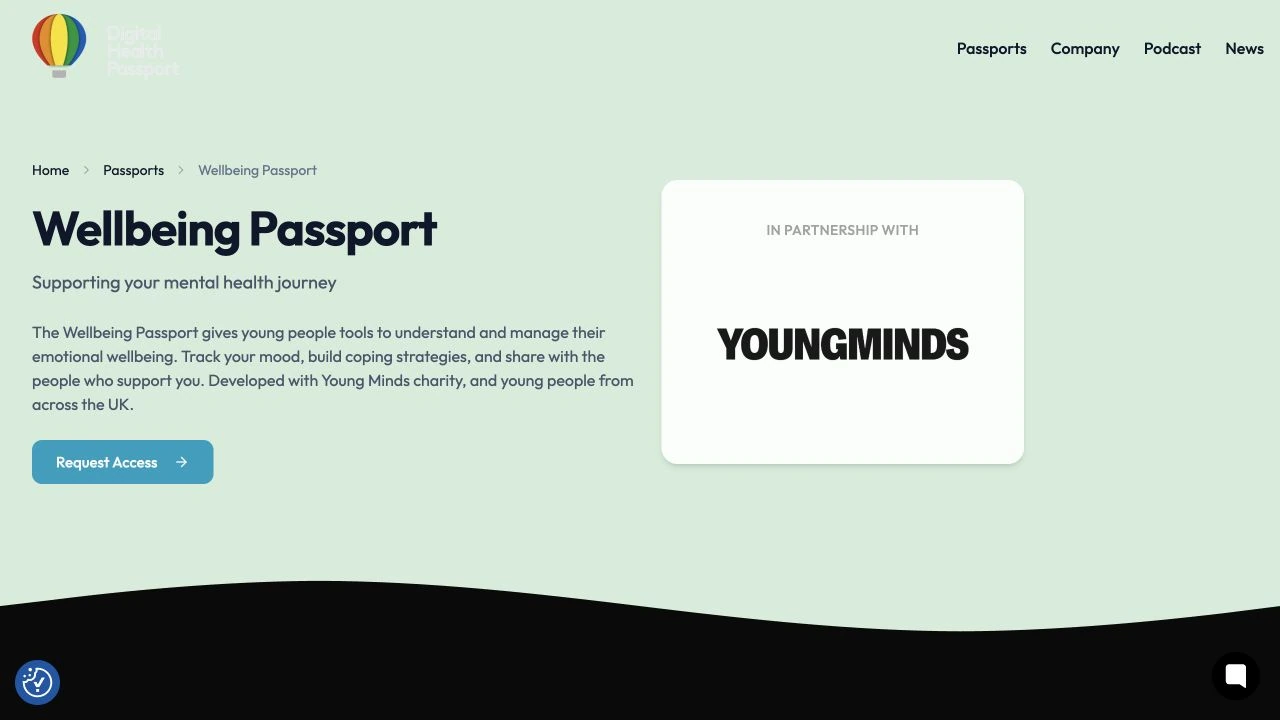
Tiny Medical Apps Wellbeing Passport
Direct wellbeing passport
Evidence: Documented; public page observed; access requested by provider
User journey reconstructed from primary material
- Create a personal passport.
- Check in, journal or add helpful strategies.
- Read progress insights.
- Choose material for a support conversation.
- Continue daily check-ins.
Documented journey reconstructed from primary material; not a hands-on usability test
- Identity
- Personal health-support context; cross-community identity schema not established.
- Daily observation / journal
- Daily mood entries and private journaling documented.
- Score / interpretation
- Progress insights advertised; numerical composite method not established.
- Community / authority
- Support contacts and chosen sharing, rather than a documented review-issuer workflow.
- Portability
- Choose material to share; credential export format and recognition rules not established.
- Privacy evidence
- Published privacy notice inspected applies to websites; app data controls require confirmation.
- Visual evidence
- Public page observed; authenticated journaling and insights screens not tested.
Lesson for the proposal: Learn from the support-first story; verify the underlying application before asserting a scoring or identity gap.
Sources: Tiny Medical Apps: Wellbeing Passport · Tiny Medical Apps: Privacy policy
Mind.org.im Wellness Passports / Mindprint
Direct digital passport and reflection
Evidence: Indexed primary feature/policy text; direct retrieval partly limited
User journey reconstructed from primary material
- Enter the private personal workspace.
- Record context and before/after reflections.
- Read Mindprint patterns.
- Choose Passport sections and expiry; share the complete link.
- Continue reflection; revoke a link when appropriate.
Documented journey reconstructed from primary material; not a hands-on usability test
- Identity
- Account/profile and selected personal context.
- Daily observation / journal
- Contextual before/after reflections, journals and practice history.
- Score / interpretation
- Descriptive personal patterns; sample sizes and uncertainty documented.
- Community / authority
- Trusted circle and selected sharing; contribution-review authority not established.
- Portability
- Selected snapshots with expiring, revocable complete links.
- Privacy evidence
- Device-side encryption claimed; link holders can read and retain copies. No independent audit.
- Visual evidence
- Provider feature descriptions; authenticated workflow not tested.
Lesson for the proposal: Person control, reflection and selected sharing already overlap. Test the precise review/recognition need.
Sources: Mind.org.im / Cloud OI (Pty) Ltd: Wellness Passports · Mind.org.im / Cloud OI (Pty) Ltd: Privacy policy · Mind.org.im / Cloud OI (Pty) Ltd: Mindprint · Mind.org.im / Cloud OI (Pty) Ltd: Trusted circle
Connect & Support UK
Direct digital support passport
Evidence: Direct developer App Store listing
User journey reconstructed from primary material
- Open the personal tools.
- Use a journal or mood check-in.
- Read a mood summary.
- Export the support-context Passport or a combined summary.
- Return to the on-device record.
Documented journey reconstructed from primary material; not a hands-on usability test
- Identity
- Personal support introduction.
- Daily observation / journal
- On-device journals and mood check-ins.
- Score / interpretation
- Mood summaries; composite method not established.
- Community / authority
- Sharing with supporters; issuer review not established.
- Portability
- Export and combined summary documented.
- Privacy evidence
- Developer-declared on-device content; not audited.
- Visual evidence
- Developer listing, not hands-on app inspection.
Lesson for the proposal: A passport and daily reflection already coexist. Preserve simple personal use.
Sources: Play North West CIC / developer listing on Apple App Store: Connect & Support UK
Wellbeing Passport Australia
Workplace service-access passport
Evidence: Provider-described Hunter-region pilot
User journey reconstructed from primary material
- Employer funds access.
- Employee chooses a service.
- Provider supplies that service.
- Programme reports utilisation.
- Employee uses the network again.
Documented journey reconstructed from primary material; not a hands-on usability test
- Identity
- Employee/member context.
- Daily observation / journal
- Service bookings; daily journal not established.
- Score / interpretation
- Partner named; method not established.
- Community / authority
- Employer, employee and provider network.
- Portability
- Network access; credential transfer not established.
- Privacy evidence
- Record-level controls not established.
- Visual evidence
- Public page, not app tested.
Lesson for the proposal: Distinguish access, utilisation and reflection.
Sources: Wellbeing Passport Australia: Wellbeing Passport
Lancashire and south Cumbria Wellbeing Passport
Direct wellbeing passport
Evidence: Public booklet; partial visual and OCR inspection
User journey reconstructed from primary material
- Introduce the young person.
- Write relevant preferences and support context.
- Read the account together.
- Carry chosen context to supporters or services.
- Revisit the booklet as context changes.
Documented journey reconstructed from primary material; not a hands-on usability test
- Identity
- Preferred name, NHS number and birth-date fields in the public blank booklet.
- Daily observation / journal
- Personal/support context; a timestamped daily-log workflow is not established.
- Score / interpretation
- No numerical method established in inspected material.
- Community / authority
- Sharing information with supporters and services.
- Portability
- A person carries the booklet; sharing is a copy or presentation.
- Privacy evidence
- The person chooses what to write and show; paper copies have no remote recall.
- Visual evidence
- Booklet cover observed; blank PDF headings/fields examined with OCR, with recognition limits.
Lesson for the proposal: Keep assisted, low-effort ways to introduce oneself; avoid requiring complete self-disclosure.
Sources: Lancashire and south Cumbria programme: Wellbeing Passport · Lancashire and south Cumbria programme: Blank Wellbeing Passport booklet
NHS and QEH workplace passports
Workplace support records
Evidence: Primary indexed documentation; no interface test
User journey reconstructed from primary material
- Begin a support conversation.
- Record needs and agreed arrangements.
- Check the shared understanding.
- Carry context to a new manager or assignment.
- Review arrangements as needs change.
Documented journey reconstructed from primary material; not a hands-on usability test
- Identity
- Worker support needs and adjustments across management changes.
- Daily observation / journal
- Support conversations and agreed arrangements; daily diary not established in reviewed accounts.
- Score / interpretation
- A numerical wellbeing calculation is not established.
- Community / authority
- Employee and workplace support/management context.
- Portability
- Portable context between managers or assignments.
- Privacy evidence
- Voluntary support context is documented; technical app controls not established.
- Visual evidence
- Indexed primary descriptions; direct source pages returned 403.
Lesson for the proposal: An employee passport must improve support and continuity, not become a supervisor's wellbeing ranking.
Sources: NHS Employers: NHS health passport · NHS Employers / Sally Nederpel: A passport to better health and wellbeing
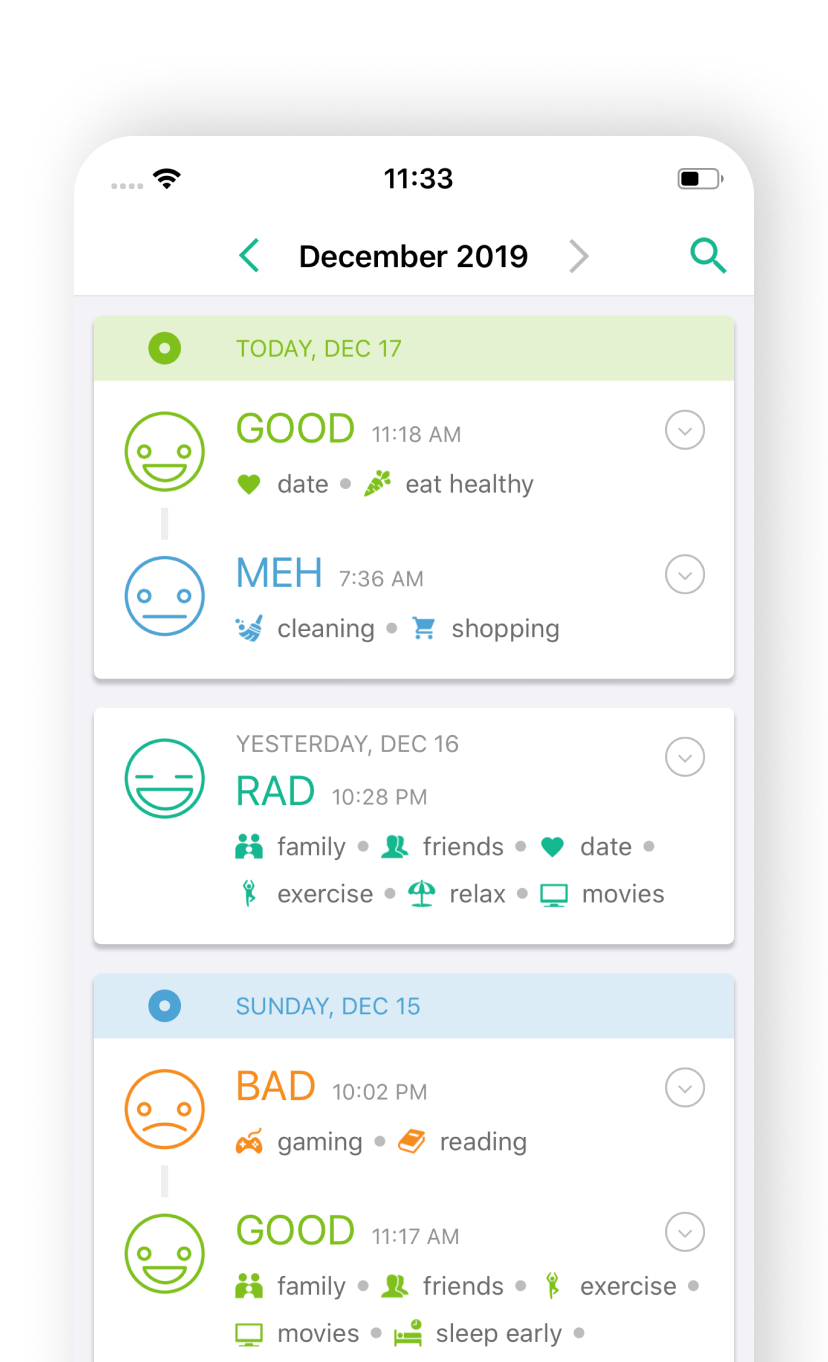
Daylio
Personal diary
Evidence: Primary product/help documentation
User journey reconstructed from primary material
- Open the diary.
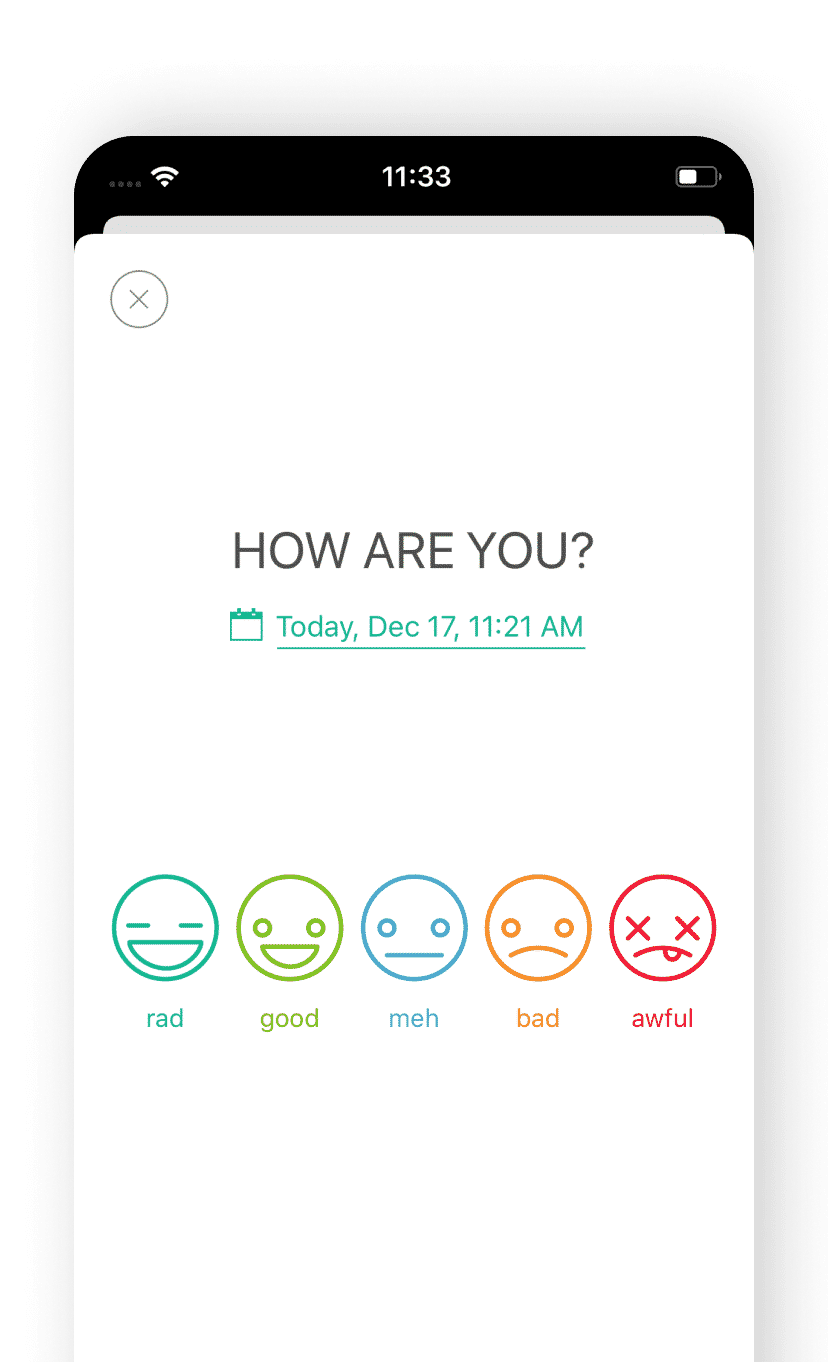
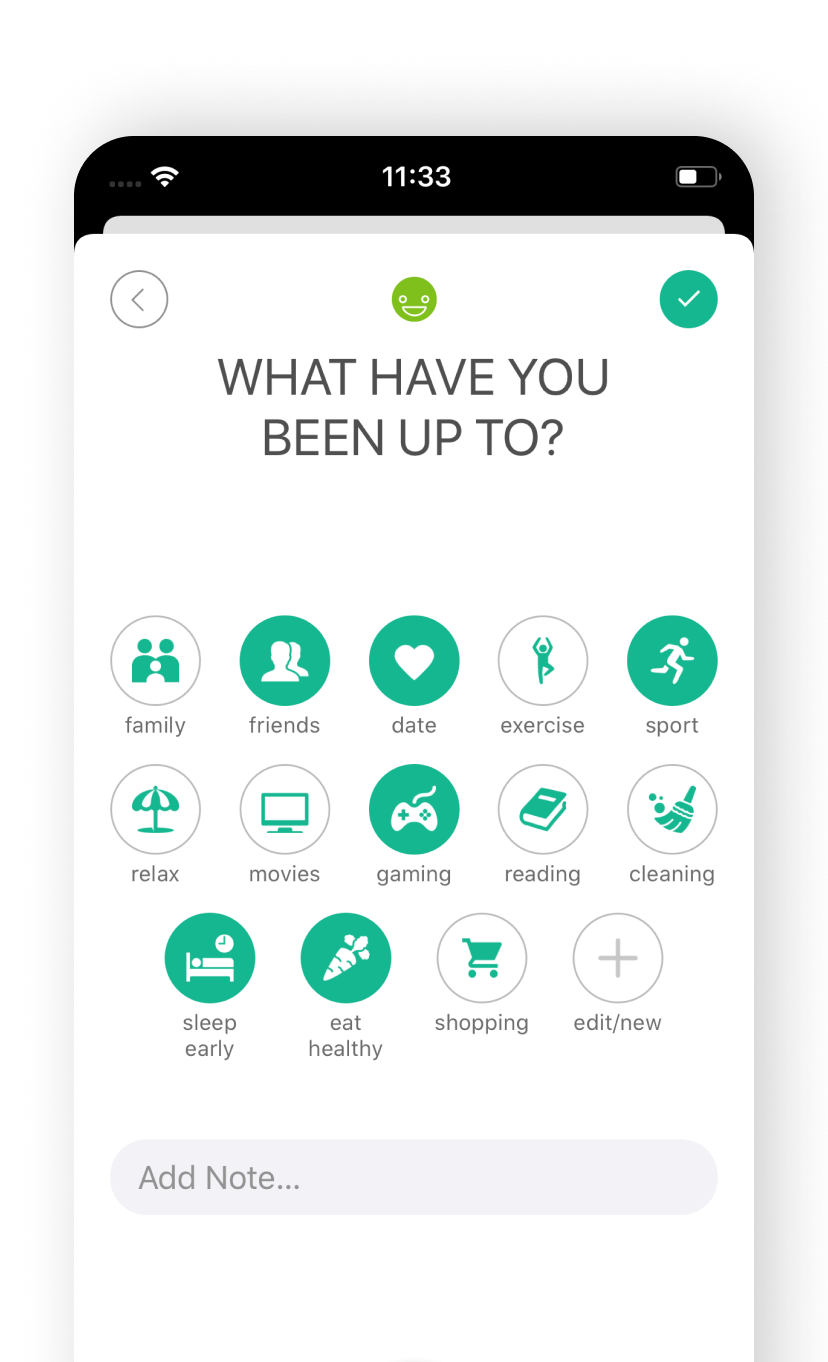
- Choose mood, activities and optional context.
- Browse entries and statistics.
- Export a document or chosen statistics.
- Return through the calendar or list.
Documented journey reconstructed from primary material; not a hands-on usability test
- Identity
- Private personal diary context; a portable credential identity is not established.
- Daily observation / journal
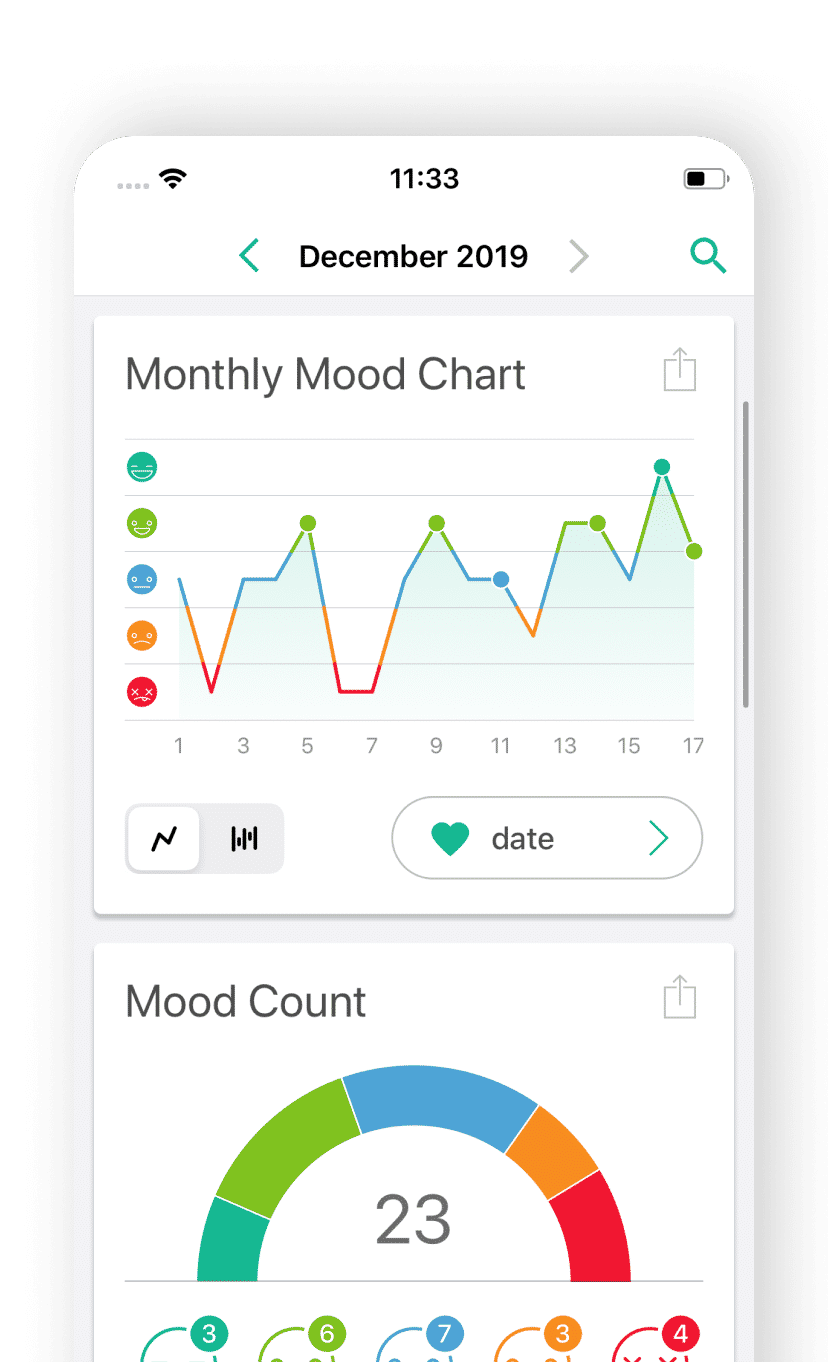
- Quick mood/activity entries; optional notes and media.
- Score / interpretation
- Mood-oriented statistics and correlations; six-component issuer policy not established.
- Community / authority
- Sharing output with others; scoped community attestation not established.
- Portability
- PDF/CSV export and manual backup transfer are documented.
- Privacy evidence
- Provider describes local storage and optional private cloud backups.
- Visual evidence
- Mood selector, list/calendar and Year in Pixels documented; logged-in testing not performed.
Lesson for the proposal: Low entry effort, familiar calendars and useful personal history are a strong benchmark.
Sources: Habitics / Daylio: Daylio · Daylio: Data security · Daylio: Can I use Daylio on multiple devices
Bearable
Personal health journal
Evidence: Detailed primary help; no account test
User journey reconstructed from primary material
- Choose recording categories.
- Log mood, symptoms and factors.
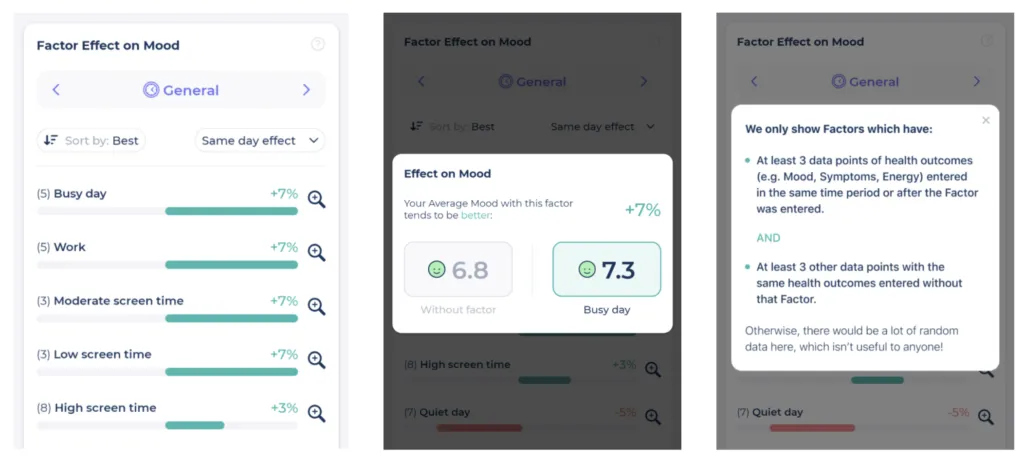
- Explore recorded associations in Insights.
- Filter and export relevant history.
- Return to a date or comparison window.
Documented journey reconstructed from primary material; not a hands-on usability test
- Identity
- Personal health context; cross-community credential anchor not established.
- Daily observation / journal
- Mood, symptoms, factors and notes with configurable sections.
- Score / interpretation
- Mood 1–10; symptom severity 0–4; aggregate symptom and factor reports.
- Community / authority
- Sharing selected information with a support/medical team; issuer review roles not established.
- Portability
- Timeline filtering and data export; health integrations currently read into Bearable.
- Privacy evidence
- Provider describes device-side encryption before cloud backup; not independently audited here.
- Visual evidence
- Timeline, trends and factor-comparison interfaces documented.
Lesson for the proposal: Contextual history and transparent association language matter; correlations cannot establish causal wellbeing effects.
Sources: Bearable: Configure and enter data · Bearable: The Factor Effect Report · Bearable: Sharing with a medical team · Bearable: Writing data to another app · Bearable: Can you see what I enter
Oura
Sensor-based personal scores
Evidence: Current primary help, including October 2026 updates
User journey reconstructed from primary material
- Set up membership and a ring.
- Sync signals and add optional tags.
- Read scores and contributors.
- Choose Circles scores or an export/report.
- Return to trends and past readings.
Documented journey reconstructed from primary material; not a hands-on usability test
- Identity
- Member profile; US health-record import includes identity verification for eligible users.
- Daily observation / journal
- Wearable signals plus tags; distinct from a full narrative time-slice ledger.
- Score / interpretation
- Daily 0–100 Readiness combines sleep, activity and physiological signals.
- Community / authority
- Circles selectively shares high-level scores with other members.
- Portability
- Reports, API and Membership Hub export documented.
- Privacy evidence
- Sharing choices vary by workflow; EHR context has separate inclusion controls.
- Visual evidence
- Score/contributor and trend grammar; Circles uses shared score bars.
Lesson for the proposal: Do not claim that other products lack identity, selective sharing or community; define our different review and recognition job.
Sources: Oura: Your Oura Readiness Score · Oura Member Care: Oura Circles · Oura Member Care: Export and share your Oura data · Oura Member Care: Importing electronic health records · Oura Member Care: Oura Membership
Unmind Wellbeing Tracker
Workplace assessment
Evidence: Provider material and original research; commercial configuration not tested
User journey reconstructed from primary material
- Enter the assessment.
- Respond to the instrument.
- Read domain results and explanations.
- Use relevant support.
- Return for another assessment.
Documented journey reconstructed from primary material; not a hands-on usability test
- Identity
- Employee assessment context; no portable issuer-recipient identity established in this review.
- Daily observation / journal
- Periodic self-report assessment; documentation also depicts a separate mood view.
- Score / interpretation
- Seven domains and an overall instrument; original psychometric studies exist.
- Community / authority
- Employee insights and aggregated employer reporting are described.
- Portability
- Cross-community signed-record format not established in reviewed material.
- Privacy evidence
- Individual and aggregate reporting have different audiences; exact deployment controls need vendor confirmation.
- Visual evidence
- Domain results, explanations and longitudinal change; provider specimen available.
Lesson for the proposal: Our provenance model is not a substitute for validating a measure in the intended population.
Sources: Unmind: Wellbeing Tracker key facts · Sierk and colleagues: Development and validation of the Unmind Index · Travers and colleagues: Validation in USA Australia and New Zealand
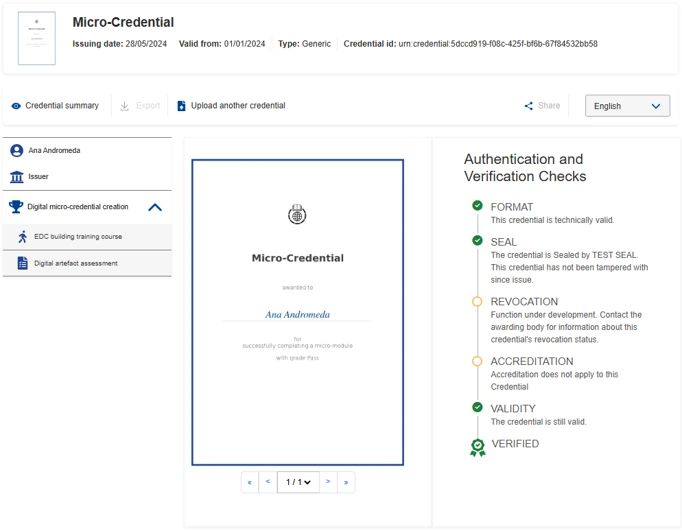
Europass EDC and Open Badges
Credential infrastructure
Evidence: Official guidance and technical standards; no IoV conformance claim
User journey reconstructed from primary material
- Identify the learner and issuer.
- Complete an achievement under criteria.
- Receive the structured credential.
- Inspect content, issuer and verification.
- Present the chosen credential elsewhere.
Documented journey reconstructed from primary material; not a hands-on usability test
- Identity
- Identified recipient and issuer attached to a bounded claim.
- Daily observation / journal
- Learning/achievement evidence; not primarily a daily wellbeing diary.
- Score / interpretation
- Criteria or assessment can accompany a claim; no general wellbeing composite is implied.
- Community / authority
- Institutions issue and verify achievements; recognition depends on context.
- Portability
- Structured, signed or sealed credentials and sharing workflows.
- Privacy evidence
- Disclosure and credential transport depend on the chosen ecosystem and implementation.
- Visual evidence
- Visible credential separate from structured contents and verification checks.
Lesson for the proposal: Reuse a proven credential grammar where useful; a stamped picture alone is not a verifiable credential.
Sources: European Commission / Europass: European Digital Credentials for Learning · 1EdTech: Open Badges · W3C: Verifiable Credentials Data Model 2.0
RSA Cities of Learning
Place-based recognition
Evidence: Primary programme overview; feature scope partly unknown
User journey reconstructed from primary material
- Find a learning opportunity.
- Participate in local learning.
- Receive recognition under the programme.
- Carry badges through the learning ecosystem.
- Continue with another opportunity.
Documented journey reconstructed from primary material; not a hands-on usability test
- Identity
- Learner and local learning context; broader identity model not established.
- Daily observation / journal
- Learning activities and achievements across a place.
- Score / interpretation
- A general wellbeing score is not established.
- Community / authority
- Local actors recognise learning through digital badges.
- Portability
- Recognition ecosystem described; exact technical acceptance requires implementation evidence.
- Privacy evidence
- Record-level disclosure and revocation controls not established in reviewed overview.
- Visual evidence
- Learning pathways and badges, rather than a daily wellbeing passport.
Lesson for the proposal: Dhun needs an issuer/community operating model as much as it needs an interface.
Sources: RSA: Cities of Learning
Camino credential and National Parks passport
Journey records
Evidence: Primary programme descriptions and existing visual research
User journey reconstructed from primary material
- Acquire the programme booklet.
- Visit a participating place.
- Receive a dated mark.
- Present marks under that programme’s rules.
- Continue to another place.
Documented journey reconstructed from primary material; not a hands-on usability test
- Identity
- Pilgrim introduction or personal visit collection, depending on programme.
- Daily observation / journal
- Dated marks accumulated across places.
- Score / interpretation
- A computed wellbeing score is not established.
- Community / authority
- Sites and programme rules give marks their specific meaning.
- Portability
- A carried booklet; recognition follows the receiving programme's rules.
- Privacy evidence
- Holder carries the record; copied or printed marks cannot be remotely withdrawn.
- Visual evidence
- Place/date/issuer and accumulating impressions.
Lesson for the proposal: A modest visit mark can be useful without implying learning, skill or positive wellbeing movement.
Sources: Cathedral of Santiago Pilgrim Office: La Credencial · America's National Parks: Passport FAQ