
Day 0 · Field Station · Dhun, Rajasthan
Dhun: When an Idea Chooses You
Published · 4 min read
In this entry
The melody that keeps returning
What if the most important ideas in your life aren't the ones you choose, but the ones that refuse to leave you alone? This morning, while walking around Dhun in Rajasthan, I was talking to Sunil Sharma, who has been deeply involved in the on-ground work of building this extraordinary space. We got talking about the word dhun (धुन), and how a word for a melody can also describe something that takes hold of your mind.
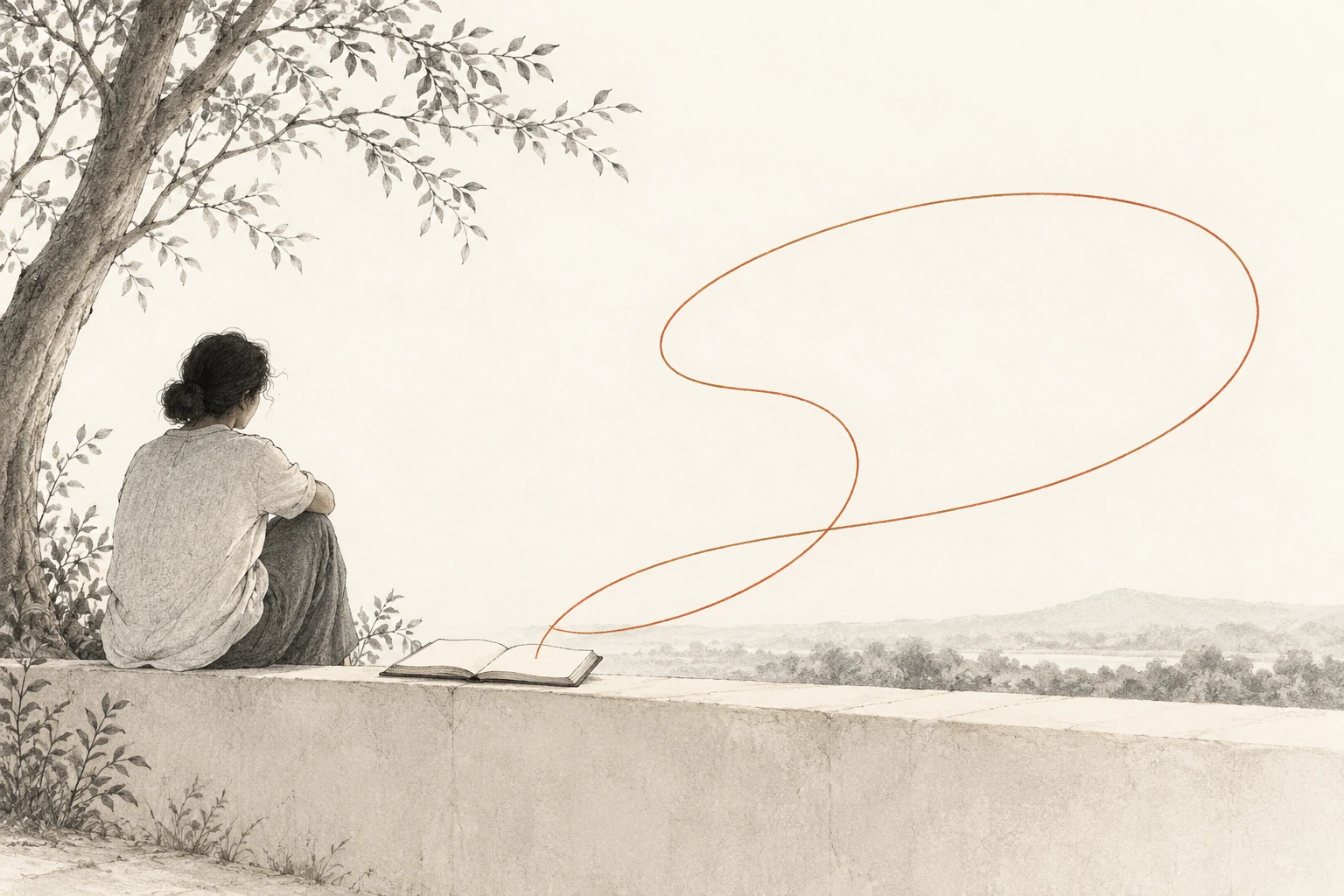
In Hindi, dhun can mean a tune or melody: something that keeps playing in your head. But there's another beautiful usage: “मेरे दिमाग़ में धुन सवार है।” An idea has taken hold of my mind. Not just a thought, and not quite an ambition, but something that keeps returning and demanding attention. It is that persistence, the feeling of being drawn back, that fascinates me.
There's another word, junoon (जुनून), which can convey intense passion, obsession or drive. Here's the metaphor that came to me: junoon is the fire; dhun is the melody. Sometimes the melody becomes so persistent that it begins organizing your life around itself, shaping what you notice and what you keep returning to.
When an idea becomes a place
Look around Dhun. What was once degraded land is being transformed into a 500-acre experiment in ecological restoration and regenerative living. Trees, water systems, biodiversity, architecture and community make the work tangible. Dhun's own ecology story describes the patient work of restoring soil and water. Here, an idea has become something you can actually walk through, built through years of attention and effort.
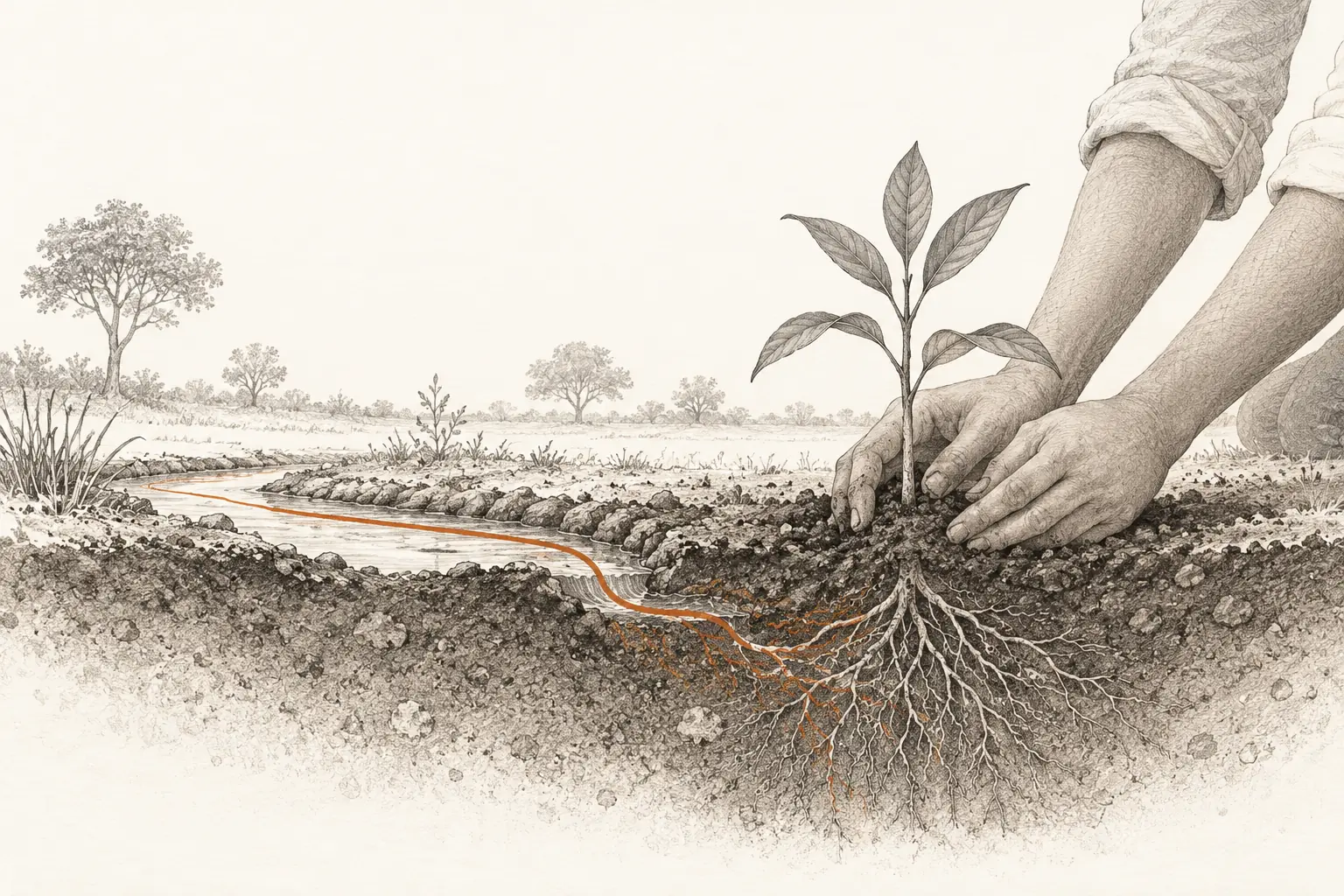
Dhun isn't the first place where an ambitious idea has taken physical form. In 1968, Auroville was founded near Puducherry as an experiment in human unity, bringing together people from across the world to explore a different way of living. These are different visions in different contexts, but I find a common thread compelling: someone imagined a world that didn't exist, and then people started building it.
Conviction that can still change its mind
I've spent seven years thinking about and building The Internet of Value: seven years of questions, experiments, conversations, failed assumptions and unexpected connections. There are easier things to work on, and probably more immediately rewarding ones too. Yet somehow, the question keeps returning: how do humans represent themselves, coordinate, establish trust and exchange value across systems that weren't designed to understand one another?
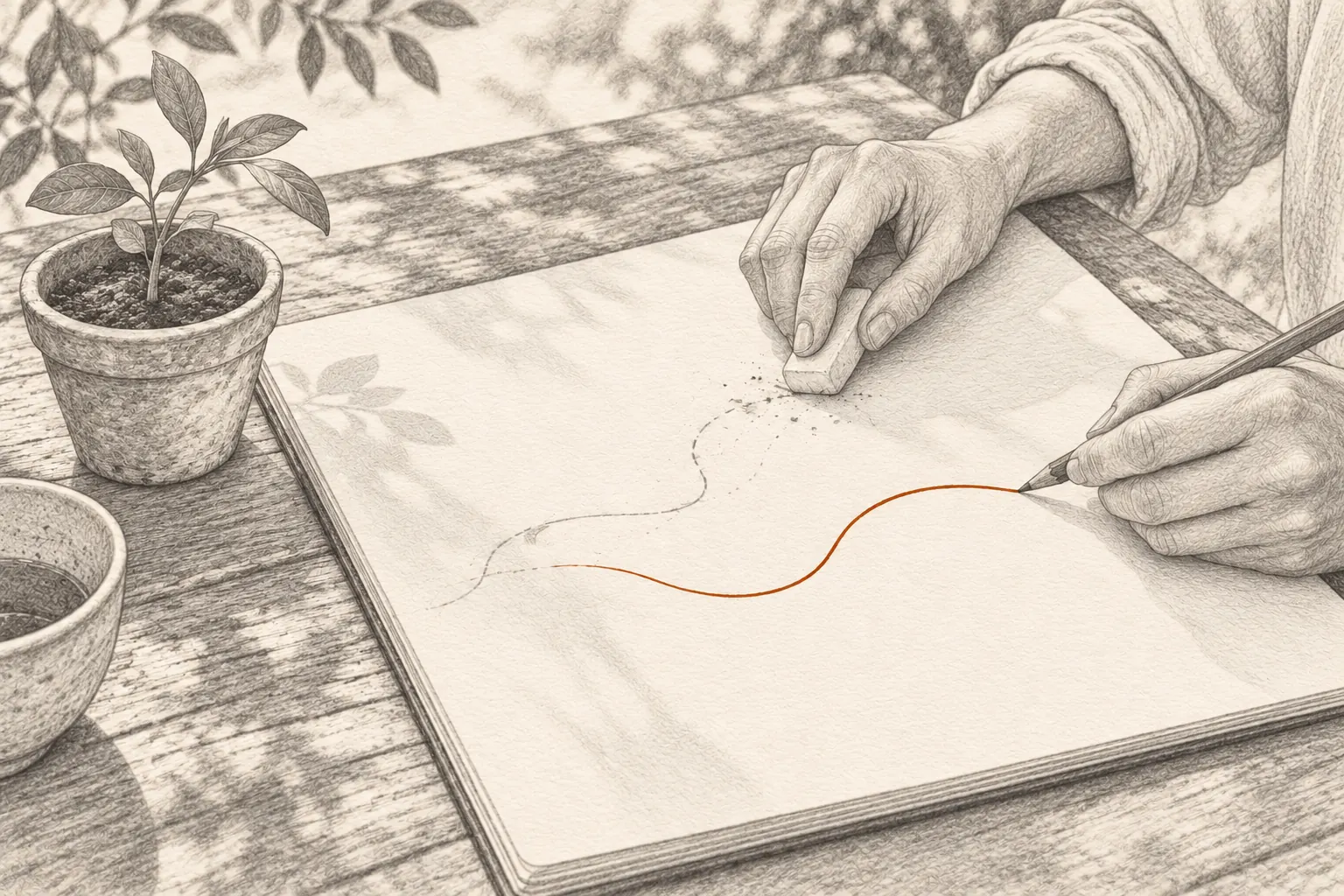
At some point, a problem stops being something you're working on and becomes something you're working through. But there's a thin line between conviction and obsession. Persistence can produce breakthroughs; it can also make us blind to evidence that we're wrong. Maybe the difference isn't how intensely we believe, but whether we're willing to let reality change our minds. I want to keep that question alongside the conviction.
When different melodies meet
Which brings me back to Field Station. Zu-Grama × Logos have brought together people with wildly different backgrounds, disciplines and ambitions here at Dhun. Each person has arrived with their own questions, projects and perhaps their own dhun. Something interesting happens when those individual melodies encounter one another: some harmonize, some clash, and some reveal notes you didn't know were missing.
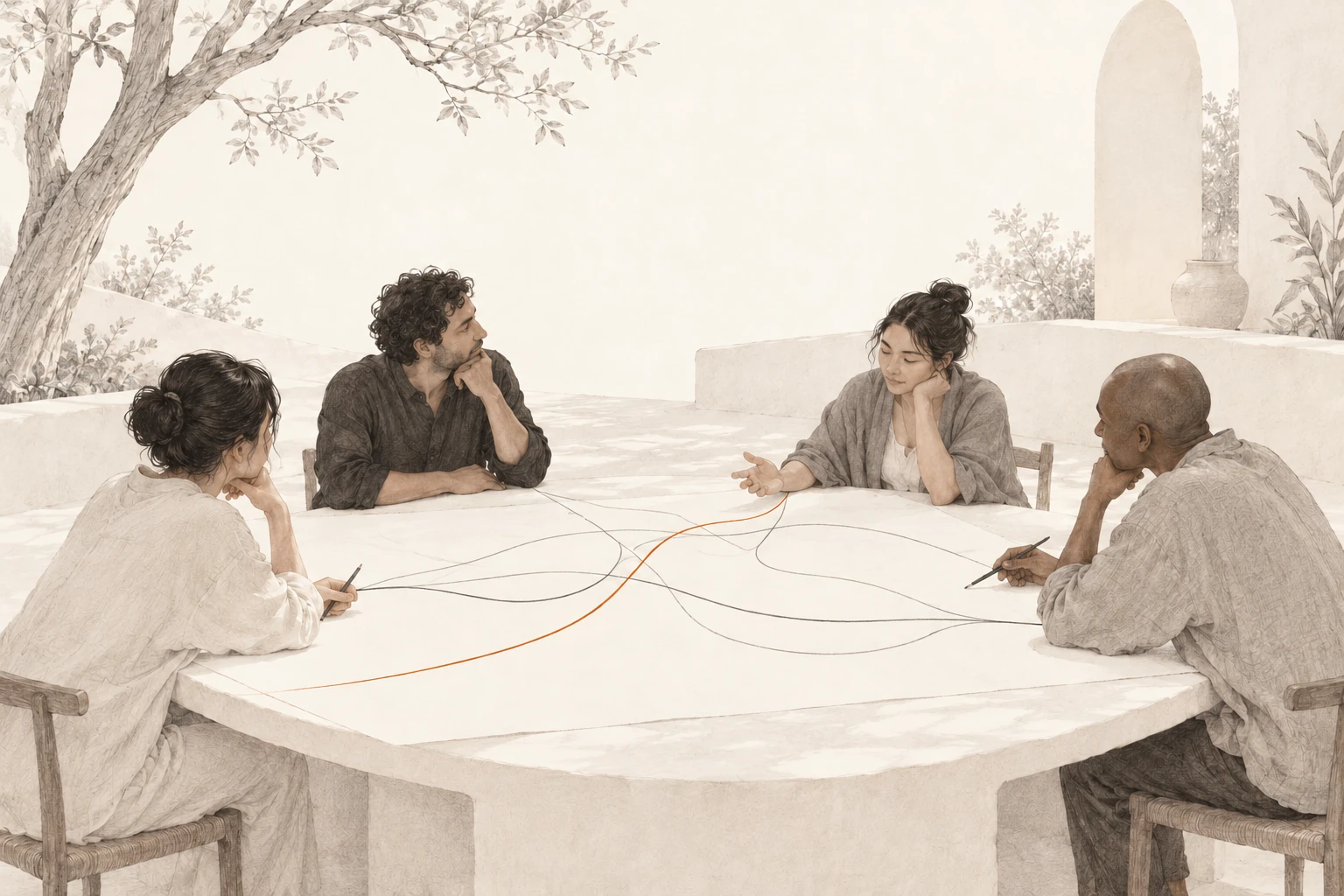
Perhaps that's what makes environments like this valuable: not that everyone shares the same vision, but that everyone gets an opportunity to hear their own vision differently. An encounter can change the way a familiar question sounds. That is part of what I'm finding here, among people whose questions and ambitions have taken them along very different paths from mine.
I don't know whether a calling comes from within us, emerges through our encounters with the world, or sometimes feels as though it's coming from somewhere beyond us. But I recognize the feeling: that persistent melody in the background, following you into conversations, surviving your doubts, and somehow finding its way back. Maybe we don't always choose our dhun. Maybe, sometimes, our dhun chooses us.