
Day 0 · Field Station · Dhun, Rajasthan
Language, Time and Mathematics
Published · 4 min read
In this entry
Three tools for coordinating beyond ourselves
What are the three most consequential inventions in human history? My candidates are language, time and mathematics. Not the wheel, electricity or even the Internet. I'm at Dhun, Rajasthan, for Field Station, an eight-day residency curated by Zu-Grama × Logos. Between conversations about quantum physics, AGI, parallel societies and the Internet of Value, I found myself returning to a question I've been thinking about for years: How did humans learn to coordinate beyond the limits of their own minds?
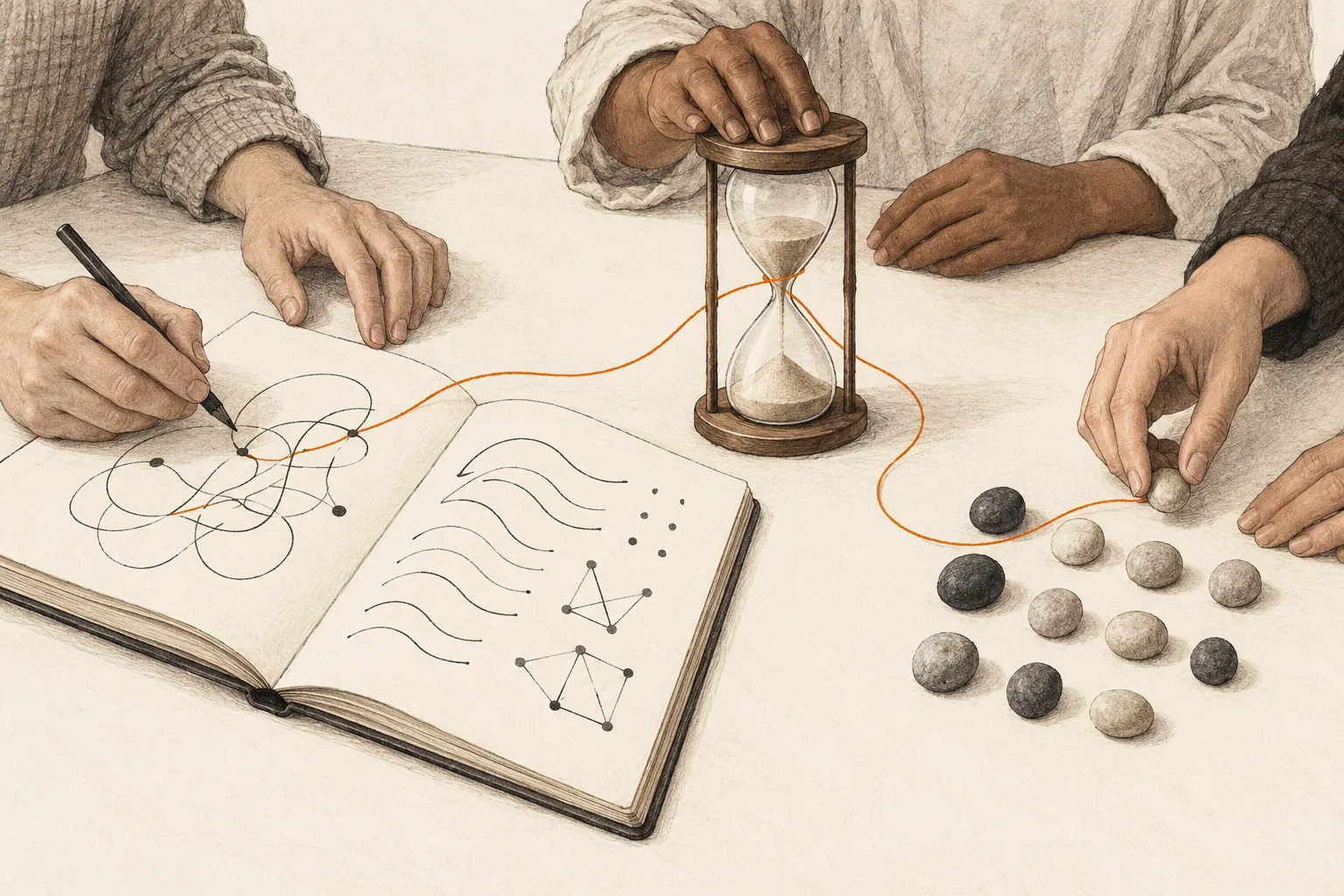
Language gave us shared meaning. Thoughts became words, and words became promises, stories, agreements and eventually institutions. What was once inside one person's mind could become something others could interpret, remember and respond to. Meaning could be expressed and carried beyond the person who first thought it.
Time gave us shared sequence. Yesterday, today and tomorrow became ways to relate events, while calendars, deadlines, histories and commitments helped us coordinate across them. We didn't invent time; we invented ways to measure, divide and synchronize it. Those shared conventions let people arrange their actions in relation to one another.
Mathematics gave us shared structure. Numbers, quantities, relationships and patterns offered ways to describe aspects of reality with extraordinary precision. We could express how much, how many, or how one thing related to another, using forms that other people could examine and work with. But what fascinates me is how these three tools intersect.
When meaning, sequence and structure intersect
These aren't isolated inventions. We have the language of time, in words such as before, after, yesterday and tomorrow; the mathematics of time, in seconds, intervals, frequencies and durations; and the language of mathematics, in symbols, equations, definitions and proofs. Each gives us ways to work with the others, rather than remaining a separate way of understanding the world.
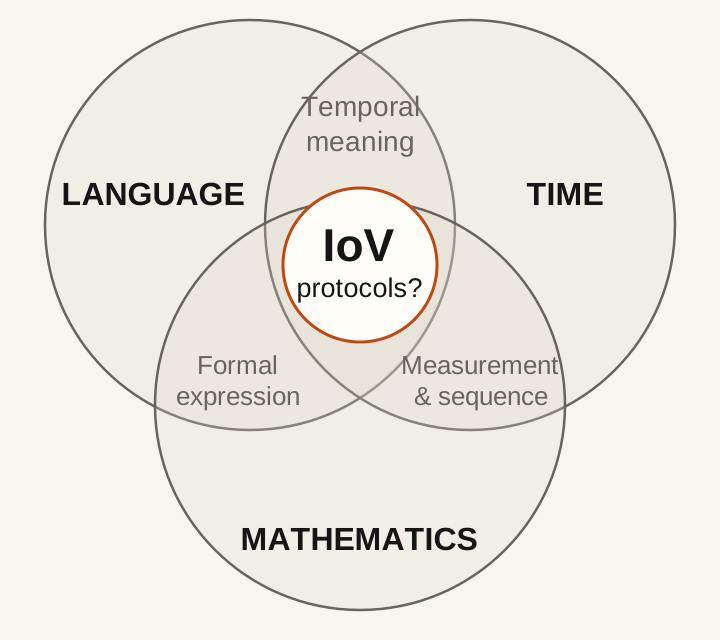
At their intersection, meaning becomes expressible, events become traceable and relationships become formalizable. Humans can coordinate beyond the limits of memory, geography and individual lifetimes. The Venn diagram makes me wonder where The Internet of Value (IoV) might fit in that shared space. It's a conceptual lens, not a claim that the current IoV protocol stack already implements all three dimensions.
Bookkeeping at the beginning of writing
Here's a historical detail I love: some of humanity's earliest surviving written records, from Mesopotamia around 5,000 years ago, were accounts of goods and rations. The British Museum's beer-rations tablet dates to about 3100–3000 BCE. An administrative tablet at The Met, dated around 3100–2900 BCE, most likely records grain distributed by a temple.
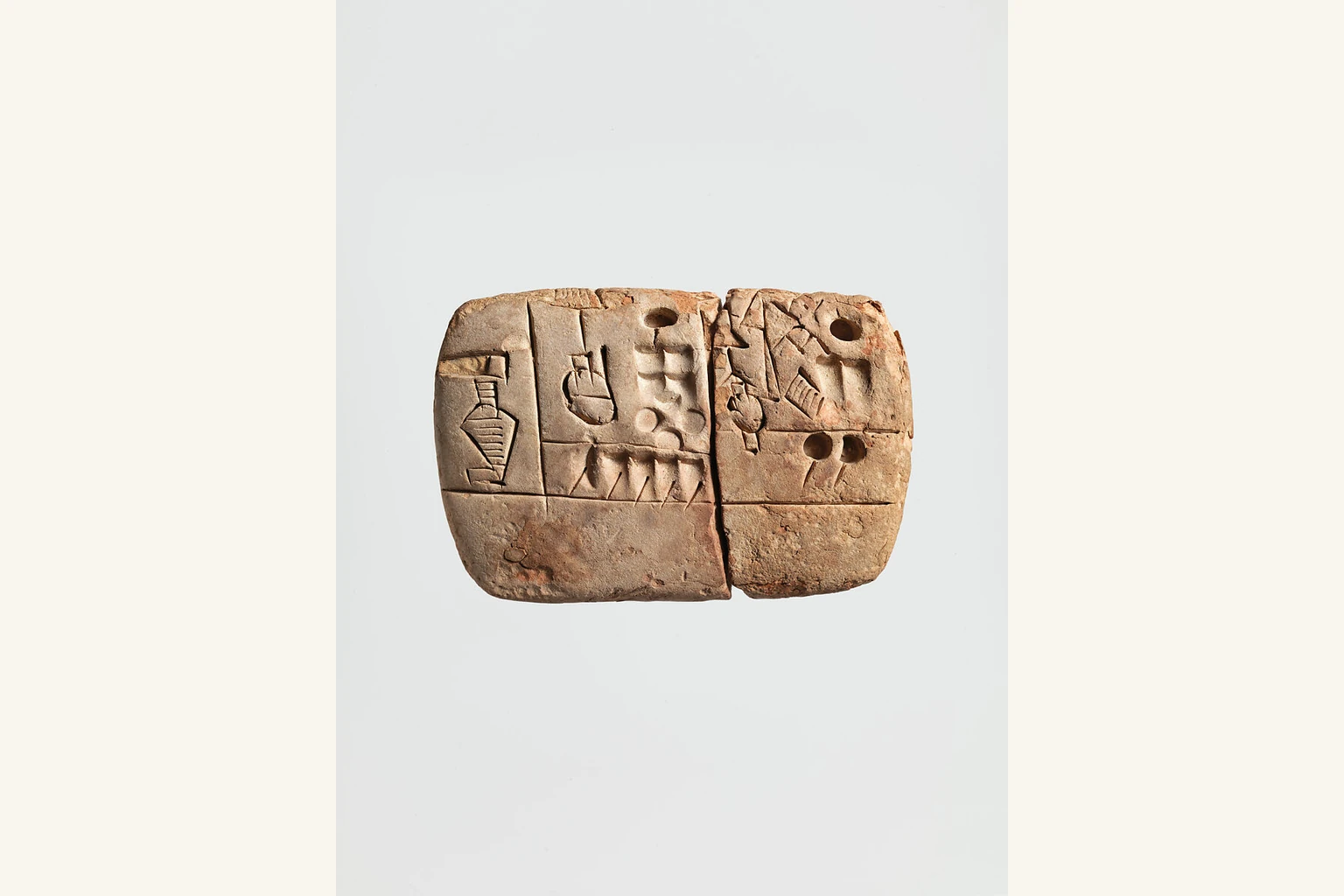
Yes, one of civilization's earliest information technologies was essentially bookkeeping. Someone needed to record what was exchanged, how much, and preserve that information for later. I see an echo of language, mathematics and time in that practical problem. Five thousand years later, we're still working on the challenge of making information usable beyond the moment and the people who produced it.
Precision does not create trust
Which brings me to something I've been working on for seven years: The Internet of Value. At the intersection of language, time and mathematics, could we build protocols that help people and independent systems express commitments, establish sequences of events and exchange value? I'm imagining infrastructure that lets different systems communicate, coordinate and preserve context, rather than another institution deciding what everything is worth.
Of course, there's a catch: not everything valuable is measurable, and not everything measurable is valuable. Shared symbols don't guarantee shared understanding, timestamps don't establish truth, and mathematical precision doesn't create trust. A protocol must do more than represent information; it must help independent participants interpret it and coordinate around it. That is part of the challenge I'm exploring, not something the diagram resolves.
Perhaps language, time and mathematics aren't humanity's three greatest inventions after all, but three of our most powerful coordination primitives. The Internet connected machines, and the Web connected information. Could the Internet of Value connect meaning, time and value? Civilization doesn't scale merely when humans become more intelligent. It scales when intelligence becomes coordinated.
The original illustrated overview
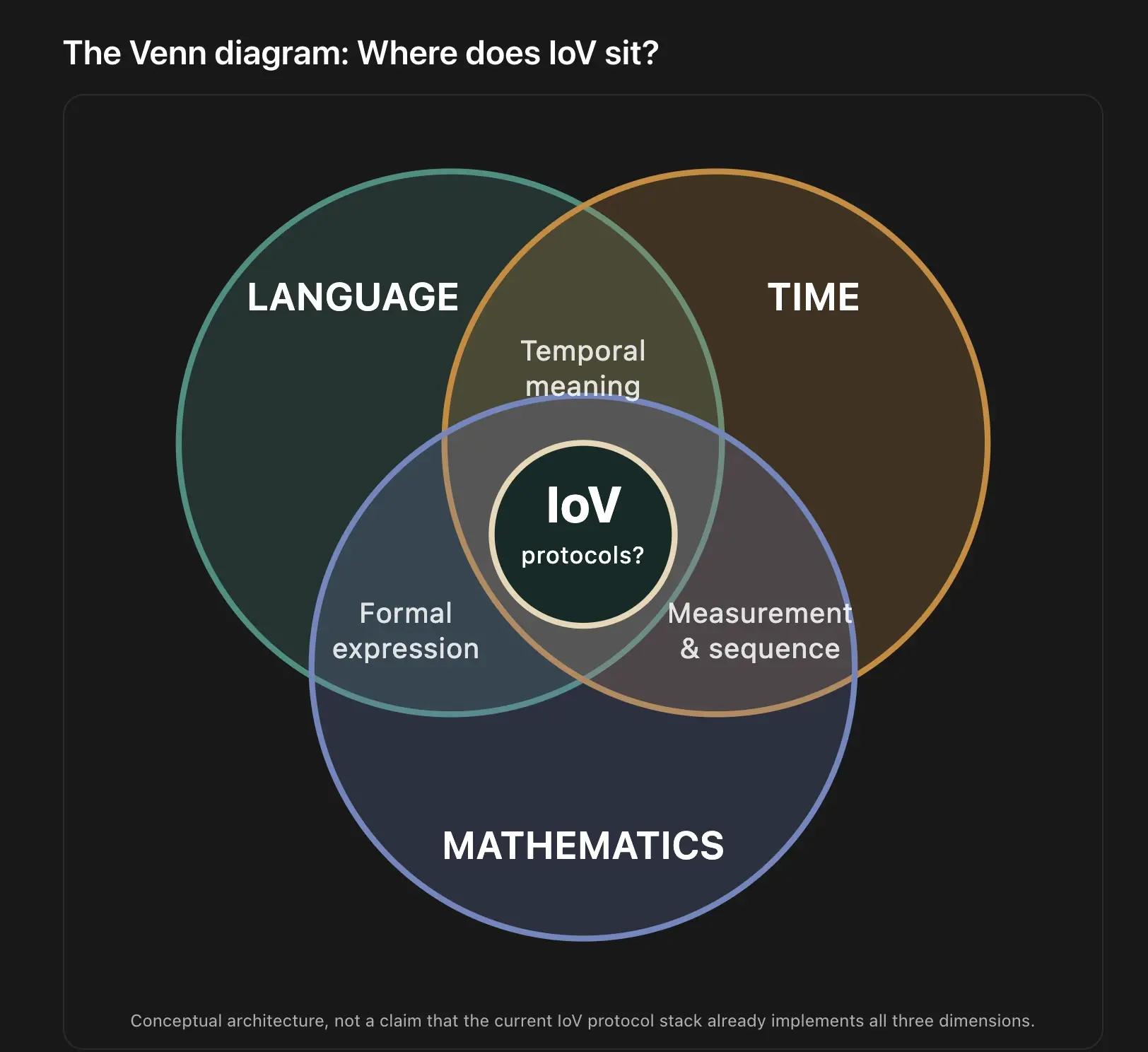
The original diagram supplied by the author. Its question mark and limitation are preserved in the adapted figure above.
Open the full-size image (opens in a new tab)