Chapter 1 of 11 · 3 min
How was the Logos × ZuGrama Field Station residency?
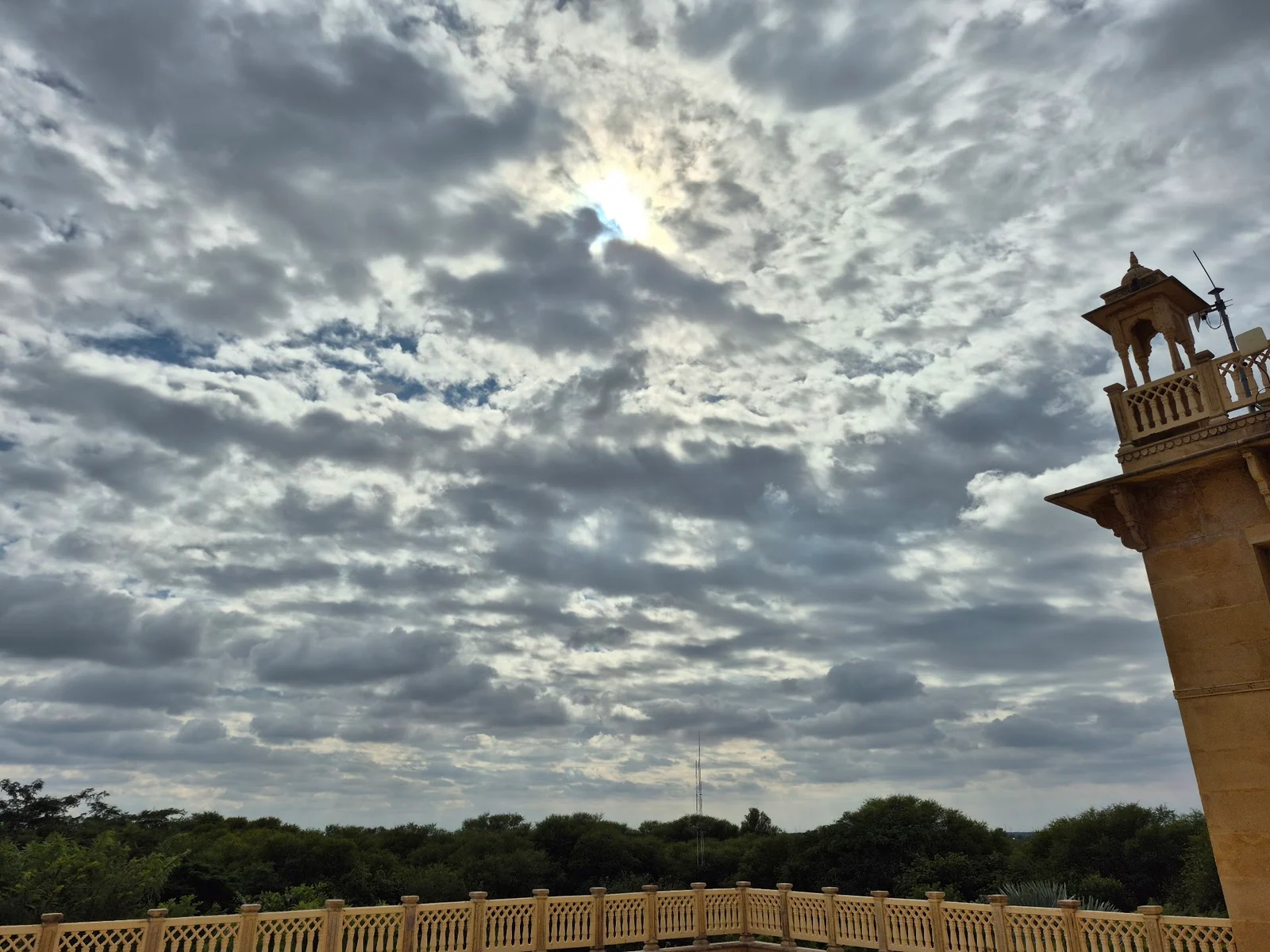
I went to Dhun, Rajasthan, for the Logos × Zu-Grama (ZuGrama) Field Station residency. The programme1 brought builders together for shared work, discussion and demonstrations. In my experience, that included Web3 builders, AI maximalists, AI-security researchers and people interested in longevity. These were people with different projects and positions, not a single voice about humanity’s future.
What happens when agents enter a human residency?
One of the projects I remember from the residency was called The Last Human Residency. Residents' profiles had been put into a system in which agents could interact. Alongside the Web3 infrastructure and token demonstrations, people were imagining what a residency of AI agents might become.
I kept returning to a premise I heard in those conversations: given enough compute and a goal, an agent could eventually do things better than a human. What, then, would we mean by human value?
My own presentation approached value from a human-first position. I was trying to explain The Internet of Value: a way of representing experience, wellbeing and contribution in which the person living the life participates in defining what counts.
What did cacao and ecstatic dance ask of me?
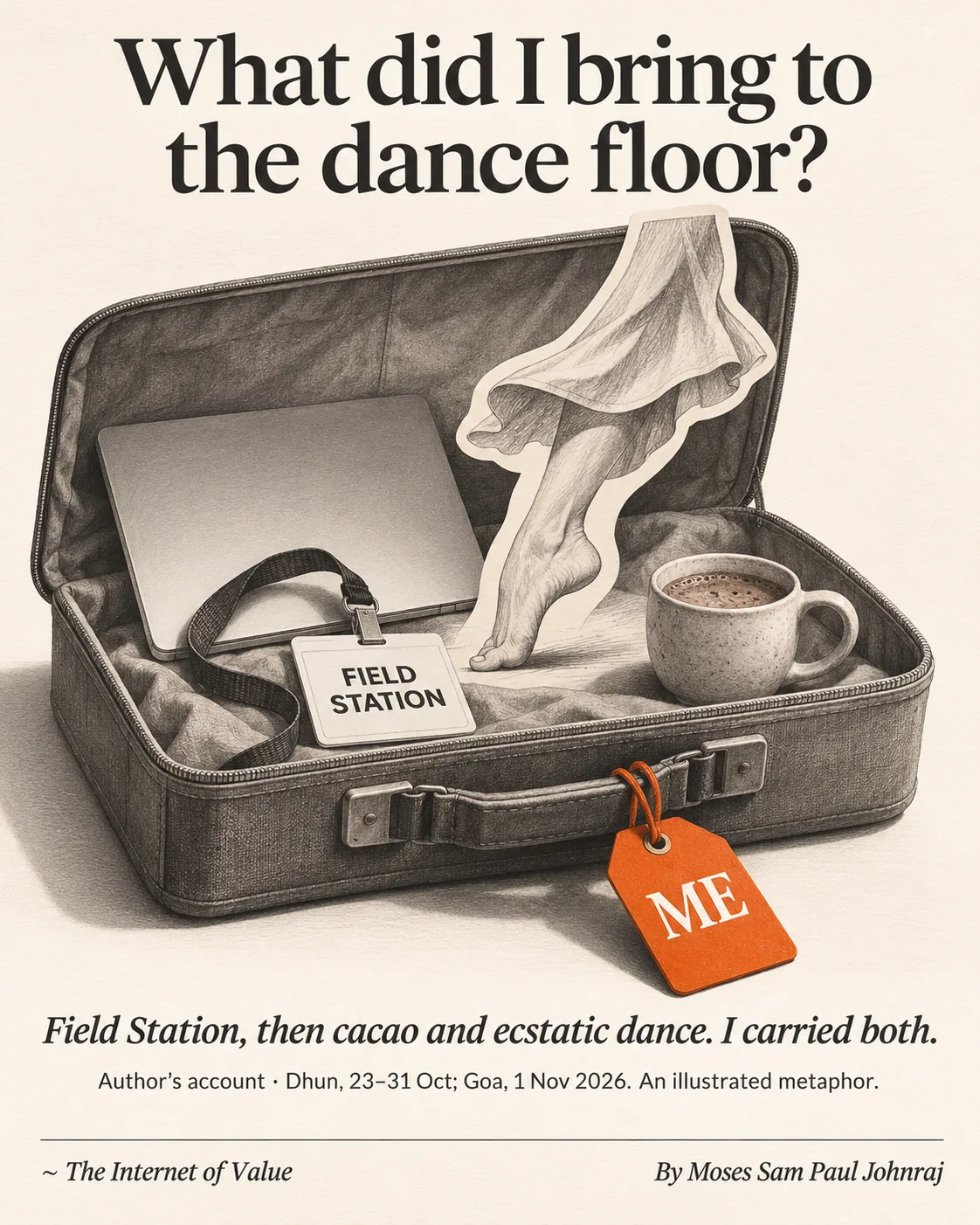
On November 1, after returning to Goa, I went to a cacao ceremony and ecstatic dance.
It was a phone-free setting. The ceremony involved the elements, setting an intention and observing. We were invited to dance with ourselves first. There were instructions for inviting someone else to dance, and for politely declining an invitation. The facilitator left room for the experience to develop through the people participating.
That last part stayed with me. There was structure, but the eventual experience would depend on what people did with it. An invitation could be accepted or declined. The facilitator had not specified every outcome.
I had moved between conversations about agents pursuing goals and an experience in which intention, participation and the freedom to respond were part of what mattered. I was also carrying my own work on time slices, observation and measurement. These encounters brought the questions together: what is an experience worth, what changes while we live through it, and what could a record tell us afterward?
Who arrived at the ceremony?
The transition was personal. I use AI extensively in my own work; the logs from the residency include guiding agents through product development. The dance also had instructions and boundaries. These were different arrangements of attention and participation, experienced by the same person over a short period.
Or, more precisely, by a person who had been working, sleeping, becoming unwell, meeting people, receiving encouragement and encountering friction along the way.
The person arriving at the ceremony had lived through all of that.
“I left the residency. I carried the week with me.”
Which days am I actually describing?
This is an investigation of that experience. The stay at the Logos × ZuGrama Field Station residency at Dhun ran from 23 to 31 October 2026. With arrival and departure at the boundaries, I think of 24–30 October as seven core days. My activity records cover 22 October–1 November, including the travel around the stay and the later ceremony in Goa. Those are different periods, and their boundaries matter whenever I make a numerical comparison.
Some aspects of experience can be counted or modelled. The harder question is what those quantities mean, and whether opening them up helps me understand something I would otherwise overlook.