I ended the last essay wondering how to make it easier for someone outside my own head to change my next decision. At Dhun, I’d watched people try Value Log. Seeing where they got stuck gave us something specific to fix. I wanted to see where else an encounter had changed what I did next. Why Do Smart People Fail at Startups?
I went back through my logs, my chats and the work we put out. I looked for the next action I could actually trace. Sometimes I stayed somewhere longer or took up a practice I kept coming back to. Sometimes a conversation changed the software or turned into a proposal someone could question. The first decision I looked at was where to spend October.
A visit becomes a stay
In September I came to Goa to teach quantum computing at the Naval War College. One conversation took a turn I hadn’t expected. We talked about how to account for an experiment that failed. I remember being interested in the language for a piece of work that didn’t give you the result you wanted and still left you with something worth carrying forward. It was a question I could take home. The decision that changed the trip happened somewhere else.
I usually left Goa fairly soon after the Naval War College. This time I made time to see Rahul in Mandrem. We had known each other since our startup days in Bengaluru, and over the years we had kept finding each other in new settings. I moved into his space on 3 October to finish the book I was writing. The weeks that followed also gave an old relationship more time to become part of daily life again. Rahul’s timeline
At VIT, around the same period, our faculty programme put a different kind of encounter on the calendar. We knew the dates and what we hoped to cover. The room gave us something the programme poster could never supply: the research problems people actually wanted to work on and the friction they described in their own practice. We corrected the public account when a topic on the schedule hadn’t been delivered, published a summary of the responses we could use, and prepared a way to ask for later work. I can trace what we learned in class and what we changed in our account of it. The trail to a later collaboration is much thinner. VIT programme journal Faculty research findings
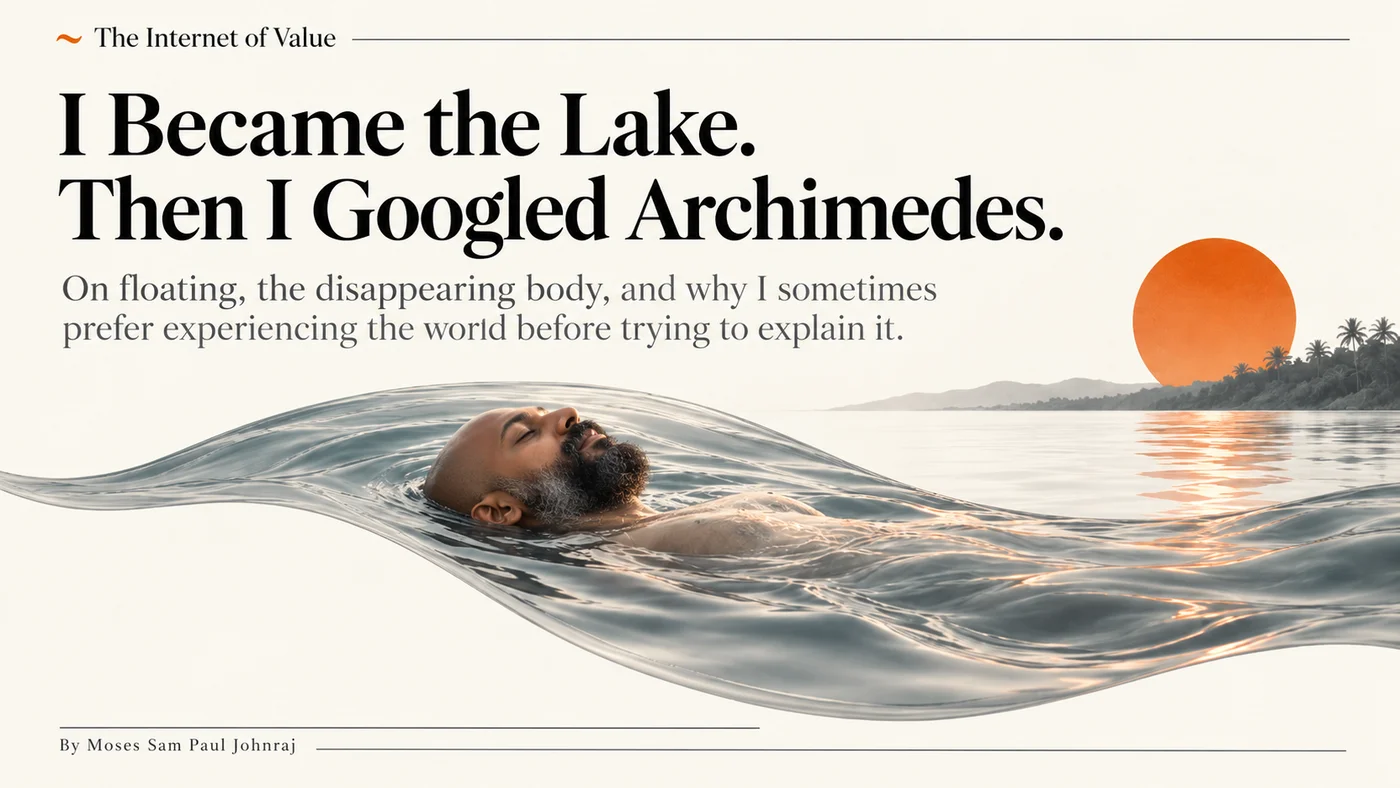
In Arambol I got talking to someone about The Internet of Value. Hours later we had made a much simpler arrangement. She would teach me to float the next morning. I tried to manage my chin, my hips and every other part of my body that could possibly interfere. Eventually I let her support my back, and for a while the difference between my body and the water felt hard to locate. Later a friend brought up aquatic bodywork and I went looking for language for what I’d experienced. I wrote about it, then went back to practising in the sea. My November log has two separate entries for floating. The account of the lesson
I can see the part I chose. I stayed in the conversation and said yes to being taught. Later I returned to the water. The experience itself was a surprise. That difference matters when I use the word deliberate. The action I can repeat is making time for the next encounter. If I tried to recreate the first experience exactly, I would bring entirely different expectations into the lake.
People try the work
On my first evening at Dhun, dinner kept opening up into new conversations. We went from what I was building to longevity, quantum physics and breathwork. I came away with three things I wanted to write about. One became a field note about why I felt so energised after an evening of talking. Can Conversations Get You High?
At the Logos × ZuGrama Field Station at Dhun, I asked people to replay the previous twenty-four hours in their heads. The next day some of them tried Value Log. Signing in was a problem. A prepared record could also look complete even when it had dropped part of what someone said. I spent time with a peer working on the product after people hit those problems. I had a clear test for what should get better: could someone new save a complete account and recognise it as their own? Two months of self-observation with Value Log
There were other kinds of feedback in the room. My account of an early presentation says it felt rushed and I wasn’t sure I’d clearly asked for help. Before the later session I worked through questions people might ask and made a page that brought the material together. One person declined a request I made. On another day a comedian joked about me and the work with my permission, and I enjoyed it.
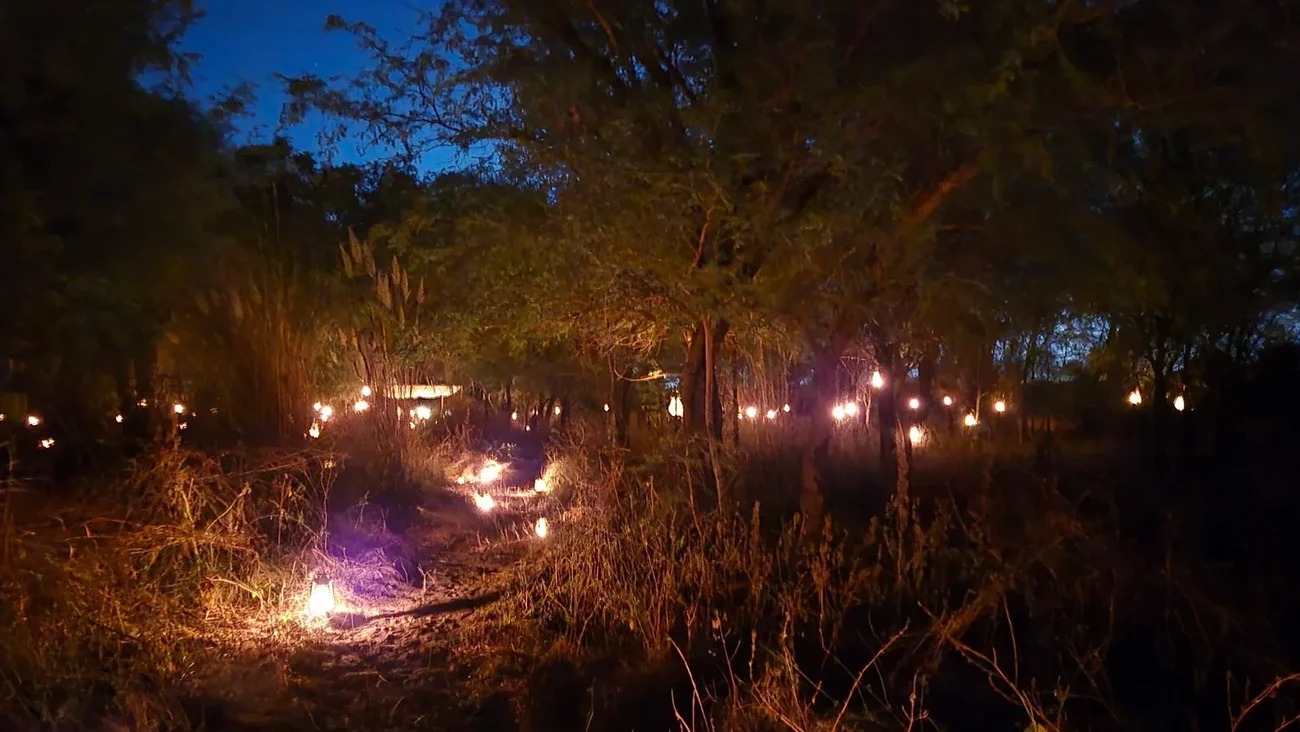
I also led a shorter Sundara Chakra Pranayama session at Dhun, taking a practice we’d been developing in Goa into a different room. After returning to Goa, I went to a screen-free cacao ceremony and danced. I remember coming home with a sharper question about how to put an experience into words without stripping it of what mattered. I pursued it in an essay that moves from the residency to the dance floor. Can Experiences Be Observed with Numbers and Words? The pranayama inquiry The evening back in Goa
Back in Goa, Mridul asked how people could find a way into what we were building. A polished demo can make an idea visible, and it can also take up so much of the room that the other person has almost nothing to do. We talked again, and the following morning my log shows me mapping those conversations into what became a People page. The site later used the same structure for Rahul’s timeline. A conversation about leaving space for another person had acquired a place on the website that a second conversation could use. Mridul’s conversations Rahul’s timeline
Questions about how to end a session also stayed with me. Where did you feel a change? What stood out? What did you notice? By 6 November Value Log already had an optional place for those personal words. Later conversations gave me more settings in which to take the question seriously. On 15 November we extended that support to the Custom GPT intake and opened a draft discussion about where such an account belongs. That progression is more useful to me than trying to give the whole idea a single birthday. Living an Aware Life Draft Spec discussion
I also wanted to hear how people who study experience for a living would approach that question. We prepared individual invitations and I recorded twenty sends and one bounced address. From the records I checked, I can tell how far I got in making those invitations. I still have a separate question about who answered and what we might learn together.
Four things people could answer
A chat gives you a good first sense of what somebody cares about. At some point there has to be something they can examine when you’re absent. This autumn we put four versions of that next step into the world. Each asks for a different kind of participation. It took me a while to get clear about what had actually happened by the time I could send somebody a link.
Goa Wellbeing Commons
We built a public home for the larger Goa inquiry and a working studio behind it. The first question was whether practitioners could document what they actually do and whether community review would help someone make a more informed choice about working with them. On the public site a facilitator, researcher or institution can come to that question from their own starting point. There is a place for us to prepare the work. A voluntary practitioner pilot would require people to choose to participate and agree how that participation works. The Goa experiment
Reached A live project site and research studio. Open A practitioner cohort and agreed field work.
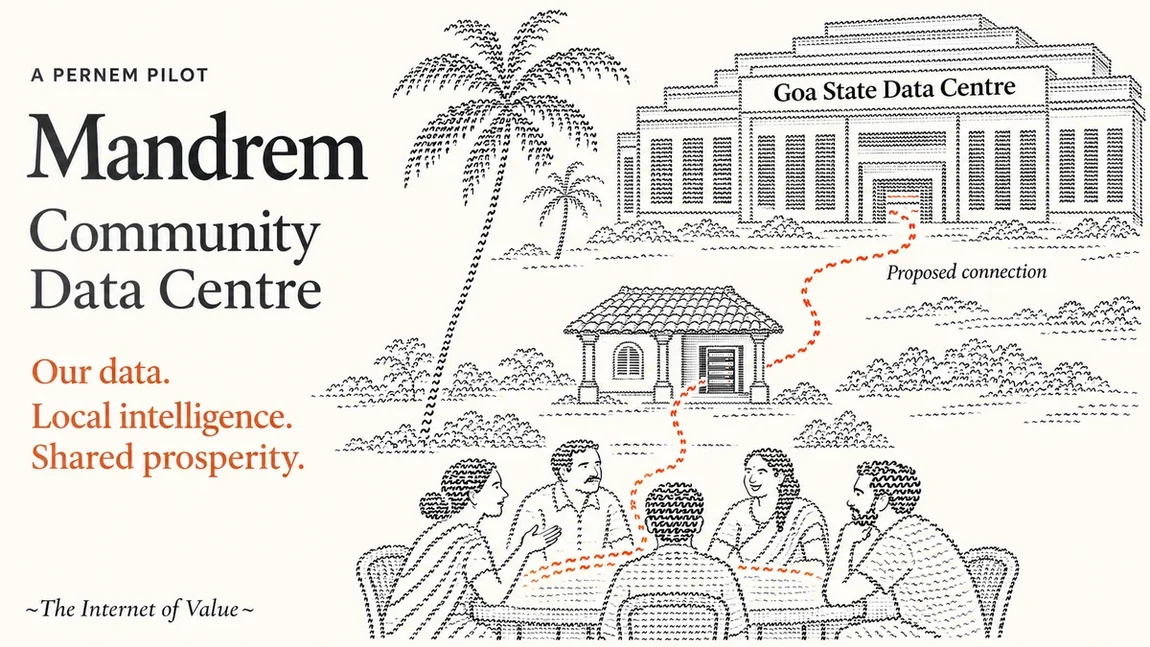
Mandrem Community Data Centre
Mandrem gave us somewhere specific to ask who should own local computing and storage, decide what leaves the community and share in any proceeds. I pushed the proposal back toward the infrastructure because a personal-data interface could easily become the whole story. We made the pilot idea inspectable in a walkthrough, then put the concept note, research and models in a public reading room on the Goa site. There is a planning workspace too. Each of those things makes it easier for someone to challenge a particular part of the plan. There is still the larger decision of whether anyone wants to run it together. Mandrem reading room Community-owned data centres essay
Reached A proposal, models, reading room and planning workspace. Open A commissioned centre or operating pilot.
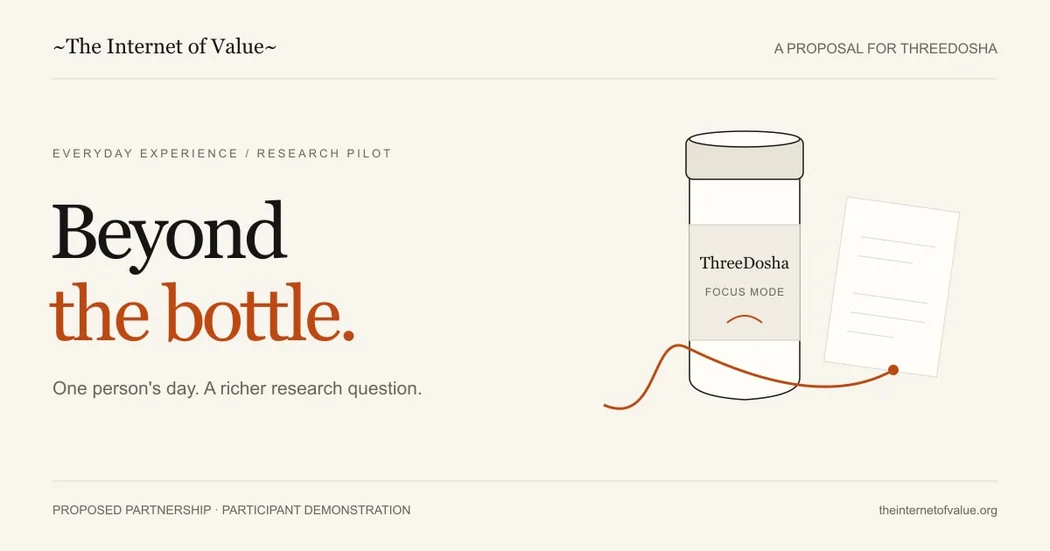
ThreeDosha · Beyond the Bottle
Here I wanted to see what a feedback conversation might become after somebody opens a bottle and carries on with an ordinary day. A rating often leaves out the setting, what was happening beforehand and how sure the person is about what they noticed. The proposal lets a reader try a fictional account and see how a study might keep those details, including ordinary days and experiences where someone notices no change. The brief gives a prospective partner a question, a method and terms to think about. The examples are fictional and the study is still proposed. ThreeDosha research brief
Reached A fictional walkthrough and research brief. Open Study agreement, participation and evidence.
Dhun Wellbeing Passport
At Dhun I spoke with the founder about identity, community and what makes a place liveable. During the residency he told us about a well his ancestors helped dig. I wrote about what that story made me ask about the contributions a community remembers. Where Is Your Nose? What a Community Chooses to Remember
I brought the Passport up again later in the residency. I recorded interest, an exchange of numbers and a follow-up message. The published proposal carries that conversation far enough for someone to try the idea through Manisha, a fictional person who can move through a day and decide what to keep visible. A prospective collaborator can point to a specific step and ask who gets to see something or decide what it means. That is the invitation we have made. A joint pilot would involve a new decision. Dhun Wellbeing Passport walkthrough
Reached Interest, a follow-up and a published walkthrough. Open An agreed pilot or participation.
I recognise the same impulse in smaller work. With Value Log’s Time Travel, I took an actual demo to a gathering in Maharashtra and gave people a way to react to a thing they could see. With Growth Flow Engineering, we built a live path for an employer to bring a real brief and a system for sending stories out in several formats. Those changes give me more chances to hear from someone. A demonstration, a working intake and a published story each tell me the work made it to a particular point. What someone did after seeing it is the part I still want to get better at noticing. Time Travel development
In Mandrem I invited writers and builders to come work quietly at Dunes. Nobody came. I kept editing the book that week and moved the manuscript into GitHub. Reddit invitation
What I’d do again
I’ve started paying more attention to what I do in the days after meeting someone. I went back to the sea after the floating lesson. I sat down with a peer after people struggled to use Value Log. And once the Dhun conversation had become a Passport walkthrough, I had something I could put in front of someone with a question I couldn’t have asked over dinner. Which part of this would you try with your own community? The answer could change what we build next.