
Whitepaper · v0.8
Observer Attention Is All You Need
How a lived moment becomes observable, interpretable, governable value—and returns to change the observer
00
Abstract · v0.8
Representation
Every measurement system begins before mathematics. It begins when a civilization learns how to represent something that was previously difficult to see. Clocks represented time. Credit scores represented repayment risk. GDP represented national economic output. Each representation made new forms of measurement and coordination possible, while also narrowing what could be seen.
The missing observer
Modern civilization has created many representations of the human being: citizen, borrower, worker, student, patient, user, creator, and consumer. These representations are useful, but partial. They are usually built for institutions that must make decisions about people. They rarely help the person observe their own becoming.
Human protocol flow
The observer is the person. A selected lived moment becomes a time-bound record, passes through human-state interpretation, may enter commons validation through Performance, and returns as a scoped update to the same living identity.
Theory before implementation
The protocol architecture and its limits carry the argument. Product screenshots and issuer-specific calculations appear only as implementation evidence: proof that parts can be built, never proof that the theory is universally valid.
This paper uses the canonical tilde grammar of The Internet of Value: ~ protocol, ~~ node, ~~~ facet, and ~~~~ signal.
Choose format
Start with the version that fits your attention.
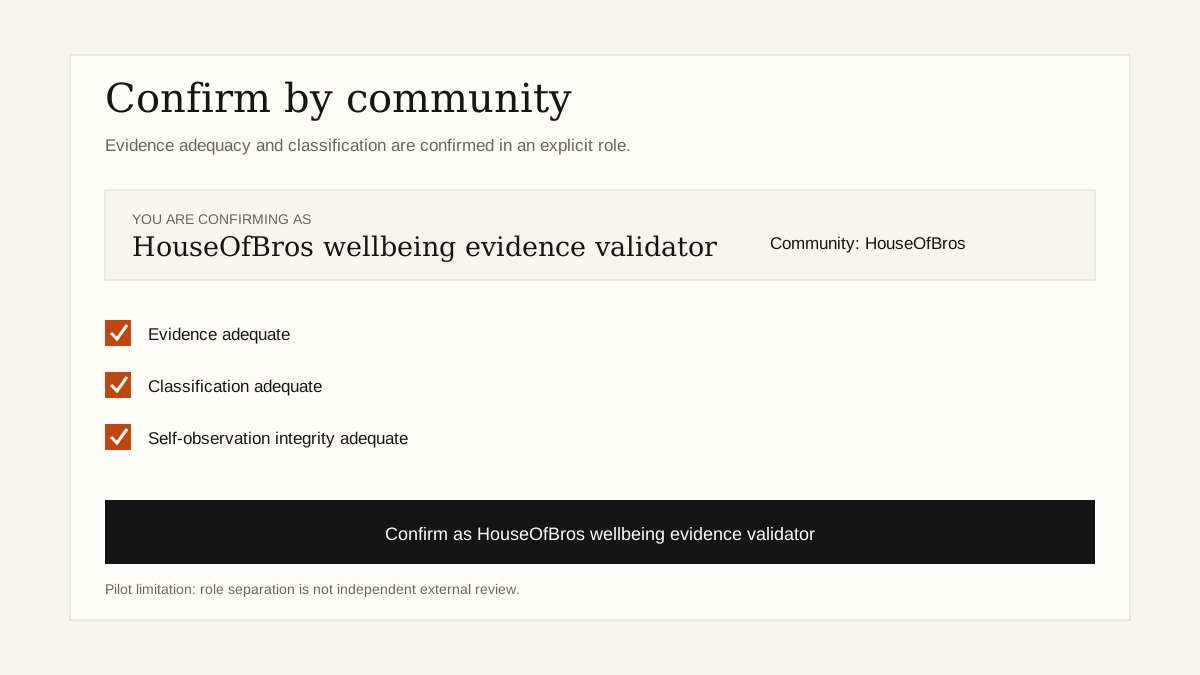
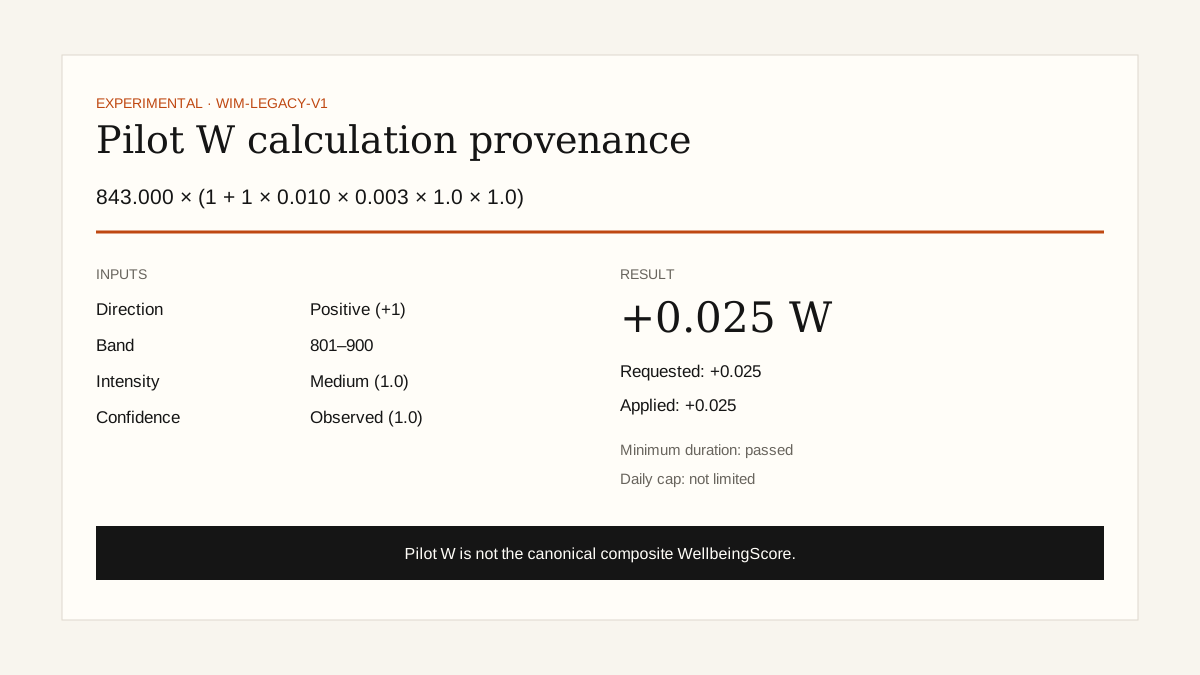
Implementation evidence—not validation
The theory stands first. The built work shows what became possible.
These redacted product views demonstrate proposal, human confirmation, governed validation, calculation provenance, and correction. They do not prove universal validity.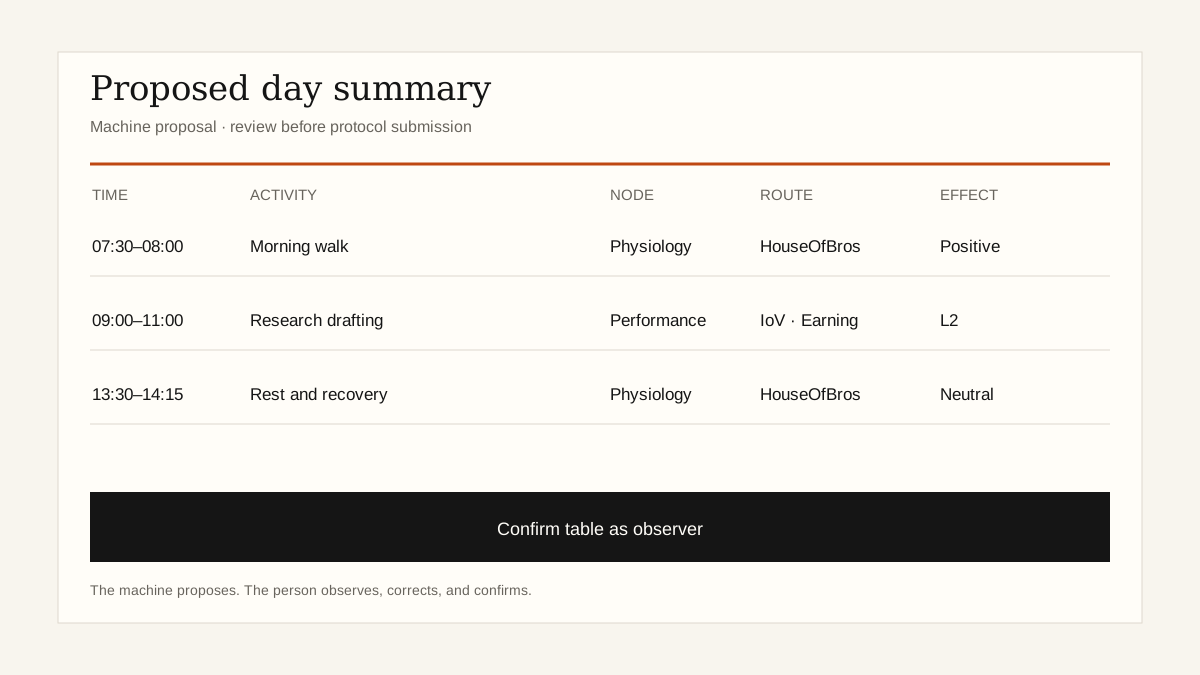
Reader guide
How to read protocol notation
Canonical grammar
A single tilde marks a protocol, double tilde marks a node, triple tilde marks a facet, and four tildes mark a signal.
~ProtocolProtocol~~NodeNode~~~FacetFacet~~~~SignalSignal
Sources & Edition
Edition utility
This research edition was developed with AI-assisted drafting and structure review under human authorship and protocol-spec verification.
Archived source PDFBibTeX citationBibliography, methods, and version historyPublic edition ledger